




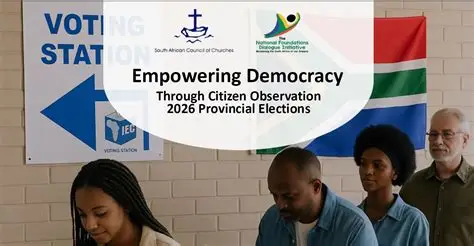
“South Africa’s upcoming local government elections on November 4, 2026, will see 546 out of 732 registered parties contesting, making it one of the most competitive elections in the country’s history. The ANC, once dominant, now faces strong challenges from the DA and MK Party, raising the likelihood of coalition governance.”
South Africa is entering a defining moment in its democratic journey. The 2026 Local Government Elections, scheduled for November 4, are not merely about municipal governance but about the broader trajectory of the country’s political landscape. With 75% of registered political parties contesting, the elections promise to be one of the most competitive in recent history, reshaping the balance of power and potentially ushering in a new era of coalition politics.
The ANC’s Waning Dominance
For decades, the African National Congress (ANC) has been the dominant force in South African politics. However, years of corruption scandals, service delivery failures, and economic stagnation have eroded public trust. The state capture saga, Eskom’s mismanagement, and healthcare delivery failures have become symbols of governance decay. As a result, the ANC now faces mounting opposition from both established and emerging parties.
The Rise of the DA
The Democratic Alliance (DA) has positioned itself as the primary challenger to the ANC. Polls show the DA gaining traction in key metros such as Tshwane and Johannesburg, where urban voters are increasingly disillusioned with ANC governance. The DA’s campaign emphasizes accountability, economic reform, and improved service delivery, resonating with middle-class and urban constituencies.
MK Party’s Surge
Perhaps the most surprising development is the rise of Jacob Zuma’s MK Party, which has captured significant support in KwaZulu-Natal, particularly in eThekwini, where polls suggest it could secure over 50% of the vote. Zuma’s populist appeal and promises of radical transformation have energized voters who feel marginalized by mainstream politics.
Youth Mobilization
The Independent Electoral Commission (IEC) has confirmed that over 29 million registered voters will participate, including a record number of young South Africans. This surge in youth registration reflects growing disillusionment with traditional political structures and a desire for change. Young voters are expected to play a decisive role, particularly in urban areas where unemployment and inequality remain pressing issues.
Coalition Politics on the Horizon
With the ANC unlikely to secure an outright majority, analysts predict that coalition governance will become the new norm. The DA, MK, and smaller parties such as the Economic Freedom Fighters (EFF) and ActionSA are expected to negotiate alliances that could reshape municipal governance. This shift toward coalition politics represents both an opportunity for inclusivity and a challenge for stability.
Implications for Governance
Coalition governments could foster greater accountability and inclusivity, but they also risk instability if parties fail to find common ground. The 2026 elections will test South Africa’s democratic maturity, forcing political leaders to prioritize compromise and collaboration over unilateral decision-making.
Conclusion
As South Africans prepare to head to the polls on November 4, 2026, the stakes could not be higher. The ANC’s dominance is waning, the DA is gaining ground, and the MK Party is surging in KwaZulu-Natal. With 546 parties contesting, the elections will mark a turning point in South Africa’s democratic journey, potentially ushering in a new era of coalition governance.



