




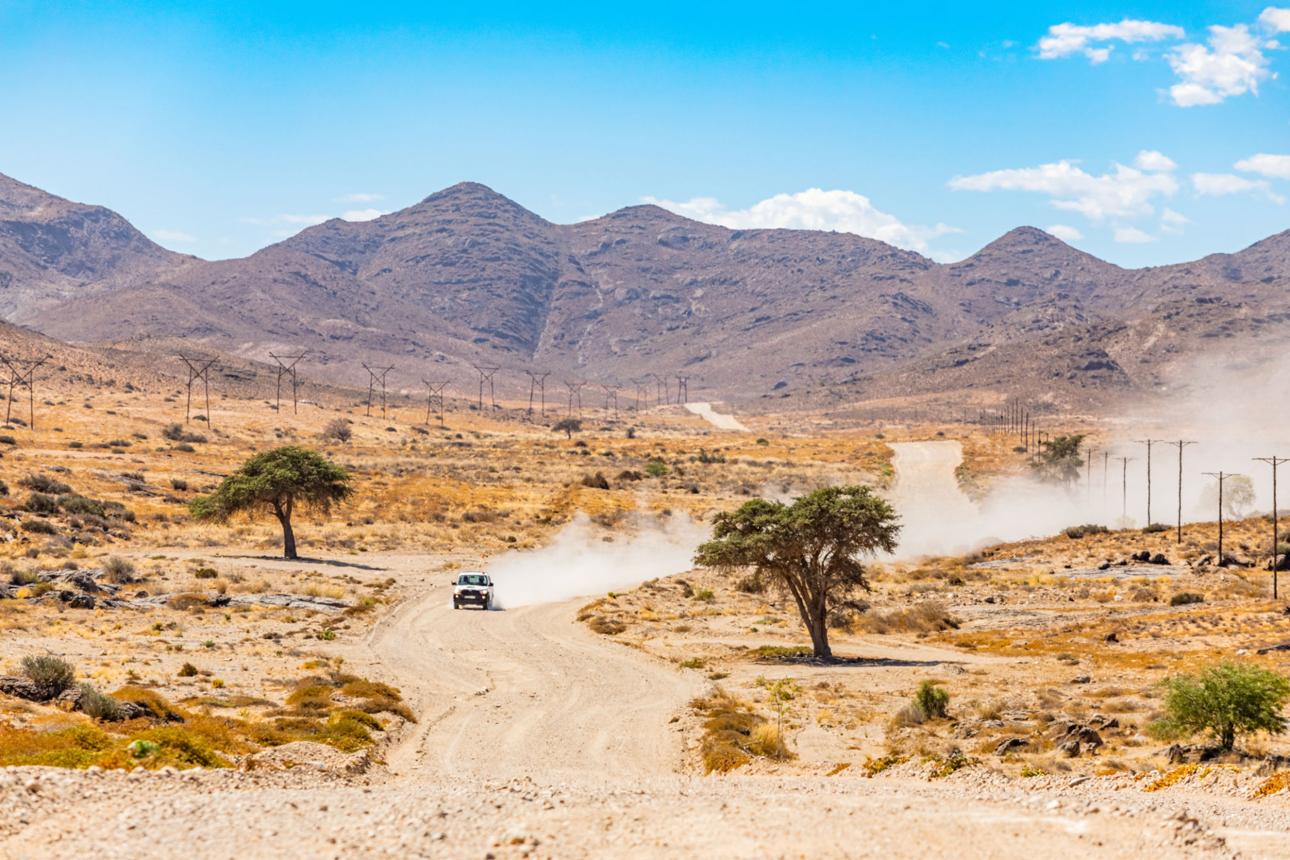
“Travellers planning self-drive journeys through the Richtersveld have been warned to change their itineraries after SANParks closed the River Road (R11–R12) between De Hoop and Richtersberg because of flooding and rising water levels. The closure highlights an important travel tip for visitors to remote South African destinations: check official road and weather updates immediately before departure and never attempt to drive through flooded routes.”
SANParks closes River Road in the Richtersveld
South Africa’s Richtersveld has long attracted travellers looking for remote landscapes, rugged mountain scenery, dramatic desert terrain and a genuine off-road adventure. However, visitors planning to explore the region this week need to pay close attention to changing conditions after South African National Parks (SANParks) closed the River Road in the |Ai-|Ais/Richtersveld Transfrontier National Park.
The affected route, identified as the River Road R11–R12, runs between De Hoop and Richtersberg. According to a travel update published on 6 October 2026, rising water levels and flooding have made the route unsafe. SANParks has instructed travellers not to attempt the closed road and says it will only reopen once conditions are considered safe.
For travellers, the immediate message is simple: do not treat a remote road closure as a minor inconvenience. In an isolated environment such as the Richtersveld, an apparently manageable stretch of floodwater can become a serious safety hazard.
The latest development is particularly important for self-drive visitors because the Richtersveld is known for demanding roads and limited infrastructure. SANParks describes the area as a rugged mountain desert environment in the Northern Cape, where 4×4 travel forms an important part of the visitor experience.
Why travellers need to take the closure seriously
Flooding creates several risks that are difficult to assess from inside a vehicle. Water can hide potholes, damaged road surfaces, rocks and changes in the underlying riverbed. Even if the water appears shallow, the current can be stronger than expected.
Remote areas create another problem: assistance may not be immediately available. A vehicle that becomes stuck or damaged on an isolated route can leave travellers facing long delays before recovery services arrive.
For that reason, the current River Road closure should be regarded as a firm travel restriction rather than a suggestion. The latest travel information states that visitors should not attempt the road while the closure remains in place.
This is also a reminder that travellers should not rely entirely on ordinary GPS navigation. Digital mapping systems can sometimes suggest alternative tracks that may be unofficial, poorly maintained or unsuitable for current weather conditions. In a remote conservation area, following an unfamiliar track simply because a navigation application displays it as a route can increase rather than reduce risk.
Check official information before leaving
One of the most important travel tips emerging from the Richtersveld situation is the need to check official information immediately before travelling.
SANParks maintains an online notifications system where visitors can find updates affecting its parks. Its Richtersveld information currently includes a warning concerning the Sendelingsdrift pontoon, which has also been affected by high water levels.
The pontoon has been temporarily closed since 21 September because of high water levels and will remain closed until water levels have receded and the necessary safety inspections have been completed. SANParks provides an alternative route for visitors travelling from Namibia through Oranjemund, Alexander Bay and Sendelingsdrift.
This means travellers should consider the entire journey rather than checking only the final destination. A route may look open on a map while a bridge, crossing, pontoon or internal park road is unavailable.
Before departure, visitors should therefore check SANParks notifications, weather conditions, road information and accommodation updates. If travelling with a tour operator, travellers should also confirm the latest itinerary directly with the operator.
Prepare carefully for remote self-drive travel
The Richtersveld is not the type of destination where travellers should arrive with minimal preparation. SANParks recommends high-clearance vehicles or 4×4 vehicles for parts of the region, particularly because gravel roads can become heavily corrugated.
Travellers should make sure their vehicle is appropriate for the terrain and should carry sufficient water, food, fuel, communication equipment and emergency supplies.
Offline maps are also useful because mobile connectivity can be unreliable in remote areas. However, offline navigation should supplement official information rather than replace it.
South Africa’s Department of Tourism similarly advises travellers to download offline maps or use GPS devices as a precaution, while also encouraging visitors to understand local conditions before travelling. The department advises travellers to carry enough water, avoid drinking from rivers and streams and follow safety instructions from authorities and tourism operators.
Weather should influence travel decisions
The Richtersveld closure also demonstrates why weather should be part of every travel plan.
Remote roads can change quickly following heavy rain or rising river levels. A road that was passable when a traveller began planning a trip may not remain passable when the journey actually starts.
This is especially important for visitors travelling across several days. Checking conditions only at the beginning of a holiday is not enough. Travellers should monitor conditions throughout the journey and be prepared to modify plans.
The principle is particularly important for outdoor destinations, where weather can affect hiking trails, river crossings, mountain roads, beaches and conservation areas.
The wider Richtersveld remains a remarkable destination
The current closure should not be interpreted as meaning that the entire Richtersveld has been closed. The travel update specifically identifies the River Road R11–R12 as the affected route, while SANParks continues to operate other parts of the park subject to current conditions.
The park remains one of South Africa’s most distinctive wilderness destinations. SANParks describes the Richtersveld as a mountain desert containing an extraordinary diversity of succulent plants, dramatic mountains and a landscape shaped by extreme environmental conditions.
That remoteness is part of the destination’s attraction, but it also explains why travellers must take access information seriously.
For visitors whose accommodation or activities depend on the affected route, flexibility is essential. It may be necessary to postpone a particular activity, change accommodation arrangements or select an alternative route until SANParks confirms that the road is safe again.
Travel insurance and flexible bookings matter
Another useful lesson for travellers is the importance of appropriate travel insurance and flexible booking arrangements.
The United Kingdom’s current South Africa travel advice recommends that visitors obtain travel insurance covering their itinerary, planned activities and emergency expenses.
Travellers heading into remote areas should understand what their insurance covers in relation to vehicle recovery, cancellations, medical emergencies and unexpected changes to travel plans.
Where possible, accommodation and activity bookings should also allow reasonable flexibility. This becomes especially valuable when travelling to areas where weather can affect access.
Safety should come before completing the itinerary
The temptation during a long-awaited holiday is to continue with the original itinerary regardless of changing circumstances. The Richtersveld closure provides a timely reminder that completing an itinerary is never more important than personal safety.
If authorities close a road, travellers should respect the restriction. If water is flowing across a route, drivers should not attempt to cross simply because another vehicle appears to have done so.
South Africa’s Department of Tourism advises visitors to remain alert, protect important documents and valuables, understand their surroundings and follow safety guidance from accommodation providers and local authorities.
For remote self-drive holidays, those basic principles become even more important.
What travellers should do now
Anyone travelling to the Richtersveld in the coming days should take several practical steps:
- Check the latest SANParks notifications before departure.
- Avoid the closed River Road R11–R12.
- Do not drive through floodwater or attempt to bypass official closures.
- Confirm accommodation and route access directly with SANParks or the relevant operator.
- Use a suitable high-clearance or 4×4 vehicle where required.
- Carry sufficient water, fuel, food and emergency supplies.
- Download offline maps but do not rely on GPS alone.
- Monitor weather and water conditions throughout the journey.
- Keep travel plans flexible in case routes remain inaccessible.
- Make sure travel insurance covers the activities and itinerary.
Ultimately, the River Road closure is more than a temporary inconvenience. It is a practical lesson in responsible travel: conditions can change rapidly, particularly in remote wilderness areas, and travellers must be prepared to change their plans accordingly.
For now, the safest approach is to follow SANParks instructions, avoid the affected road and wait for an official confirmation before considering the route again. The Richtersveld will remain an extraordinary destination, but its spectacular isolation demands careful planning, reliable information and respect for changing environmental conditions.



