




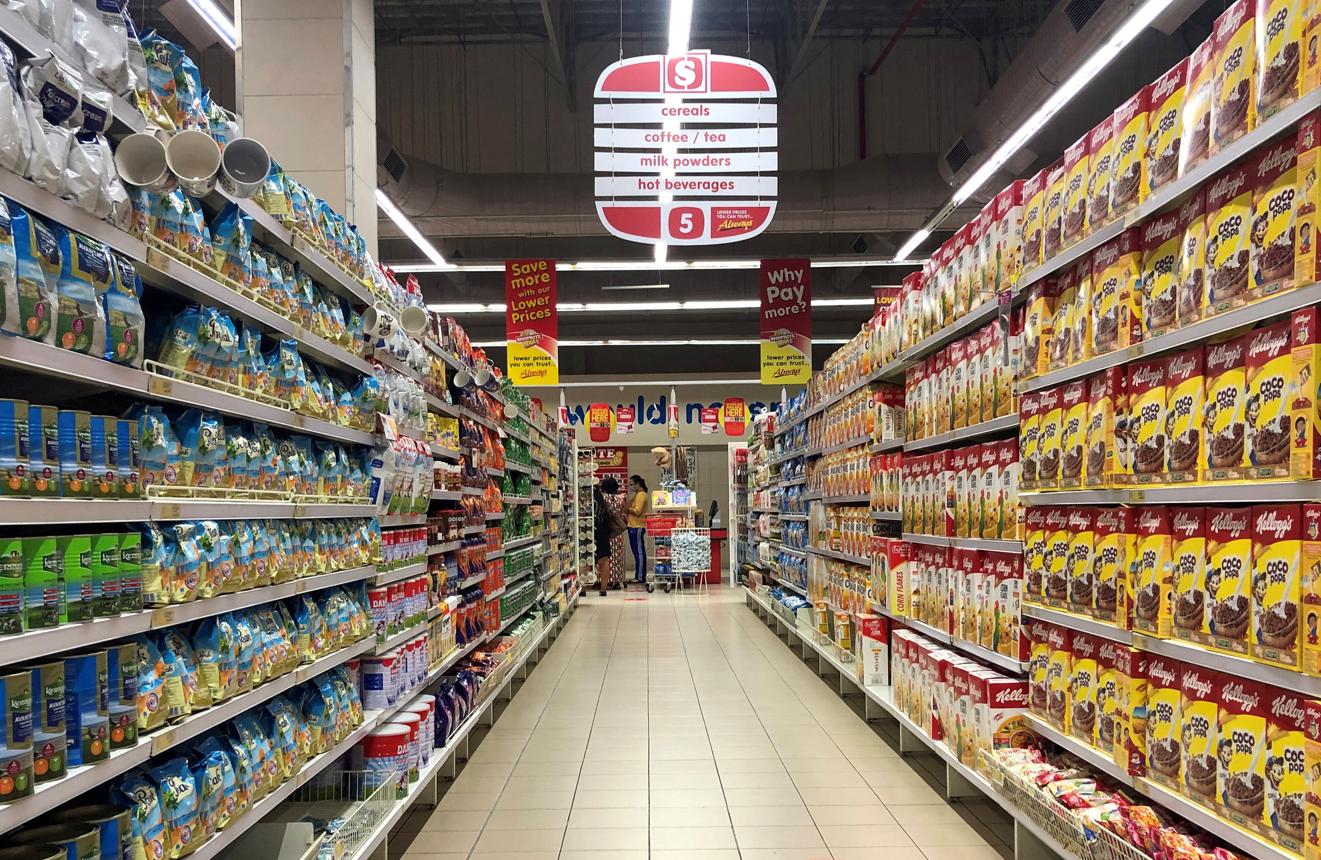
“Shoprite’s retail sales increased by 6.4% during the four months to October 2026, reflecting continued consumer activity in South Africa’s grocery market. Supermarkets RSA recorded 7.1% growth, while its Sixty60 online delivery platform expanded by 33.4%, highlighting the importance of convenience, digital purchasing and competition among retailers.”
Shoprite Sales Rise 6.4% as South Africa’s Grocery Market Reflects Changing Consumer Behaviour
South Africa’s grocery retail market continues to demonstrate resilience despite persistent pressure on household budgets, rising living costs and challenging economic conditions. Shoprite Group’s latest trading update, reporting a 6.4% increase in sales during the four months to October 2026, highlights the continuing importance of food retailing in the country’s consumer economy. The performance also provides insight into changing shopping behaviour, competitive pricing, digital retail expansion and the microeconomic forces influencing household purchasing decisions.
According to reporting published by Rand Desk on 6 November 2026, Shoprite’s Supermarkets RSA business achieved sales growth of 7.1%, while its Sixty60 online delivery platform recorded a substantial 33.4% increase. These developments demonstrate how established retailers are responding to evolving consumer preferences and competition within South Africa’s grocery market.
Consumer Demand and Household Spending
Grocery spending represents a fundamental component of household consumption in South Africa. Food, beverages and essential household products remain priorities even when consumers experience declining purchasing power.
However, increased retail sales do not necessarily indicate that households are purchasing substantially more goods. Sales growth can result from higher transaction volumes, increased prices, changes in product composition or a combination of these factors.
Shoprite’s reported internal selling price inflation of approximately 0.7% in its Supermarkets RSA segment provides an important indication of the relationship between prices and sales growth. When selling-price increases remain relatively modest, stronger sales growth may indicate that customers are purchasing more products or that the retailer is attracting additional transactions.
Nevertheless, the distinction between nominal sales growth and real consumption remains important. Economists assess retail performance using both sales values and physical volumes to determine whether consumers are genuinely increasing their consumption.
Competition in South Africa’s Grocery Industry
South Africa’s grocery industry features intense competition among established supermarket chains, discount retailers, independent stores and emerging online businesses.
Shoprite operates alongside competitors including Pick n Pay, Woolworths, Spar, Boxer and Food Lover’s Market. These businesses compete through pricing strategies, product availability, store locations, promotions, private-label products and customer service.
Competition can produce substantial benefits for consumers. When retailers compete aggressively for market share, they have incentives to improve operational efficiency, negotiate favourable supplier agreements and offer attractive prices.
However, competition does not always guarantee that every consumer receives identical benefits. Differences in geographic location, transport costs, product availability and purchasing power influence the prices consumers actually pay.
Lower-income households frequently place greater emphasis on affordability, while some higher-income consumers may prioritise convenience, product quality or premium offerings.
Price Sensitivity and Consumer Choice
Microeconomics examines how consumers respond when prices change.
The price elasticity of demand measures the responsiveness of quantity demanded to a change in price. For essential products such as maize meal, bread, cooking oil and basic household groceries, demand is generally less elastic than demand for luxury goods.
Consumers may reduce quantities slightly when prices increase, but they cannot eliminate their need for essential food products entirely.
Nevertheless, households can adjust their purchasing decisions in several ways.
They may change brands, purchase smaller packages, select cheaper alternatives, visit discount retailers or reduce spending on non-essential products.
These adjustments demonstrate substitution effects within consumer markets.
For example, a household facing higher prices for premium breakfast cereals may switch to a less expensive product. Similarly, consumers may purchase retailer-owned brands instead of nationally advertised products.
Consequently, supermarkets that offer competitive prices and reliable availability may attract customers from competing retailers.
Sixty60 and the Expansion of Digital Grocery Shopping
Shoprite’s reported 33.4% growth in Sixty60 sales highlights the growing importance of digital grocery shopping.
Online purchasing allows consumers to compare products, organise shopping lists and receive deliveries without travelling to physical stores.
Convenience becomes particularly valuable for households balancing employment, childcare, transport expenses and other responsibilities.
However, online grocery shopping also introduces additional economic considerations.
Delivery charges, minimum-order requirements and product availability can influence whether consumers prefer online purchasing or traditional supermarket visits.
Retailers must balance these customer benefits against operational expenses, including technology infrastructure, delivery personnel, warehouse management and last-mile logistics.
The growth of online grocery platforms also creates opportunities for improved market access. Consumers who face mobility challenges or limited access to large supermarkets may benefit from alternative purchasing channels where delivery services operate.
The Importance of Affordable Retailing
South African households continue to face difficult economic choices as essential expenditure competes with limited disposable income.
Transport, electricity, housing and food consume significant portions of household budgets. Consequently, grocery retailers operate in a market where affordability strongly influences consumer behaviour.
Shoprite’s discount-oriented retail operations and competitive pricing strategies demonstrate the importance of serving price-sensitive consumers.
Retailers that successfully manage costs can potentially maintain competitive prices while protecting profitability.
Operational efficiency becomes particularly important in this environment. Businesses must control inventory losses, improve distribution networks, negotiate supplier arrangements and manage labour costs.
Efficient supply chains can reduce the costs associated with moving products from manufacturers to stores.
These improvements may support lower retail prices while maintaining adequate margins.
Inflation and the Cost of Living
South Africa’s inflation environment remains an important influence on consumer purchasing decisions.
Statistics South Africa reported annual consumer inflation of 4.5% in September 2026, compared with 4.4% in August. Transport-related inflation remained a significant contributor, reflecting substantial increases in fuel prices.
Higher fuel prices affect grocery retailers through distribution expenses, refrigeration, logistics and supplier transportation.
Consequently, even when supermarket prices increase only moderately, retailers may experience pressure on their operating costs.
Consumers also face indirect effects because transportation expenses reduce the amount of money available for groceries and discretionary purchases.
This relationship illustrates how changes in one market can influence another through interconnected production and consumption decisions.
Retail Growth and Employment
Retailing is an important contributor to South Africa’s employment and economic activity.
Supermarkets employ workers in stores, distribution centres, administration, merchandising, logistics and customer service.
Growth in retail activity can support employment opportunities, although the relationship between sales growth and job creation depends on productivity, investment and operating strategies.
Increasing automation and digital ordering may improve efficiency while changing the types of jobs retailers require.
Online grocery platforms create demand for delivery drivers, warehouse workers and technology-related personnel.
However, employment benefits depend on whether businesses expand operations sufficiently to create additional positions.
Market Competition and Consumer Welfare
The competitive structure of South Africa’s grocery industry has implications for consumer welfare.
Competition encourages businesses to differentiate themselves through price, quality, convenience and product selection.
Consumers benefit when they have access to multiple retailers offering alternatives.
Nevertheless, competitive markets require conditions that allow businesses to enter, operate and expand without unnecessary barriers.
Market concentration, supplier relationships, distribution infrastructure and access to commercial property can influence competition.
Regulatory oversight therefore remains important in ensuring that market practices do not unfairly disadvantage consumers or competing businesses.
The Competition Commission plays a role in investigating potentially harmful market conduct and assessing competition-related concerns.
Outlook for South Africa’s Grocery Market
The grocery sector’s performance during 2026 demonstrates that essential consumer markets can remain active despite difficult economic conditions.
However, sustained growth will depend on household purchasing power, employment prospects, inflation and consumer confidence.
Retailers are likely to continue prioritising affordability, operational efficiency and digital convenience.
The expansion of online shopping may also intensify competition between traditional supermarkets and digital retail platforms.
For consumers, the most important considerations will remain accessible prices, product availability, convenience and the ability to stretch household budgets.
Conclusion
Shoprite’s reported 6.4% sales growth during the four months to October 2026 provides an important perspective on South Africa’s grocery market.
The performance highlights continuing consumer demand, the importance of competitive pricing and the rapid expansion of online grocery shopping.
From a microeconomic perspective, the development demonstrates how households respond to financial constraints, how retailers compete for customers and how businesses adapt their strategies to changing market conditions.
Although retail sales growth provides evidence of continued economic activity, the underlying welfare of consumers ultimately depends on affordability, real purchasing power and access to essential goods.
South Africa’s grocery market will therefore remain an important indicator of consumer behaviour, competition and the broader economic challenges facing households.



