




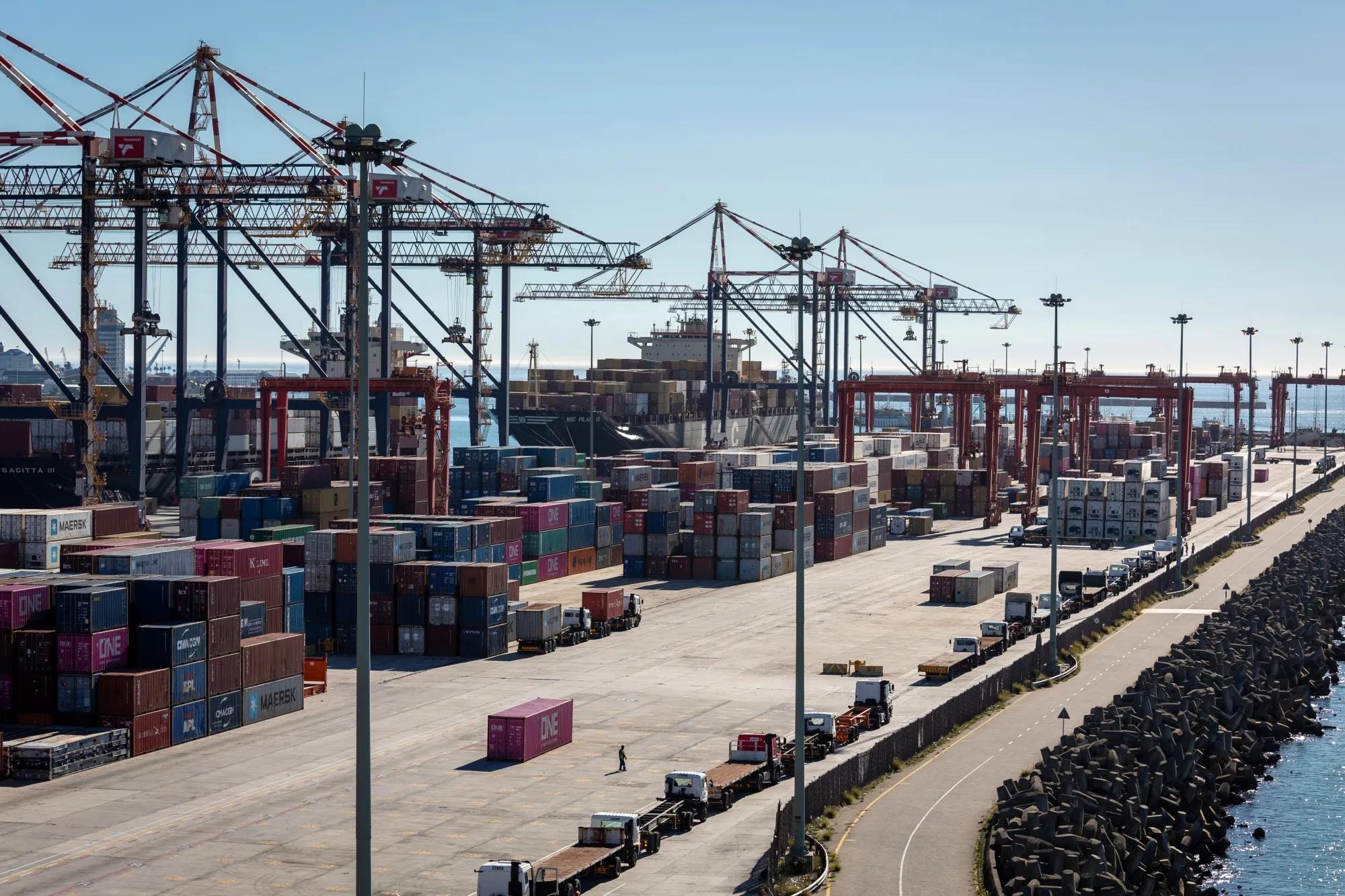
“South Africa is confronting a major trade-policy challenge after the United States announced its intention to withdraw the country’s African Growth and Opportunity Act (AGOA) benefits from 1 January 2027, prompting the government to pursue diplomatic engagement, targeted assistance and export-market diversification. The decision has intensified debate about industrial competitiveness, investment confidence, employment protection and the effectiveness of South Africa’s trade policy, particularly for exporters in agriculture, manufacturing and automotive-related industries.”
South Africa Faces Business Policy Pressure as US Moves to End AGOA Trade Preferences
South Africa is facing renewed pressure to strengthen its business policy framework following the United States government’s announcement that it intends to withdraw the country’s preferential trade benefits under the African Growth and Opportunity Act (AGOA) from 1 January 2027. The development has placed trade negotiations, industrial competitiveness, export diversification and employment protection at the centre of the country’s economic policy discussions.
The decision, announced in early November, represents a significant challenge for South African exporters that have benefited from preferential access to the American market. Consequently, government, industry organisations and businesses are increasingly focused on understanding the implications while pursuing alternative strategies to maintain competitiveness and protect economic opportunities.
Government Responds to US Trade Policy Decision
South Africa’s Department of Trade, Industry and Competition has acknowledged the proposed withdrawal and expressed concern about its potential consequences for businesses, workers and communities connected to AGOA-supported industries.
The government has indicated that it will continue engaging with American authorities while assessing the consequences for affected sectors. Trade, Industry and Competition Minister Parks Tau has emphasised that the decision does not represent the entirety of South Africa’s economic relationship with the United States.
According to the department, South Africa had made efforts to address American concerns through negotiations that began in 2025. Pretoria maintains that additional concessions were presented through appropriate channels while protecting constitutional responsibilities, biosecurity requirements and international trade obligations.
Nevertheless, Washington’s decision has introduced uncertainty into the business environment. Companies dependent on American customers must now evaluate whether their products will remain commercially competitive after preferential tariff treatment ends.
The government has also committed to supporting affected industries through targeted measures and encouraging businesses to identify alternative export destinations.
Understanding AGOA’s Importance to South African Businesses
AGOA was established in 2000 to strengthen economic cooperation between the United States and eligible African countries through preferential access to the American market.
For South African businesses, the programme created opportunities to export qualifying products while benefiting from reduced or eliminated import duties.
However, AGOA does not account for the entirety of South Africa’s trade with America.
The Department of Trade, Industry and Competition reported that approximately 89% of South African exports to the United States entered under ordinary World Trade Organisation most-favoured-nation terms in 2025. Approximately 10% entered under AGOA, representing about US$1.7 billion in exports.
These figures demonstrate that the programme remains important to particular industries despite accounting for a relatively limited share of total national exports.
The withdrawal could nevertheless have concentrated consequences because businesses and communities involved in preferential export markets often depend heavily on specific international customers.
Exporters Face Growing Commercial Uncertainty
The immediate challenge for affected exporters is determining how the removal of preferential trade benefits will influence product prices, profit margins and customer relationships.
Agricultural producers, including citrus growers, wine exporters and other food-related businesses, are among the industries examining possible consequences.
Manufacturers and maritime businesses also face questions about competitiveness and market access.
The Cape Chamber of Commerce and Industry has highlighted concerns involving Western Cape exporters, including agricultural producers and maritime manufacturing companies.
According to the organisation, exporters are assessing operational costs while seeking practical measures to maintain commercial relationships.
For some businesses, the additional duties could make South African products more expensive relative to competitors from countries enjoying different trade arrangements.
Consequently, exporters may need to renegotiate contracts, absorb additional costs, improve operational efficiency or explore alternative markets.
Employment Protection Becomes a Business Policy Priority
The possible employment consequences have intensified concerns about South Africa’s labour market.
Reuters reported that business organisations had warned of potential job losses following the proposed withdrawal. Business Unity South Africa indicated that employment losses could reach several thousand in affected sectors, although actual outcomes remain uncertain.
Such risks are particularly significant in agricultural production, where export demand supports seasonal employment, logistics operations, processing facilities and related services.
A reduction in export orders could affect more than individual businesses. Suppliers, transport companies, packaging manufacturers and communities dependent on export-related employment could experience indirect consequences.
Government therefore faces a policy challenge involving the protection of employment without creating inefficient or unsustainable assistance programmes.
Targeted support, export promotion, workforce development and improved market access could become important elements of the response.
Government Pursues Export Diversification
South Africa’s response increasingly emphasises export-market diversification.
The government has identified opportunities across the African Continental Free Trade Area, the Southern African Development Community, the European Union, the United Kingdom, India, China, ASEAN and other international markets.
The strategy seeks to reduce excessive dependence on particular destinations while strengthening South Africa’s participation in regional and international value chains.
However, diversification requires more than identifying new customers.
Businesses must satisfy different regulatory requirements, develop commercial relationships, understand consumer preferences and adapt products to market conditions.
For agricultural exporters, additional considerations include phytosanitary requirements, transportation infrastructure, storage facilities and shipping schedules.
Manufacturers must also evaluate certification standards, distribution arrangements and production costs.
As a result, export diversification should be considered a long-term business policy objective rather than an immediate replacement for existing American customers.
Industrial Policy and Domestic Competitiveness
The AGOA development has also renewed attention on South Africa’s domestic business environment.
International trade opportunities are influenced by local production costs, infrastructure reliability, logistics performance, regulatory efficiency and investment conditions.
Businesses operating in South Africa continue to evaluate electricity availability, transportation networks, port efficiency and administrative requirements when making investment decisions.
Improving these conditions could strengthen competitiveness across multiple export markets.
The government therefore faces an opportunity to connect international trade policy with domestic industrial reforms.
Greater investment in infrastructure, skills development, manufacturing capacity and export-oriented production could improve the ability of South African companies to compete internationally.
Similarly, strengthening support for small and medium-sized enterprises could enable more businesses to participate in export markets.
Investment Confidence and Business Sentiment
Trade-policy uncertainty can influence business investment decisions even before new tariffs take effect.
Companies considering expansion may postpone capital expenditure while evaluating future market access conditions.
International investors may also examine the stability of South Africa’s trade relationships, policy direction and commercial environment.
Business Unity South Africa has warned that the AGOA development could negatively affect business sentiment.
Nevertheless, the government has emphasised that the broader economic relationship between South Africa and the United States remains substantial.
Bilateral trade reached approximately US$28.8 billion in 2025, while more than 600 American companies operated in South Africa, supporting approximately 134,600 jobs, according to the Department of Trade, Industry and Competition.
These relationships demonstrate why both governments have economic incentives to maintain constructive engagement.
Strengthening South Africa’s Policy Response
South Africa’s response will require coordination between government departments, business organisations, exporters, labour representatives and investment institutions.
A practical approach would involve several priorities.
First, government should maintain diplomatic engagement with Washington to explore opportunities for resolving outstanding trade concerns.
Second, businesses should receive clear guidance concerning applicable tariffs, customs procedures and available support mechanisms.
Third, targeted assistance should prioritise companies with demonstrable exposure and viable strategies for maintaining employment and production.
Fourth, export promotion programmes should help businesses identify customers in alternative markets and navigate international regulatory requirements.
Finally, improvements in domestic infrastructure and regulatory efficiency should remain central to the country’s competitiveness strategy.
These measures could strengthen resilience while supporting broader economic development objectives.
The African Continental Free Trade Area Opportunity
The African Continental Free Trade Area represents an important opportunity for South African businesses seeking additional markets.
Regional trade could support manufacturing expansion, agricultural processing, logistics development and cross-border investment.
For companies facing increased costs in American markets, African customers may offer opportunities to diversify revenue streams.
However, businesses must still address practical challenges involving transport infrastructure, customs procedures, financing and regulatory differences.
Strengthening regional trade therefore requires continued cooperation between governments and private-sector organisations.
South Africa’s established industrial capabilities, financial services sector and logistics networks could contribute to expanding regional value chains.
Business Policy Outlook
As South Africa approaches the proposed January 2027 AGOA withdrawal date, business policy is likely to remain focused on trade diplomacy, industrial competitiveness, employment protection and export diversification.
The government has an opportunity to strengthen its response by providing predictable policy guidance and maintaining effective consultation with affected industries.
Businesses, meanwhile, must assess their exposure, review commercial agreements and identify opportunities to improve efficiency and market diversification.
The outcome will depend partly on negotiations between South Africa and the United States, but domestic policy choices will also influence the country’s economic resilience.
Although AGOA represents only a portion of South Africa’s overall international trade, its withdrawal could produce concentrated difficulties for exporters and communities dependent on preferential access.
The broader policy challenge is therefore to protect vulnerable industries while strengthening the foundations of sustainable economic growth.
South Africa’s ability to combine constructive international engagement with domestic reforms, investment promotion and market diversification will be important in determining how businesses respond to this changing trade environment.



