




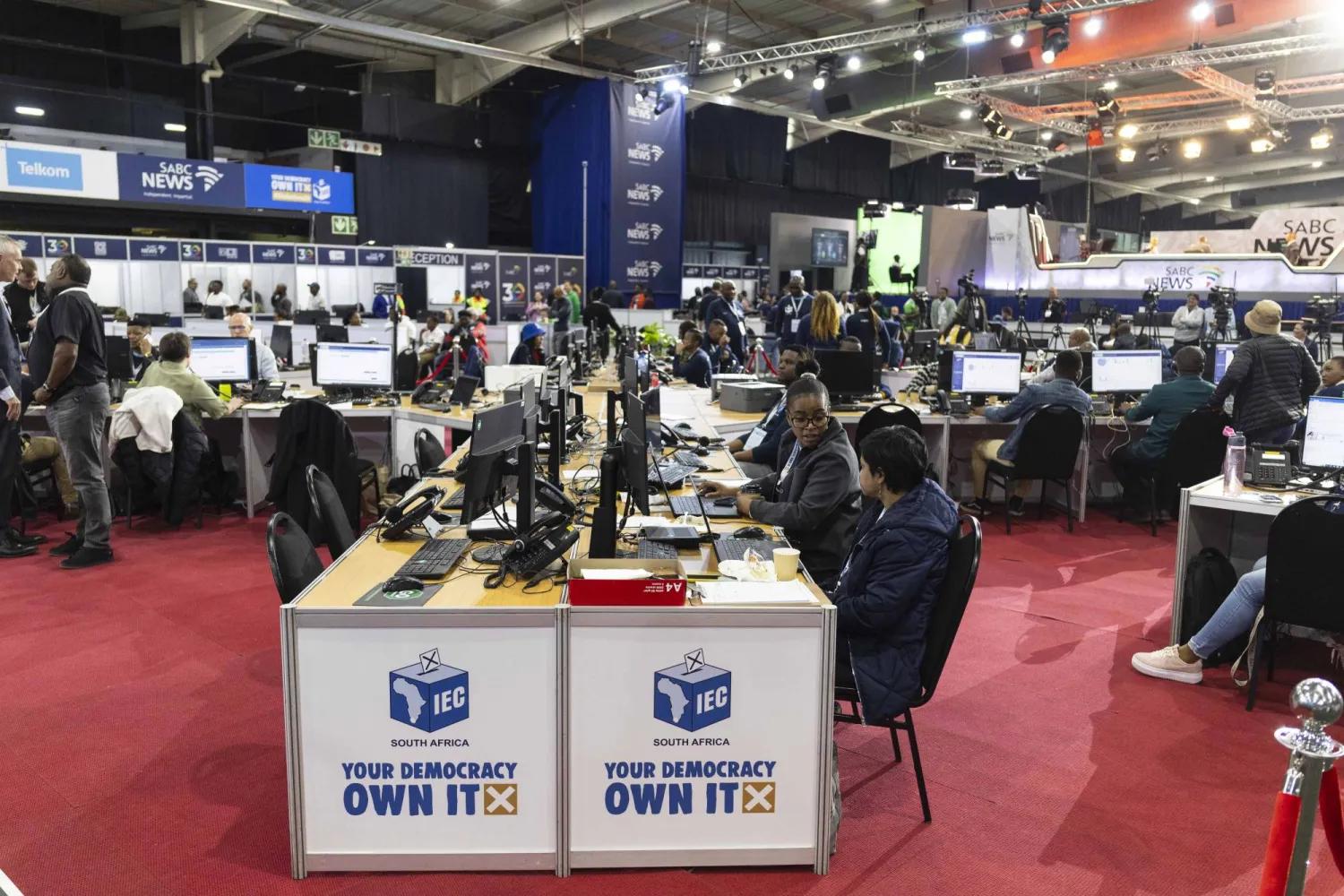
“South Africa’s Electoral Commission is preparing to announce the final results of the 2026 Local Government Elections on Sunday evening, following a closely contested election marked by significant opposition gains, declining ANC support and numerous objections to electoral outcomes. The final announcement is expected to establish the political foundation for coalition negotiations across municipalities, while recounts and disputes over results continue to attract attention from political parties and voters.”
IEC Faces Election Objections as South Africa Awaits Final 2026 Municipal Results
South Africa’s 2026 Local Government Elections have entered a decisive stage, with the Independent Electoral Commission (IEC) preparing to announce the final results following days of counting, objections, recounts and intense political negotiations. The electoral process has exposed significant changes in voter behaviour, declining support for the African National Congress (ANC), growing opposition influence and the increasing importance of coalition politics in municipal governance.
The final results announcement, scheduled for Sunday evening, November 8, represents an important milestone for South African democracy. However, the political consequences of the elections will extend well beyond the declaration of winning candidates, as parties prepare to negotiate governing arrangements in municipalities where no political organisation has secured an outright majority.
Election Results Enter Their Final Stage
The IEC has been working to complete the counting, verification and reconciliation of results across South Africa’s municipalities. The commission’s responsibilities include ensuring that voting outcomes are accurately recorded, objections are appropriately considered and final results reflect the ballots cast by eligible voters.
According to government announcements, the IEC intends to publish the final election results on Sunday evening. The process has attracted considerable attention from political parties, electoral observers, journalists and citizens seeking clarity about the composition of their municipal councils.
Although the majority of voting and counting operations have progressed, outstanding objections and requests for recounts have complicated the finalisation process in several areas.
The commission has emphasised that electoral disputes must be handled through established procedures. This approach is intended to protect the credibility of the electoral system and ensure that legitimate concerns receive appropriate consideration.
The final results will establish the number of seats allocated to political parties and independent candidates in municipal councils. Those allocations will determine which political organisations can govern independently and which must negotiate partnerships.
Objections and Recounts Raise Political Tensions
Electoral objections have become a major feature of the final results process.
The IEC reported receiving numerous objections from political parties and other participants who questioned aspects of the counting and verification procedures. Some objections have resulted in recounts, while others have been rejected or withdrawn.
The disputes have attracted particular attention in Gauteng and KwaZulu-Natal, where political competition has been intense and the distribution of council seats could determine governing arrangements.
The African National Congress has raised concerns about alleged discrepancies in certain Gauteng election results. Its provincial leadership indicated that formal objections had been submitted to the IEC, requesting investigations into the affected outcomes.
The commission has maintained that objections are evaluated according to electoral legislation and procedural requirements. Where recounts are warranted, the appropriate processes are undertaken before final results are confirmed.
In KwaZulu-Natal, the IEC has also addressed concerns raised by political parties regarding election outcomes. Electoral officials have distinguished between formal objections that meet statutory requirements and other complaints that do not necessarily prevent the declaration of results.
These distinctions are important because the election process must balance the right of political parties to challenge disputed outcomes with the need to complete the electoral process within a reasonable timeframe.
The handling of objections is therefore central to maintaining public confidence in the commission.
ANC Faces Continued Electoral Pressure
One of the most significant political developments emerging from the 2026 elections is the continued decline in support for the ANC.
The party, which historically dominated South African electoral politics, has faced growing dissatisfaction among voters over municipal service delivery, unemployment, corruption and governance challenges.
Preliminary results indicated that the ANC remained the largest political organisation nationally but experienced substantial losses compared with previous municipal elections.
The outcome reinforces the political consequences of the party’s declining electoral dominance following its loss of an outright parliamentary majority in the 2024 national elections.
The ANC has acknowledged the need to examine its electoral performance and identify the factors contributing to voter dissatisfaction.
Party leadership has indicated that the organisation will review its campaign, governance record and approach to coalition negotiations.
The electoral results also raise questions about the party’s future leadership and political strategy ahead of the next national elections scheduled for 2029.
Nevertheless, the ANC continues to possess an extensive organisational network and remains an important participant in municipal politics.
Its ability to negotiate coalition arrangements could determine whether it retains influence in several councils despite losing electoral support.
Opposition Parties Strengthen Their Position
The 2026 municipal elections have also demonstrated the growing influence of opposition political organisations.
The Democratic Alliance (DA), uMkhonto weSizwe Party (MK Party), ActionSA and other parties have emerged as important participants in the evolving municipal political landscape.
The DA has sought to consolidate its electoral support, particularly in major urban centres. Its campaign emphasised governance, municipal performance and service delivery.
Meanwhile, the MK Party has demonstrated considerable electoral strength in KwaZulu-Natal, placing itself in a potentially influential position in municipal coalition negotiations.
ActionSA has also reported electoral gains in selected municipalities, reflecting its efforts to establish a broader political presence.
The Economic Freedom Fighters (EFF), however, have faced electoral setbacks compared with their previous municipal performance. Party leadership has indicated that it intends to review the results and assess its political strategy.
These developments illustrate the increasingly fragmented nature of South African politics.
Rather than a political system dominated by one organisation, the country is moving towards a more competitive environment in which multiple parties can influence municipal governance.
Coalition Negotiations Become the Next Political Battleground
The final election results are expected to trigger extensive coalition negotiations across South Africa.
Municipal councils require governing arrangements that can command sufficient support to elect mayors, establish executive structures and approve budgets.
Where no party secures an outright majority, coalition agreements become necessary.
The negotiations are likely to involve discussions about executive positions, policy priorities, service delivery commitments and mechanisms for resolving disagreements between coalition partners.
Johannesburg, Tshwane and eThekwini remain among the most politically significant municipalities because of their economic importance, population size and complex governance challenges.
The distribution of council seats in these metropolitan areas could determine which parties lead municipal administrations over the coming years.
Political organisations have already indicated that they are considering potential partnerships.
The DA has expressed willingness to engage parties with compatible governance principles, while the ANC has indicated that it is prepared to participate in coalition discussions.
The MK Party has also positioned itself for negotiations in municipalities where its electoral performance gives it substantial bargaining power.
However, coalition negotiations may prove difficult because political parties have competing ideological positions and differing priorities.
The success of these arrangements will depend on whether participating organisations can establish stable agreements that support effective administration.
Service Delivery Remains Central to Voter Expectations
The election results have reinforced the importance of municipal service delivery in South African politics.
Water shortages, electricity interruptions, deteriorating roads, inadequate sanitation, waste management failures and public safety concerns have featured prominently in voter dissatisfaction.
For many residents, the performance of municipal government directly affects daily life.
Consequently, voters increasingly expect political parties to demonstrate measurable improvements rather than relying exclusively on historical loyalties or campaign promises.
The election outcome provides an opportunity for newly elected councillors and municipal administrations to address these concerns.
Municipal governments will face pressure to improve infrastructure maintenance, strengthen financial management and ensure that essential services reach communities consistently.
Coalition administrations will also need to develop clear mechanisms for accountability.
Where political disagreements prevent councils from approving budgets or implementing programmes, residents may continue to experience service delivery challenges.
The effectiveness of the new municipal leadership will therefore become an important measure of the election’s practical significance.
IEC Credibility and Public Confidence
The electoral process has also highlighted the importance of maintaining public confidence in South Africa’s democratic institutions.
The IEC has played a central role in organising voting, overseeing counting operations and managing electoral disputes.
Although objections and operational difficulties have attracted attention, the commission’s ability to investigate complaints transparently remains essential to protecting electoral legitimacy.
Political parties have a responsibility to use established legal procedures when challenging results.
Likewise, electoral authorities must communicate clearly about recounts, objections and verification processes.
Public confidence depends not only on accurate results but also on the perception that electoral procedures are fair, impartial and accessible.
The commission’s final announcement will therefore be closely scrutinised by political organisations and citizens.
Implications for South Africa’s Democratic Future
The 2026 Local Government Elections represent an important moment in South Africa’s democratic development.
The results demonstrate that electoral competition is becoming increasingly diverse, with voters willing to reconsider longstanding political loyalties.
The declining dominance of the ANC, stronger opposition participation and growing reliance on coalition governments suggest that municipal politics is entering a new phase.
This transformation could strengthen democratic accountability if political organisations respond effectively to public expectations.
However, it also presents challenges.
Coalition instability, political disagreements and administrative weaknesses could undermine municipal performance if parties prioritise political bargaining over public service delivery.
The coming months will therefore be critical in determining whether the electoral changes translate into improved governance.
Conclusion
South Africa’s 2026 Local Government Elections have produced a significant political turning point.
As the IEC prepares to announce the final results, attention is shifting from voting and counting towards coalition negotiations, municipal leadership and the implementation of governance priorities.
Electoral objections and recounts remain important elements of the finalisation process, demonstrating the need for transparent and credible electoral administration.
The decline in ANC support, strengthening opposition parties and increasing fragmentation of municipal councils underline the changing character of South African politics.
Ultimately, the success of the elections will be measured not only by the accuracy of the final results but also by whether the new municipal administrations deliver meaningful improvements in the lives of residents.
South Africans will now look to their elected representatives to transform electoral mandates into effective governance, accountable leadership and reliable municipal services.
The final results announcement on November 8 will mark the conclusion of the voting process, but it will simultaneously begin a new chapter in the country’s local democratic politics.



