




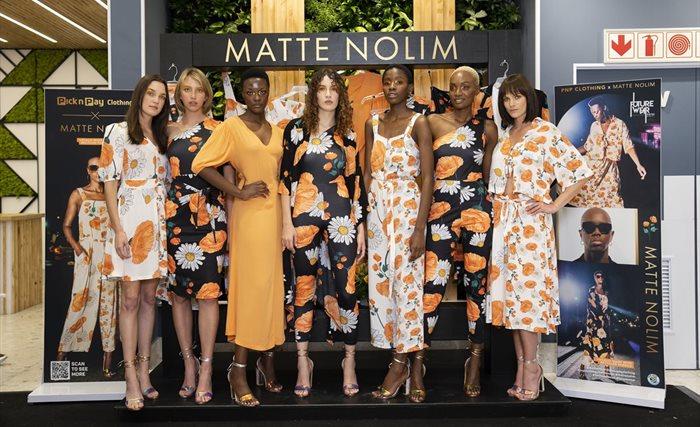
“South African designer Silungile Gcaba has launched Flowers in My Dreams, a six-piece collection created in collaboration with Pick n Pay Clothing through its Futurewear initiative, which helps emerging designers translate their creativity into commercially viable retail products. Reported on 16 October 2026, the collaboration highlights how artistic inspiration, practical garment design and access to a national retail network can create new opportunities for local fashion talent.”
South African fashion design enters a new chapter as Silungile Gcaba takes her creativity into mainstream retail
South Africa’s fashion industry continues to explore new ways of connecting creative talent with commercial opportunities. One recent example is the debut of Flowers in My Dreams, a six-piece clothing collection developed by designer Silungile Gcaba in collaboration with Pick n Pay Clothing through its Futurewear initiative. The collection, reported on 16 October 2026, illustrates how local designers can transform personal artistic experiences into clothing designed for a broader consumer market.
The collaboration is significant because fashion design involves much more than creating attractive garments. Designers must understand fabric selection, construction, production requirements, customer preferences, pricing considerations and retail distribution. For emerging creatives, gaining experience in these areas can be essential to building sustainable businesses.
Gcaba’s journey also demonstrates how creative careers can develop through unconventional educational routes. Her experience offers an example of the opportunities that can emerge when artistic skills are combined with formal training, mentorship and access to commercial fashion networks.
From an early passion for drawing to professional fashion design
According to the published report, Gcaba grew up between KwaZulu-Natal and Pretoria. She discovered her aptitude for drawing while at school and participated in drawing competitions, developing an early interest in creative expression.
Although she wanted to pursue fashion design after completing secondary school, the opportunity did not immediately materialise because she lacked the fine arts background required for her preferred route.
She subsequently enrolled at the University of KwaZulu-Natal, where studying psychology gave her the opportunity to take fine arts as a second major. She later pursued formal fashion design studies at the Durban University of Technology.
This educational journey demonstrates that professional designers can develop their creative abilities through different academic pathways. Fine arts can help students understand colour, composition, visual communication and artistic interpretation, while fashion training introduces the technical processes needed to translate ideas into wearable products.
Psychology can also offer useful perspectives on human behaviour, emotion and personal identity. Although these disciplines serve different purposes, their combination can support a designer’s ability to understand how people respond to clothing and the stories associated with it.
Gcaba subsequently developed experience creating commissioned occasion wear. Her work in this area required her to translate individual clients’ preferences into garments suited to particular events.
However, designing for individual customers differs considerably from producing a collection intended for a national retail audience.
Understanding the commercial side of fashion
The Futurewear initiative, developed by Pick n Pay Clothing and designer Gavin Rajah, seeks to help emerging creatives understand how their artistic abilities can be developed into products suitable for commercial retail.
For designers accustomed to producing individual garments, this shift can introduce a different set of considerations.
A commissioned dress might be created around one customer’s measurements, preferences and budget. A retail collection, by contrast, must appeal to a wider audience while meeting production, quality and commercial requirements.
Designers need to consider how garments will fit different customers, whether fabrics are suitable for repeated wear, how designs can be manufactured consistently and whether the finished products meet the expectations of the intended market.
The process also involves decisions about silhouettes, colour palettes, garment construction and the relationship between creativity and practicality.
For Gcaba, the collaboration provided an opportunity to explore these considerations in a real retail environment. The report describes the experience as eye-opening, particularly in showing her that fashion design extends beyond creating a beautiful outfit for a once-off occasion.
This distinction matters for South African designers seeking to establish lasting businesses. Creative talent can attract attention, but the ability to produce consistent, commercially appropriate garments is also important for long-term growth.
The creative inspiration behind Flowers in My Dreams
The collection’s title, Flowers in My Dreams, reflects Gcaba’s interest in fantasy, art and the quiet beauty of everyday life.
Its inspiration comes from an imagined peaceful morning: waking up, entering a garden and enjoying a cup of coffee or tea while surrounded by flowers.
Rather than treating clothing simply as a functional product, Gcaba sought to translate this atmosphere into garments that could evoke a particular feeling.
The concept illustrates how designers use personal experiences and imagined environments to establish a collection’s identity. A successful design concept can guide choices involving colour, fabric, print, shape and styling, creating a relationship between individual pieces.
For this collection, floral imagery plays an important role. Gcaba drew inspiration from watercolour flowers, where colours soften, blend and gradually transition into one another.
The original concept involved a brighter palette. However, the colours became more muted during development, producing a calmer visual direction.
That adjustment highlights an important aspect of fashion design: creative ideas often change as designers work with the practical possibilities of materials and colour combinations. The final result does not always match the first sketch, and experimentation can lead to a stronger collection.
The muted floral aesthetic also supports the collection’s emphasis on calmness and everyday wearability. Instead of relying exclusively on dramatic visual statements, the concept connects artistic expression with garments that customers can imagine incorporating into their lives.
Designing for everyday South African consumers
A central lesson from Gcaba’s experience is the importance of understanding the intended customer.
Designers working in luxury or bespoke fashion may focus on individual expression, distinctive silhouettes and highly personalised garments. Mainstream retail requires a different balance between originality and accessibility.
Customers generally want clothing that suits their lifestyles, personal tastes and practical needs. Designers must therefore consider how garments might be worn, how easily they can be combined with existing wardrobes and whether their visual appeal remains relevant beyond a single occasion.
Gcaba’s collection brings an artistic perspective into this commercial context. Its six pieces seek to translate a distinctive creative concept into garments that customers can purchase and wear.
For South African fashion, this relationship between design and everyday life is particularly important. Local designers work within a market that includes customers with different budgets, cultural influences, personal styles and expectations.
Commercial collaborations can give designers an opportunity to understand these differences while retaining elements of their individual identities.
Nevertheless, the success of a retail collection cannot be established solely by its launch. Sales performance, customer feedback, production consistency and the ability to maintain a recognisable design identity over time would provide further evidence of its commercial impact.
The importance of retail access for emerging designers
One of the most notable aspects of the Gcaba collaboration is its connection to an established retailer.
Independent designers frequently face barriers when attempting to expand beyond small-scale production. These can include limited access to manufacturing facilities, insufficient working capital, distribution challenges and difficulty reaching customers outside their immediate networks.
A retail partnership can help address some of these obstacles by introducing designers to established production and distribution processes.
According to the report, Flowers in My Dreams is available in 44 Pick n Pay Clothing stores and can also be ordered through Pick n Pay asap!.
This distribution provides a route for customers to encounter the work of an emerging South African designer within a familiar shopping environment.
However, wider availability also brings responsibilities. Designers must understand product quality, supply requirements and the importance of delivering a consistent customer experience. Retail partners, in turn, need collections that fit their commercial strategy and customer expectations.
The collaboration therefore represents more than a creative showcase. It offers a practical example of how a designer’s work can move from the drawing board into a retail setting.
Connecting local design with South Africa’s fashion future
Gcaba’s achievement comes at a time when South African Fashion Week is preparing its Autumn/Winter 2027 collections programme, scheduled for 20–25 October 2026 in Johannesburg. The programme includes established designers, emerging talent, craftsmanship and initiatives intended to strengthen the fashion industry’s skills pipeline.
The two developments represent different but complementary aspects of fashion development.
Retail collaborations can help emerging designers understand commercial production and reach customers. Fashion weeks can provide visibility, showcase design innovation and connect creative professionals with potential industry partners.
South African Fashion Week’s announced programme also includes a Pierre Cardin Young Designers Award initiative involving fashion students from participating South African colleges. The reported opportunity includes a workshop led by the Paris design team and a potential three-month internship at the Pierre Cardin Design Studio for the winning designer.
Such initiatives underline the importance of developing talent through education, practical experience and industry exposure.
For young designers, access to experienced professionals can help bridge the gap between classroom learning and the demands of a working fashion business. It can also provide insight into the technical and commercial decisions that influence whether a creative idea becomes a viable product.
Challenges and opportunities for the local fashion industry
Despite these opportunities, South African designers still need to navigate the challenges of turning creative work into sustainable businesses.
Production costs, access to skilled workers, material availability, competition and changing consumer spending patterns can affect how independent labels develop.
Emerging designers must also establish a clear identity in a crowded market. Original concepts can help a brand stand out, but consistency, product quality and a strong understanding of customers are equally important.
Collaborations with retailers may provide valuable exposure, although their longer-term value depends on whether designers can build on the experience and continue developing their businesses.
There is also an opportunity to strengthen connections between fashion education, local manufacturing and retail. More structured relationships among these areas could help students gain practical experience and give designers a clearer understanding of the production process.
At the same time, the industry must recognise that commercial growth should not eliminate creative individuality. Designers such as Gcaba bring personal experiences and artistic perspectives that distinguish their work. Successful partnerships should create room for those perspectives while acknowledging the realities of commercial production.
Conclusion: turning creativity into opportunity
Silungile Gcaba’s Flowers in My Dreams collection offers a timely example of the evolving relationship between fashion design and commercial retail in South Africa.
Her journey from drawing and fine arts to professional fashion training illustrates the value of developing creative abilities through different educational experiences. Her collaboration with Pick n Pay Clothing demonstrates how an emerging designer can gain exposure to the commercial processes involved in bringing a collection to market.
The collection’s artistic inspiration, floral watercolour influence and muted palette also show how personal ideas can be translated into clothing intended for everyday customers.
Its availability through 44 stores and the retailer’s online ordering channel provides a practical route to market, although its longer-term commercial performance remains to be established.
More broadly, the development highlights the importance of initiatives that connect designers with mentorship, production knowledge and retail opportunities.
As South African Fashion Week prepares to showcase its Autumn/Winter 2027 collections, the industry has an opportunity to continue building relationships between emerging creatives and established fashion businesses.
The future of South African fashion will depend not only on originality and visual impact but also on the ability to develop skills, create quality products and build sustainable enterprises. Gcaba’s debut provides an encouraging example of how these elements can come together, helping local design move beyond individual artistic expression and into the wider marketplace.



