




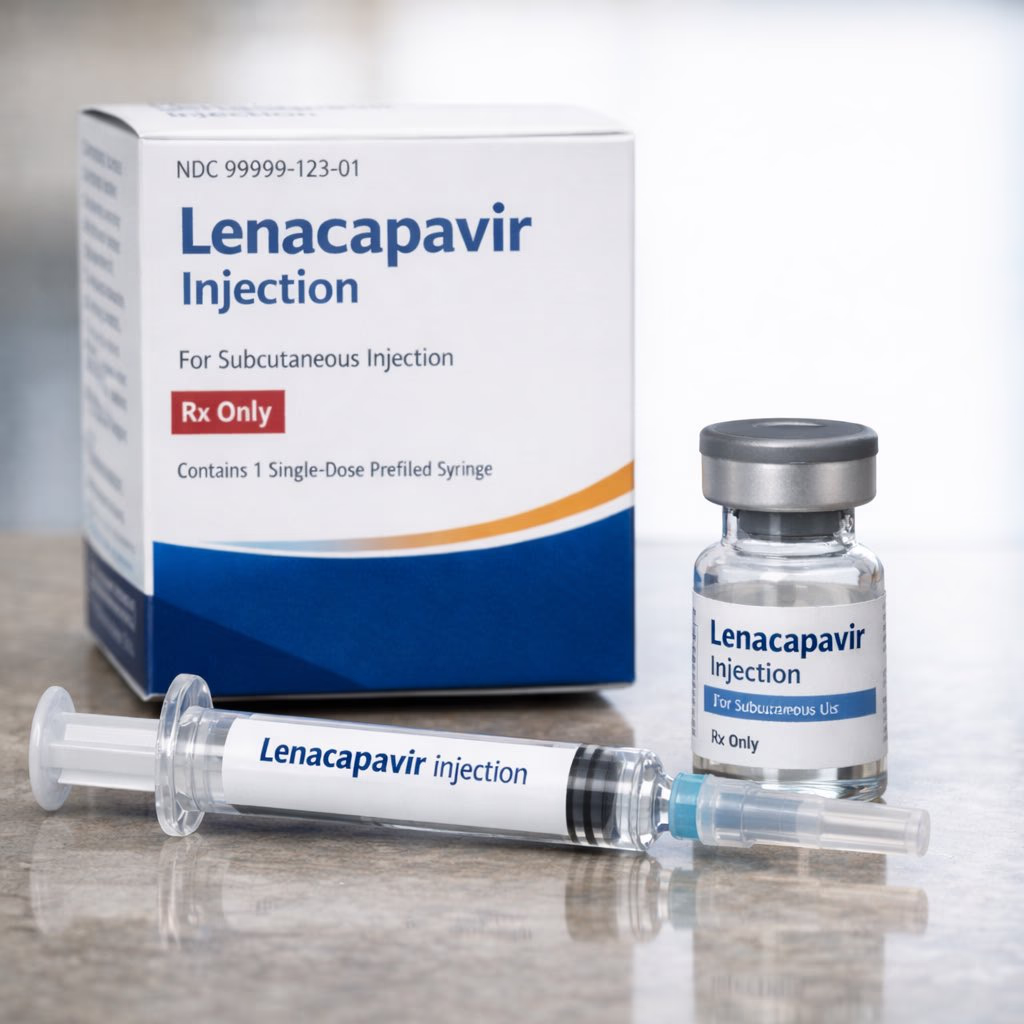
“South Africa’s Department of Health has successfully rolled out Lenacapavir, a revolutionary twice‑yearly injectable HIV prevention drug, reaching more than 55,000 individuals across six provinces since June 2026. The program prioritizes pregnant and breastfeeding mothers, significantly reducing risks of mother‑to‑child transmission and strengthening national HIV prevention efforts.”
South Africa has once again demonstrated its leadership in the global fight against HIV/AIDS. With one of the highest HIV prevalence rates worldwide, the country has consistently sought innovative solutions to curb transmission. The latest milestone—the rollout of Lenacapavir, a twice‑yearly injectable HIV prevention drug—marks a historic advancement in public health. Since its launch in June 2026, more than 55,000 individuals have been initiated on Lenacapavir across six provinces, a feat achieved in just three months.
Background on Lenacapavir
Lenacapavir is a long‑acting antiretroviral drug administered every six months as pre‑exposure prophylaxis (PrEP). Unlike traditional daily oral PrEP regimens, which often suffer from poor adherence, Lenacapavir reduces the burden of daily pill‑taking. Clinical trials confirmed its safety and efficacy, leading to approval by the South African Health Products Regulatory Authority (SAHPRA) earlier this year.
Rollout Milestones
- Launch Date: June 5, 2026, officiated by President Cyril Ramaphosa and Health Minister Dr. Aaron Motsoaledi.
- Facilities: 360 public health facilities across 24 districts in six provinces.
- Initiations: 55,123 individuals by September 7, 2026.
- Demographics: 71% female, with a majority being pregnant and breastfeeding mothers.
- Provincial Leaders: Gauteng leads with 26,357 initiations, followed by KwaZulu‑Natal (11,941), North West (4,479), Western Cape (4,446), Mpumalanga (4,294), and Eastern Cape (3,606).
Public Health Impact
The rollout addresses several critical challenges in HIV prevention:
- Adherence: Daily oral PrEP often fails due to poor adherence; Lenacapavir’s twice‑yearly injection eliminates this barrier.
- Accessibility: Expansion to both rural and urban facilities ensures equitable access.
- Maternal Health: Prioritizing pregnant and breastfeeding mothers reduces mother‑to‑child transmission risks.
- Community Trust: Public awareness campaigns are building confidence in prevention drugs, countering hesitancy.
Government Strategy
The government has set ambitious targets:
- 1 million initiations by end of 2027.
- 3 million initiations within three years. This strategy aligns with South Africa’s broader HIV prevention goals and global commitments to end AIDS as a public health threat by 2030.
Expert Perspectives
Public health experts have hailed the rollout as a “game‑changer.” Dr. Thandiwe Mokoena, a leading HIV researcher, emphasized that Lenacapavir’s long‑acting nature “removes one of the biggest barriers in HIV prevention—daily adherence.” Community health workers in KwaZulu‑Natal reported increased trust among mothers, who see the injection as a safer, more manageable option compared to pills.
Challenges Ahead
Despite the success, challenges remain:
- Supply Chain: Ensuring consistent availability across all provinces.
- Awareness: Expanding education campaigns to rural communities.
- Equity: Guaranteeing access for marginalized groups, including men and adolescents.
- Funding: Sustaining the program requires continued government and donor support.
Global Significance
South Africa’s rollout of Lenacapavir is being closely watched by global health organizations. The World Health Organization (WHO) has praised the initiative, noting that it could serve as a model for other high‑prevalence countries. If scaled successfully, Lenacapavir could revolutionize HIV prevention worldwide.
Conclusion
The initiation of more than 55,000 individuals on Lenacapavir in just three months represents a landmark achievement in South Africa’s public health journey. By prioritizing vulnerable populations, especially pregnant and breastfeeding mothers, the country is making significant strides toward ending HIV transmission. With ambitious targets set for the coming years, South Africa is not only protecting its citizens but also setting a global standard in HIV prevention.



