




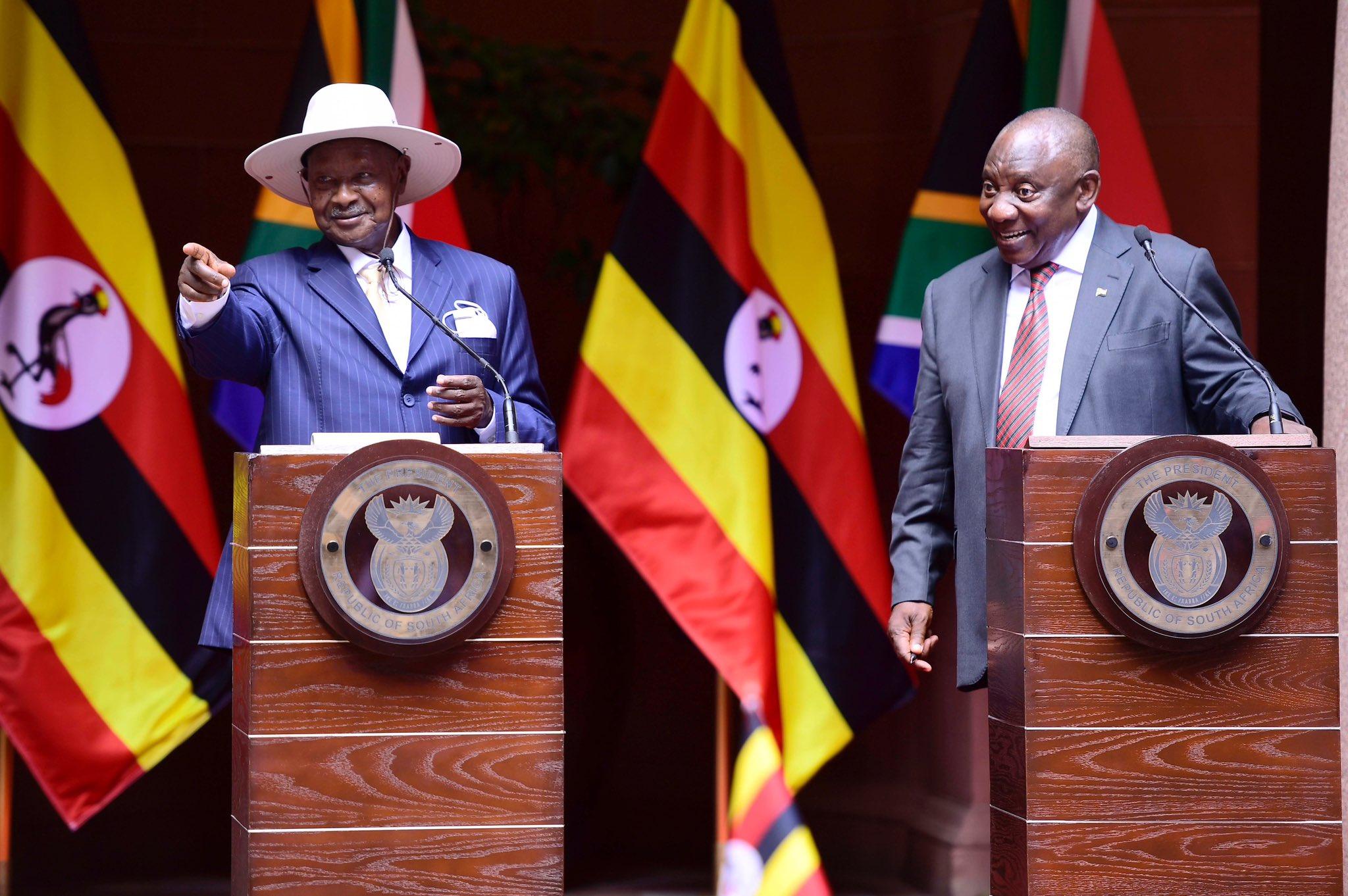
“South Africa and Uganda are preparing to strengthen their bilateral relationship through the Third Session of the South Africa–Uganda Joint Commission for Cooperation, scheduled for 20 October 2026 in Pretoria, under the co-chairmanship of South African International Relations and Cooperation Minister Ronald Lamola and Uganda’s Foreign Affairs Minister, Ambassador Adonia Ayebare. The agenda covers diplomacy, defence and security, trade, investment, agriculture, education, health, tourism, infrastructure and cooperation on African and international affairs, providing an opportunity to turn longstanding diplomatic ties into practical development initiatives.”
South Africa and Uganda Seek Stronger Diplomatic and Economic Partnership as Joint Commission Convenes in Pretoria
PRETORIA, South Africa — 19 October 2026
South Africa and Uganda are preparing for an important diplomatic engagement aimed at strengthening cooperation across economic, political, security and social development priorities. The Third Session of the South Africa–Uganda Joint Commission for Cooperation (JCC), scheduled for Tuesday, 20 October 2026, in Pretoria, represents a significant opportunity for the two African countries to review their relationship and identify practical ways to expand collaboration.
According to South Africa’s Department of International Relations and Cooperation (DIRCO), South African Minister Ronald Lamola and Uganda’s Minister of Foreign Affairs, Ambassador Adonia Ayebare, will co-chair the session. The meeting is expected to address a wide range of shared interests, including trade and investment, defence and security, agriculture, science and technology, education, healthcare, tourism, transport, infrastructure and social development.
The discussions also provide an opportunity for both governments to exchange views on regional, continental and international developments. These include peace and security in Africa, implementation of the African Union’s Agenda 2063, the African Continental Free Trade Area (AfCFTA), African Union institutional reforms and cooperation within multilateral organisations.
Although the meeting’s eventual outcomes remain to be confirmed, its agenda illustrates the importance both countries attach to structured diplomatic engagement and practical cooperation.
Strengthening bilateral relations through diplomacy
South Africa and Uganda have established diplomatic relations that provide a foundation for political dialogue, commercial exchanges and cooperation on regional affairs. The Joint Commission mechanism offers the governments a formal setting in which to assess existing commitments, identify obstacles and establish priorities for further engagement.
Unlike a meeting focused on a single policy issue, a joint commission can bring several government departments and areas of cooperation into one coordinated process. This approach enables officials to examine how diplomacy, commerce, security and development intersect.
For South Africa, engagement with Uganda forms part of its broader commitment to strengthening relationships across the African continent. As one of the continent’s major industrial economies, South Africa has opportunities to expand commercial partnerships with East African markets while developing stronger political relationships with regional partners.
Uganda, meanwhile, can use bilateral engagement to explore opportunities for investment, technical cooperation, skills development and access to additional markets.
However, diplomatic meetings alone do not guarantee stronger relations. Their success depends on the quality of agreements reached, the resources committed to implementation and the ability of public institutions to deliver measurable results.
The Pretoria meeting therefore matters not simply because senior ministers will meet, but because it creates an opportunity to move from general expressions of goodwill towards specific projects and accountable commitments.
Trade and investment at the centre of cooperation
Economic cooperation is likely to remain one of the most consequential areas of the bilateral relationship.
South Africa has established industrial, financial, retail, manufacturing and telecommunications capabilities that could support commercial partnerships with Ugandan businesses. Uganda, in turn, offers opportunities in agriculture, tourism, infrastructure, services and other areas of economic development.
Closer engagement could help businesses in both countries understand market conditions, identify prospective partners and navigate regulatory requirements. It could also encourage companies to explore joint ventures, distribution arrangements, technology partnerships and investment opportunities.
Nevertheless, expanding bilateral trade requires more than political encouragement. Businesses need reliable information about tariffs, customs procedures, standards, taxation, transport costs and applicable regulations. Unclear requirements or costly administrative procedures can discourage investment even when commercial opportunities exist.
Consequently, practical discussions about removing trade barriers, improving business information and facilitating contacts between companies could produce more lasting benefits than broad commitments without implementation plans.
The AfCFTA provides an important continental framework for this work. By seeking to reduce barriers to trade among participating African countries, the agreement aims to encourage regional production, investment and the development of cross-border value chains.
South Africa and Uganda can explore how their bilateral relationship might complement that broader objective. However, any particular tariff concession, new investment agreement or commercial commitment should be confirmed through official announcements rather than assumed to have resulted from the forthcoming meeting.
Agriculture and food security
Agriculture represents another potential area of cooperation, given its relationship with employment, food security, rural development and industrial production.
Uganda’s agricultural economy creates opportunities for partnerships involving production, processing, storage, logistics and market access. South Africa’s experience in commercial agriculture, food processing, agricultural technology and distribution could provide areas for technical exchange and business collaboration.
Both countries could benefit from discussions on improving agricultural productivity, strengthening supply chains and supporting the movement of agricultural products between markets.
Food security is particularly important because agricultural disruptions can affect household incomes, consumer prices and national economic stability. Better storage facilities, more efficient transport systems and investment in processing capacity can help reduce losses and improve the value farmers receive for their produce.
Nevertheless, cooperation must take account of different agricultural conditions, production systems, environmental pressures and regulatory requirements. Plant and animal health controls, product certification and food safety standards remain essential to protecting consumers and producers.
The Joint Commission could provide a forum for identifying specific areas in which agricultural agencies, research institutions and private businesses might collaborate. Any future initiative would need clear objectives, financing arrangements and measurable benefits for farmers and consumers.
Defence, security and regional stability
Defence and security are also included in the official agenda, reflecting the importance of cooperation in addressing challenges that extend beyond national borders.
African countries face a range of security concerns, including organised crime, trafficking, terrorism in affected regions, cyber threats and instability arising from armed conflicts. These challenges can have consequences for trade, migration, investment and humanitarian assistance.
South Africa and Uganda can use diplomatic channels to exchange perspectives on regional security developments and identify areas where cooperation would be mutually beneficial.
Such engagement may include policy dialogue, appropriate information-sharing arrangements, professional training and coordination through regional or continental institutions. Any specific operational agreement, however, would require confirmation from the governments concerned.
Regional stability also depends on addressing underlying economic and social pressures. Conflict prevention, employment opportunities, effective institutions and access to essential services can contribute to more resilient communities.
For both countries, security cooperation must therefore be considered alongside development, governance and regional diplomacy.
The broader objective is to strengthen the capacity of African governments to address shared challenges through lawful, coordinated and accountable action.
Education, science and technological development
The inclusion of education, science and technology on the Joint Commission’s agenda creates opportunities to explore cooperation beyond traditional diplomatic and commercial relationships.
Universities, technical colleges, research institutions and businesses can help countries develop the skills needed to support industrial growth and respond to technological change.
Potential areas for collaboration include academic exchanges, joint research, technical training, digital innovation and partnerships between educational institutions. These are possible avenues for cooperation, not confirmed agreements from the forthcoming session.
Science and technology partnerships can also support agriculture, healthcare, manufacturing and infrastructure development. For example, research collaboration may help institutions address practical challenges in food production, disease prevention, renewable energy or digital services.
However, sustainable partnerships require adequate funding, institutional coordination and clearly defined research priorities. Exchanges must also be accessible to students and researchers who can contribute to long-term development.
By placing education and technological cooperation within the diplomatic agenda, South Africa and Uganda have an opportunity to consider how knowledge and skills can support broader economic objectives.
Healthcare, tourism and social development
Healthcare and social development form additional components of the announced programme. These areas matter because diplomatic partnerships are ultimately judged partly by their effects on people’s everyday lives.
Cooperation between health institutions could support professional exchanges, research collaboration, public-health preparedness and the sharing of technical experience. The exact scope of any initiative would depend on decisions made by the relevant authorities.
Tourism also offers potential opportunities. South Africa and Uganda possess different but complementary tourism attractions, including wildlife, natural landscapes, cultural experiences and urban destinations.
Closer cooperation between tourism bodies and private businesses could help improve destination marketing, travel information and connections between tourism operators. However, greater visitor numbers would depend on practical considerations such as air connectivity, affordability, visa requirements and the quality of tourism services.
Transport and infrastructure development are equally important. Efficient transport links and reliable infrastructure can reduce business costs, improve access to markets and support regional integration.
Both countries therefore have reasons to examine whether cooperation in these sectors can produce projects that are commercially viable, socially beneficial and environmentally responsible.
African Union priorities and continental cooperation
The Joint Commission’s agenda extends beyond bilateral affairs to include Agenda 2063, African Union institutional reform and the AfCFTA.
Agenda 2063 is the African Union’s long-term development framework for a more integrated, prosperous and peaceful continent. Its priorities include economic transformation, regional integration, stronger institutions and improved living standards.
South Africa and Uganda can contribute to these objectives by coordinating positions on shared challenges and supporting practical regional cooperation.
The AfCFTA similarly offers a framework for developing stronger commercial relationships across Africa. Yet its potential depends on implementation, including better border procedures, infrastructure, regulatory coordination and access to reliable trade information.
African Union reform discussions also concern the continent’s ability to respond effectively to political, economic and security challenges. Cooperation between member states can help strengthen collective positions in international institutions, although national interests and policy priorities do not always coincide.
The Pretoria session offers a forum for examining these issues through the perspectives of both governments.
International relations in a changing global environment
The meeting takes place at a time when African countries are navigating a complex international environment shaped by geopolitical competition, changing trade relationships, regional conflicts and debates about global governance.
For countries such as South Africa and Uganda, maintaining constructive relationships with multiple international partners can help diversify economic opportunities and strengthen diplomatic influence.
However, effective foreign policy requires balancing international cooperation with domestic priorities. Agreements must support national development, respect sovereignty and comply with applicable law.
Stronger bilateral relations can also give African countries additional opportunities to coordinate their positions on issues affecting the continent. Nevertheless, meaningful influence depends on sustained collaboration, credible institutions and the ability to implement agreed policies.
The Joint Commission is one mechanism through which the two countries can pursue those objectives.
Implementation will determine the meeting’s significance
The main test of the Pretoria meeting will be what follows the discussions.
A successful process should ideally identify clear priorities, assign responsibility to relevant institutions and establish realistic timelines for implementation. Where new projects are proposed, governments and partners will need to clarify their funding, oversight and expected outcomes.
Businesses and civil society will also need accessible information about any initiatives that affect them. Transparent communication can help companies identify opportunities while allowing citizens to understand how cooperation serves the public interest.
Regular progress reviews would make it easier to determine whether commitments are producing tangible results. Without such follow-through, even well-intentioned diplomatic declarations risk having limited practical impact.
It is also important to distinguish between issues listed for discussion and agreements formally concluded. As of 19 October, the official announcement confirms the planned ministerial session and its broad agenda; it does not establish that new trade, security or investment agreements have already been signed.
Conclusion
South Africa and Uganda’s forthcoming Joint Commission for Cooperation represents an important opportunity to strengthen diplomatic engagement and explore shared development priorities.
The announced agenda encompasses economic cooperation, agriculture, defence and security, education, technology, healthcare, tourism, infrastructure and African multilateral affairs. These areas offer potential benefits, provided that discussions lead to practical initiatives supported by resources, accountable institutions and measurable objectives.
For South Africa, the engagement reinforces the importance of sustained partnerships across Africa. For Uganda, it provides an opportunity to deepen relations with a major continental economy and explore areas of mutual interest.
Ultimately, the value of the Pretoria meeting will be determined not by the breadth of its agenda alone, but by the quality of the decisions taken and the progress achieved afterwards.
The official announcement establishes the diplomatic framework. The next step is to see which concrete outcomes the two governments confirm following the 20 October session.



