




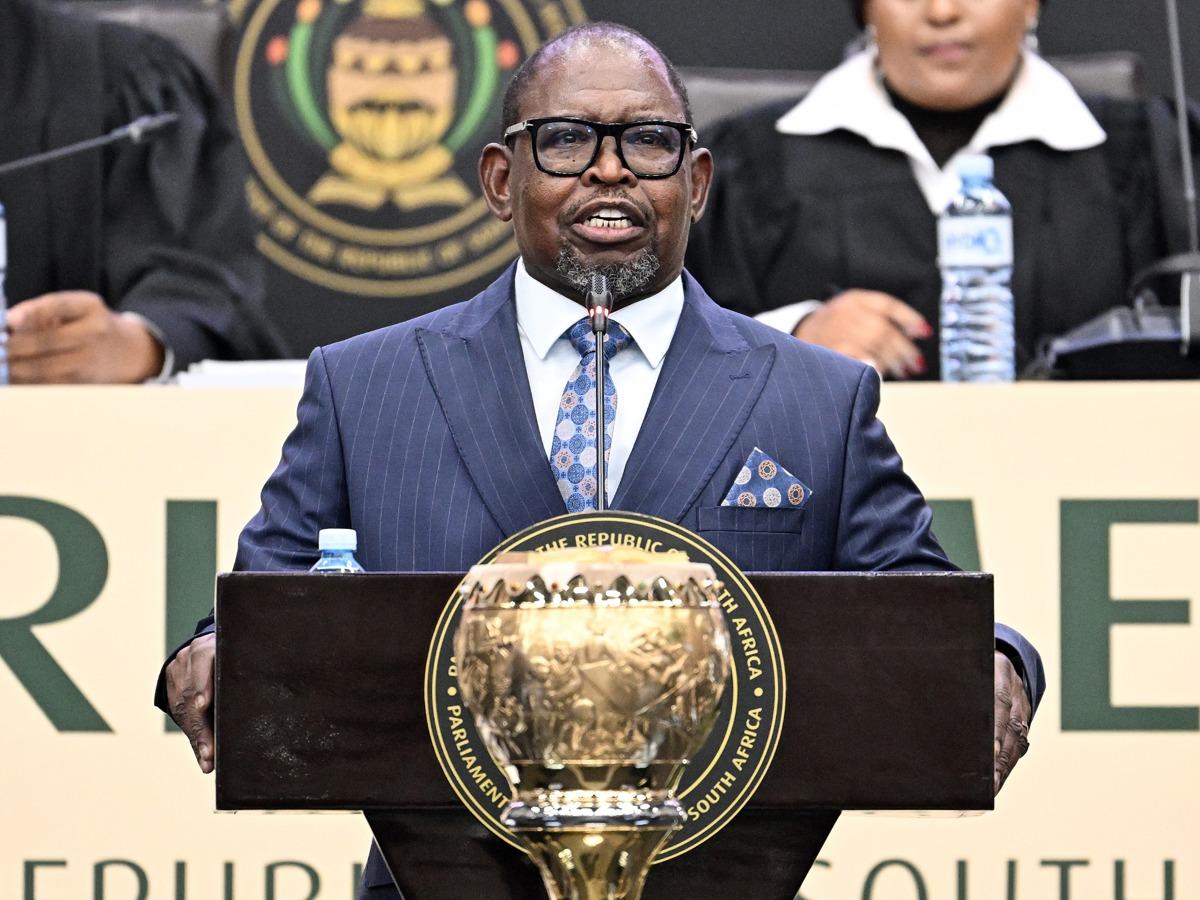
”South Africa’s economic policy outlook is in focus on 19 October as investors and policymakers await Finance Minister Enoch Godongwana’s Medium-Term Budget Policy Statement, scheduled for 21 October, alongside September inflation figures. The statement is expected to clarify the government’s fiscal direction, including its approach to public spending, borrowing, debt sustainability and economic growth, while new inflation data will help assess cost-of-living pressures.”
South Africa is entering an important week for economic policymaking as the government prepares to present its latest assessment of public finances, economic growth and spending priorities. The Medium-Term Budget Policy Statement (MTBPS), scheduled for Wednesday, 21 October 2026, is expected to provide a clearer picture of how the administration intends to manage fiscal pressures while supporting economic recovery and improving public services.
The policy announcement comes at a time when investors, businesses and households are closely watching government borrowing, inflation, employment prospects and the cost of living. According to Reuters reporting published on 19 October, the South African rand strengthened slightly in early trading as financial markets anticipated the budget statement and new inflation figures.
Although currency movements provide one indication of investor sentiment, the wider importance of the budget statement lies in the decisions it may signal about South Africa’s economic future. Government must determine how to finance essential services, maintain infrastructure, manage debt repayments and encourage private investment without placing unsustainable pressure on public finances.
Government prepares to outline its fiscal priorities
Finance Minister Enoch Godongwana is expected to use the MTBPS to update Parliament on the government’s fiscal outlook and economic policy framework. Parliament’s official announcement confirms that the statement will be delivered to a joint sitting of the National Assembly on 21 October at 14:00.
The MTBPS is an important stage in South Africa’s budget process because it provides updated economic forecasts, outlines adjustments to departmental budgets and allows lawmakers to scrutinise government expenditure. It also accompanies the Adjustments Appropriation Bill, which addresses changes to approved spending.
For policymakers, the central challenge is to ensure that public money supports national development while maintaining a credible path for government finances. South Africa needs sustained investment in transport, electricity, water infrastructure, healthcare, education and public safety. At the same time, these needs must be balanced against revenue available from taxes and other government sources.
A budget that expands spending without adequate financing could increase borrowing requirements and debt-servicing costs. Conversely, excessive spending restraint could weaken service delivery, delay infrastructure projects and reduce the government’s ability to respond to unemployment and poverty.
The forthcoming statement therefore matters because it may reveal how the government intends to manage these competing priorities during the remainder of the financial year and over the medium term.
Debt management remains a major policy concern
Public debt is a central issue in South Africa’s economic policy debate. When government borrows money, it must allocate part of its future revenue to interest payments and debt repayment. If these obligations rise too quickly, fewer resources remain available for essential public services and investment.
However, borrowing is not automatically harmful. Public investment can support economic growth when funding is directed towards productive infrastructure, effective public institutions and projects that improve the economy’s long-term capacity.
The policy challenge is to ensure that borrowing supports development rather than simply covering persistent inefficiencies or expenditure that produces limited public value.
Reporting published by the Sunday Times on 17 October cited analysts who anticipated a potentially more favourable budget outlook, pointing to stronger revenue collection and lower debt-related pressures. The article reported an estimate from Bank of America that revenue for the 2026/27 financial year could exceed earlier budget assumptions by R70 billion, driven largely by stronger corporate tax collections in gold and precious metals. This is an analyst estimate, not a confirmed government revenue outcome.
If higher revenue is confirmed, the government could have more room to reduce borrowing, strengthen its fiscal position or fund selected priorities. Nevertheless, policymakers would need to establish whether the additional revenue is sustainable. Higher receipts linked to commodity prices or unusually strong corporate profits may not continue indefinitely.
A responsible fiscal strategy would therefore distinguish between temporary revenue gains and improvements that can support spending commitments over several years.
Inflation could complicate economic recovery
Inflation is another important factor shaping the policy environment. Statistics South Africa is expected to release September consumer inflation data on 21 October, according to Reuters. The figures will provide fresh evidence of how quickly consumer prices are changing and whether households face increasing pressure from essential expenses.
Inflation affects more than the price of food and transport. It also influences interest-rate decisions, business investment, household borrowing costs and government financing conditions.
When inflation accelerates, the South African Reserve Bank may face pressure to maintain or tighten monetary policy, depending on the underlying causes and the inflation outlook. Higher interest rates can help contain price increases, but they can also make borrowing more expensive for households and businesses.
The government’s fiscal decisions can influence this environment. Spending that is carefully targeted towards infrastructure and productive capacity may support growth over time. However, policies that add demand without addressing supply constraints could complicate efforts to control inflation.
Transport costs, fuel prices and exchange-rate movements are among the factors that can affect prices in an import-dependent economy. Reuters reported that economists were watching transport-related pressures and developments in the rand as they assessed the inflation outlook.
For ordinary South Africans, the practical test will be whether economic policy helps stabilise essential expenses while creating better opportunities for employment and income growth.
Economic growth must translate into jobs
South Africa’s fiscal policy debate cannot be separated from the need to create employment and encourage businesses to expand.
Government can influence the business environment through infrastructure investment, regulation, taxation, education and skills development. However, public spending alone cannot guarantee strong economic growth. Sustainable job creation also depends on whether companies can invest confidently, access reliable infrastructure, reach customers and compete effectively.
The medium-term budget statement will consequently be assessed against more than its debt and deficit projections. Businesses will want to understand whether government plans support investment, improve public infrastructure and reduce obstacles to productive activity.
Small and medium-sized enterprises are particularly important because they can create jobs across retail, manufacturing, agriculture, tourism, technology and professional services. Yet these businesses can be vulnerable to expensive credit, weak consumer demand, unreliable services and regulatory uncertainty.
Fiscal policy that protects essential infrastructure investment while improving the effectiveness of public expenditure could help establish better conditions for these firms.
Nevertheless, the budget statement should not be treated as a substitute for broader structural reforms. Improvements in municipal services, electricity supply, freight transport, education and public administration require implementation beyond the annual budget process.
Public services will test the government’s spending choices
South African citizens will judge fiscal policy partly through its effects on daily life. The quality of schools, hospitals, roads, public transport, water systems and municipal services often matters more directly to communities than changes in headline economic indicators.
The government must therefore demonstrate that its financial plans can translate into measurable improvements in service delivery.
Higher allocations do not automatically produce better outcomes. Departments must spend appropriated funds effectively, procurement processes must be transparent, and projects must be monitored to ensure that public money achieves its intended purpose.
Weak financial controls and delayed projects can reduce the impact of public investment even when budgets appear adequate. Strengthening accountability is therefore an essential part of responsible fiscal management.
Parliament has a significant role in this process. Its committees scrutinise departmental expenditure and assess whether government institutions are meeting their responsibilities. The MTBPS also gives legislators an opportunity to examine revised forecasts and question the assumptions underpinning spending decisions.
For communities, the most meaningful result would be a closer connection between public expenditure and visible improvements in living conditions. This includes functioning infrastructure, reliable basic services and public institutions capable of responding to local needs.
Investor confidence and the rand
Financial markets are paying attention to the forthcoming announcement because government fiscal decisions can influence expectations about South Africa’s borrowing requirements and financial stability.
Reuters reported that the rand traded at approximately R16.4475 against the US dollar at 05:48 GMT on 19 October, representing a gain of around 0.2% from its previous close. The currency’s movement reflected a broader market focus on upcoming economic data and the budget statement.
A stronger currency can reduce the domestic cost of some imported goods, although the effect depends on pricing, contracts and other economic conditions. A weaker currency can increase the cost of imports, including fuel and certain production inputs.
Exchange rates are influenced by many factors, including international interest rates, commodity prices, global risk appetite and geopolitical developments. It would therefore be incorrect to attribute a daily movement in the rand solely to the government’s anticipated policy announcement.
Even so, credible fiscal planning can contribute to investor confidence over time. Investors generally want evidence that government can manage its finances, maintain predictable policy and support an environment in which businesses can operate productively.
The challenge for policymakers is to build confidence without overlooking the needs of households and communities that depend on effective public services.
Parliament’s oversight will be important
The budget statement is not simply a financial presentation. It is also part of South Africa’s democratic accountability process.
Parliament must evaluate the assumptions behind the government’s forecasts, question spending priorities and examine whether public resources are being used effectively. These responsibilities are especially important when competing demands make it difficult to fund every programme at the level requested.
Lawmakers will need to consider the credibility of revenue estimates, the affordability of expenditure commitments and the implications of debt-service costs for future budgets.
Public scrutiny also matters. Citizens, civil society organisations, economists, businesses and labour representatives can assess whether fiscal priorities reflect the country’s development needs.
A transparent policy process should make it possible to understand not only how much government intends to spend, but also what outcomes that spending is expected to achieve and how those outcomes will be measured.
The MTBPS can help clarify the government’s direction, but its effectiveness will ultimately depend on the quality of the decisions that follow and the ability of institutions to implement them.
What South Africans should watch next
The most important indicators following the statement will include updated growth projections, the budget deficit, the public debt trajectory, revenue estimates and spending plans.
The September inflation release will provide an additional measure of economic conditions, while subsequent monetary-policy decisions and market reactions will help show how the outlook is evolving.
However, one announcement cannot resolve all the challenges confronting the economy. Job creation, infrastructure development, public-sector performance and household affordability require sustained attention and consistent implementation.
The government will also need to distinguish between immediate pressures and long-term priorities. Measures that offer short-term relief may be necessary, but they should be designed alongside policies that improve productivity, strengthen public services and support sustainable employment.
Conclusion: A decisive week for South African economic policy
As of 19 October 2026, South Africa’s immediate policy focus is the forthcoming Medium-Term Budget Policy Statement and the economic data expected alongside it. The announcement offers the government an opportunity to explain how it intends to balance fiscal discipline, economic growth, investment and the delivery of essential public services.
The most credible outcome would combine realistic financial forecasts with clear spending priorities, transparent oversight and a practical strategy for improving economic opportunities. Stronger revenue collection could provide some relief, but lasting progress will depend on sustainable growth, effective expenditure and disciplined management of public finances.
For households, businesses and investors, the key question is not simply whether the budget outlook improves. It is whether the policies announced this week can help create a more stable economy in which public money delivers better services, businesses can grow and more South Africans gain access to meaningful employment.



