




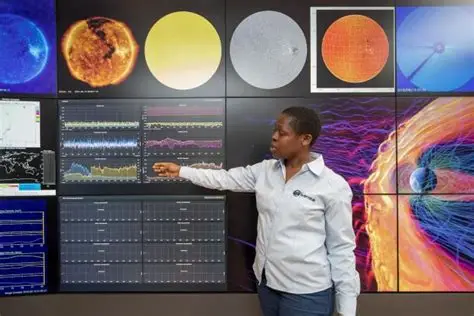
“South Africa presented its strategic Growth and Sustainability Plan at the UN Committee on the Peaceful Uses of Outer Space, emphasizing investments in Earth observation, satellite engineering, robotics, and advanced manufacturing. The initiative aims to elevate South Africa’s role in global space exploration while driving socio‑economic development through technology transfer and innovation.”
South Africa has taken a decisive step toward redefining its role in the global space ecosystem. On June 16, 2026, during the 69th session of the United Nations Committee on the Peaceful Uses of Outer Space (COPUOS), the Republic of South Africa delivered a landmark statement outlining its Growth and Sustainability Plan (2025–2030). This plan seeks to position the country as an intermediate space‑faring nation by the end of the decade, a bold ambition that reflects both national priorities and international aspirations.
Strategic Vision
At the heart of the plan is the Space Infrastructure Hub, a multi‑faceted program designed to strengthen capabilities in Earth observation, satellite engineering, ground systems, data infrastructure, and emerging space technologies. These investments are not only about scientific exploration but also about industrial competitiveness, digital innovation, and human capital development. South Africa’s government emphasized that space innovation must serve broader societal goals, including disaster management, food security, and national security.
International Cooperation
South Africa’s statement highlighted the importance of international partnerships. By leveraging cooperation agreements, the country aims to integrate itself more deeply into global exploration missions. This includes collaboration with agencies such as the European Space Agency (ESA) and the United Nations Office for Outer Space Affairs (UNOOSA). Such partnerships are expected to accelerate knowledge transfer, enhance sovereign technological capabilities, and open opportunities for African leadership in space governance.
Robotics and Advanced Manufacturing
A particularly notable aspect of the plan is the emphasis on space robotics and autonomous systems, spearheaded by the Council for Scientific and Industrial Research (CSIR). These technologies will not only support future exploration missions but also have terrestrial applications in mining, infrastructure management, and hazardous‑environment operations. This dual‑use approach underscores the government’s commitment to ensuring that investments in space yield tangible economic benefits at home.
Socio‑Economic Impact
The Growth and Sustainability Plan is framed as a driver of industrial development and job creation. By cultivating advanced engineering skills and fostering innovation spillovers, South Africa hopes to stimulate sectors beyond aerospace, including manufacturing, digital industries, and education. The plan also aligns with the country’s broader STEM development agenda, ensuring that young scientists and engineers are equipped to contribute to both national and global space initiatives.
Challenges Ahead
Despite the optimism, challenges remain. Funding constraints, infrastructure gaps, and the need for sustained political commitment could hinder progress. Analysts caution that South Africa must balance its ambitions with pragmatic resource allocation, ensuring that the pursuit of space leadership does not come at the expense of pressing domestic priorities.
Conclusion
South Africa’s declaration at COPUOS signals a new era of ambition and responsibility. By 2030, the country aims to stand as an intermediate space‑faring nation, contributing meaningfully to exploration missions, technological innovation, and global governance. If successful, this initiative will not only elevate South Africa’s standing in the international space community but also deliver transformative benefits for its economy and society.



