




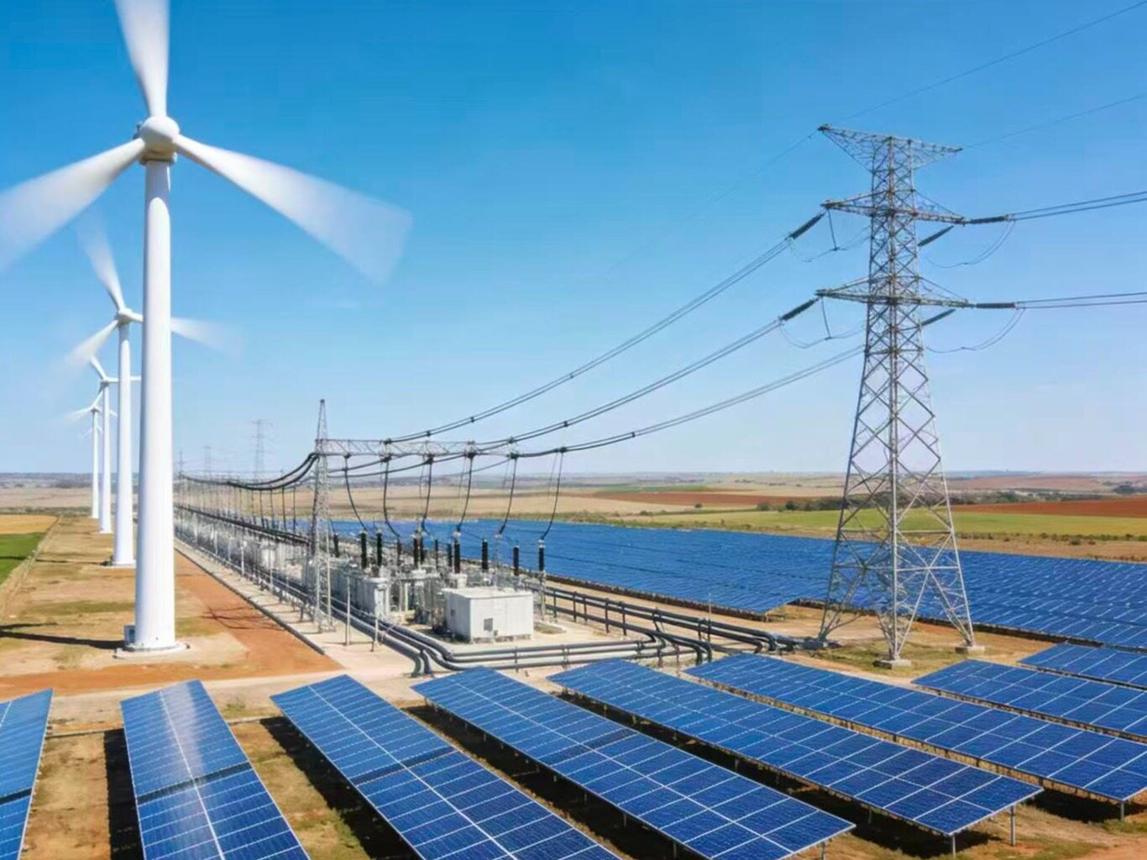
“South Africa has delayed the final request for proposals for the first phase of its Independent Transmission Projects programme until the second quarter of 2027, extending the timetable for private-sector participation in the expansion of the national electricity grid. The delay is intended to allow further consultation with seven pre-qualified bidders and strengthen the programme’s financing and contractual structure, while the government says the transmission expansion remains essential for connecting new generation and supporting energy security and economic growth.”
South Africa’s transmission expansion enters another phase of consultation
South Africa’s plans to bring private investment into the national electricity transmission network have been pushed back, with government moving the target date for the final request for proposals to the second quarter of 2027. The Department of Electricity and Energy and National Treasury announced the revised timetable on 1 October, saying another targeted consultation with pre-qualified bidders would take place before binding proposals are invited.
The decision affects the first phase of the Independent Transmission Projects (ITP) programme, an initiative designed to introduce private-sector participation into the development of South Africa’s national transmission infrastructure. Phase I covers approximately 1,164 kilometres of new transmission infrastructure and associated substations across seven corridors, with the projects previously estimated to have a combined investment value of about $1-billion.
The government had previously indicated that the final request for proposals would be issued by the third quarter of 2026. Instead, the authorities now intend to issue another draft tender package to the seven pre-qualified bidders before the end of 2026, followed by further consultation and the necessary approval processes.
The revised schedule means the programme will take additional time before private companies can submit their final bids. According to the government, however, the additional consultation is intended to address issues that could affect financing, bid submission and financial close rather than reopen the entire procurement process.
Why the transmission programme matters
Transmission infrastructure has become one of the central challenges in South Africa’s changing electricity sector. While the country has been working to improve electricity generation performance, the ability to move power from generation sites to consumers is increasingly important.
The government says substantial additional transmission capacity will be required to connect new generation envisaged under the Integrated Resource Plan 2025, including renewable-energy projects. Transmission investment is therefore being positioned as an important link between new generation capacity, industrial development and broader economic activity.
South Africa’s electricity system has historically been heavily dependent on large centralized power stations, particularly coal-fired plants. Renewable generation is changing that geography. Large solar projects are concentrated in areas with strong solar resources, while major wind developments are located in parts of the country with favourable wind conditions. Moving electricity from these areas to major demand centres requires substantial new transmission infrastructure.
The scale of the challenge is considerable. Eskom has previously outlined plans for approximately 14,000 kilometres of new transmission lines over the next decade. Moneyweb, citing Bloomberg reporting on 2 October, said the utility had been building transmission infrastructure at a pace below the target required for the broader expansion.
The transmission constraint also has implications for renewable-energy procurement. If generation projects cannot secure grid connections, electricity capacity can remain stranded even when developers have financing and projects are technically ready.
The seven bidders and the first phase
The first phase of the ITP programme attracted international and South African participation. Seven bidders were pre-qualified for the next procurement stage.
Engineering News reported that the groups include the Adani Power Middle East–Momentous Energy Consortium, AREF Cobra Transmission Consortium, Consortium Pulse Infrastructure, the EITP Consortium, the State Grid Consortium, the Hyperion Consortium and the Transmission Africa Consortium.
These groups were selected to participate in a programme covering approximately 1,164 kilometres of transmission lines and associated substation infrastructure.
The participation of international companies reflects the government’s objective of using private capital and technical capacity to accelerate grid development. The ITP programme is also intended to establish a repeatable framework that can be used for future transmission projects.
The government says Phase I should therefore be viewed as more than a single infrastructure transaction. Its procurement structure is intended to provide a foundation for a longer-term pipeline of privately developed transmission projects.
Financing is a central issue
One of the main developments accompanying the revised procurement timetable is the continued work on a Credit Guarantee Vehicle, or CGV.
The government has been developing the CGV as part of the financing architecture for the ITP programme. Its purpose is to strengthen the credit framework around the projects and provide greater visibility to bidders and lenders.
According to the government, a second draft RFP package is expected to be accompanied by a draft non-binding CGV term sheet. This would give potential bidders and their lenders more information about the proposed credit-enhancement arrangements while they assess the wider transaction structure.
National Treasury and the Development Bank of Southern Africa have also established arrangements for a project implementation unit to support the development and operationalisation of the CGV. The government said the CGV was incorporated in August 2026 and that work involving prospective capital investors was progressing.
The financing structure is important because transmission projects require substantial upfront capital and generate returns over long periods. Investors and lenders need clarity about regulation, revenue recovery, payment mechanisms and risk allocation before committing funds.
Government says the additional consultation is designed to resolve material issues before bidders submit binding proposals.
A delay against a much larger grid requirement
The six-month adjustment comes against a much larger infrastructure requirement.
Government says South Africa needs significant transmission expansion to accommodate generation under the country’s latest electricity planning framework. Eskom’s transmission network is already extensive, but additional infrastructure is needed as the electricity mix evolves and new generation is developed in different parts of the country.
Eskom’s existing transmission network spans tens of thousands of kilometres. The utility says its electricity system requires real-time balancing of supply and demand across the transmission network.
The challenge is therefore not simply to build more lines. New infrastructure must be strategically connected to generation projects, substations and areas of electricity demand.
The National Transmission Company South Africa, or NTCSA, continues to undertake public transmission investment alongside the proposed private-sector programme. Government says the ITP initiative is intended to complement this public investment rather than replace it.
Implications for renewable energy
The timetable is particularly relevant to renewable-energy developers.
South Africa has been expanding solar and wind generation as part of its broader electricity transition. Yet generation capacity is only useful to consumers when it can be connected to the transmission network and delivered where electricity is needed.
Government has therefore increasingly framed transmission infrastructure as an enabling component of the energy transition.
The ITP programme is intended to help unlock new generation by creating additional transmission corridors. In practical terms, new power lines can allow electricity produced in renewable-energy-rich regions to reach industrial centres, cities, mines and other large consumers.
The delay does not mean the programme has been cancelled. Instead, government says it is using the additional period to improve the transaction structure before moving to binding bids.
This distinction is important because transmission projects involve long-term contracts, financing arrangements and regulated cost recovery. A procurement process that proceeds without sufficient clarity could create difficulties later during construction or financial close.
Government says the programme remains on track
Despite the revised deadline, the Department of Electricity and Energy and National Treasury have reaffirmed their commitment to the ITP programme.
The departments describe it as a flagship infrastructure initiative and say the revised sequencing is intended to create a credible and bankable procurement framework.
The second draft RFP is expected before the end of 2026. Further consultation will then take place, while work on the Credit Guarantee Vehicle continues. Government’s current timetable targets the final RFP for the second quarter of 2027.
SAnews reported that the government sees the additional consultation as a focused process aimed at giving the seven pre-qualified bidders and their lenders an opportunity to identify remaining bankability issues.
The government also intends to use Phase I as the foundation for a longer-term programme. A sustained pipeline could provide greater certainty for transmission-equipment manufacturers, construction companies, engineering firms and specialist service providers.
What happens next
The immediate next step is the preparation and release of the second draft RFP package to the seven pre-qualified bidders before the end of 2026.
The package is expected to incorporate changes made since the first draft and provide additional detail around the Credit Guarantee Vehicle. Feedback from bidders and lenders will then be assessed before final documents proceed through the necessary governance and approval processes.
Further work on the CGV is expected during the first quarter of 2027, with government targeting a binding term sheet by the end of that quarter.
If those milestones are achieved, the final request for proposals would be released in the second quarter of 2027.
For South Africa’s electricity sector, the significance of the process extends beyond the 1,164 kilometres included in Phase I. The government is attempting to establish a model that can mobilise private capital repeatedly for transmission infrastructure while maintaining public oversight and regulated cost recovery.
The immediate story, therefore, is both a delay and a restructuring of the procurement timetable. The broader objective remains the expansion of South Africa’s transmission network so that new electricity generation can reach consumers and the economy.
As the country moves further into electricity-sector reform, the ability to build transmission infrastructure at scale will remain closely connected to renewable-energy investment, industrial development, private-sector participation and long-term energy security.



