




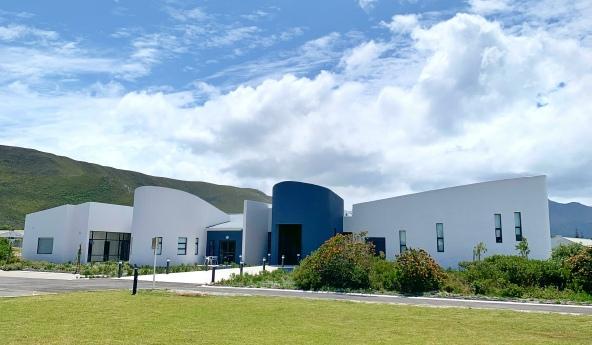
“South Africa’s national space-weather monitoring system is reporting active geomagnetic conditions for 2 October 2026, although SANSA’s forecast indicates low solar activity and no immediate major disruption to South African high-frequency communications. The development highlights the increasingly important role of the South African National Space Agency in monitoring solar activity and translating conditions in space into information relevant to communications, navigation, aviation and other technologies.”
South Africa’s Space-Weather Outlook Turns Active as SANSA Monitors Conditions
South Africa is beginning October with a close watch on conditions in space as the South African National Space Agency (SANSA) monitors solar activity and its possible effects on technological systems on Earth. The agency’s latest space-weather information for 2 October 2026 describes solar activity as low while forecasting active magnetic conditions. For the following two days, SANSA expects conditions to remain unsettled to active before returning to an active classification on 4 October.
Although the forecast does not indicate an exceptional solar storm, space weather remains an important area of scientific monitoring because disturbances originating from the Sun can interact with Earth’s magnetic environment. Those interactions can influence radio communications, satellite operations, navigation systems and other technologies that depend on the near-Earth space environment.
SANSA’s role is particularly important for South Africa because the agency provides specialised space-weather monitoring and forecasting from its facilities in Hermanus in the Western Cape. The organisation describes space science as one of its core areas alongside Earth observation, space engineering and space operations. Its broader mandate includes supporting research, developing human capital and providing information that can assist decision-making and national infrastructure.
What SANSA is reporting
According to SANSA’s 3-day prediction, the expected sunspot number for 2 October is 29, with a predicted value of 23 on 3 October and 22 on 4 October. The agency classifies solar activity as low across all three days. However, geomagnetic conditions are forecast as active on 2 October, unsettled to active on 3 October, and active again on 4 October.
The forecast also describes South African high-frequency communications as “fair” for the three-day period. SANSA expects radio fadeouts to be unlikely, although maximum usable frequencies are described as unstable. These measurements matter because high-frequency radio remains useful for aviation, maritime communication, emergency services and other applications where dependable long-distance communication can be important.
The agency’s latest available bulletin also reported very low solar activity, with background X-ray flux at B-class levels. It said solar-wind speeds were at background levels, between approximately 280 and 350 kilometres per second, while geomagnetic conditions had been quiet at the time of that bulletin.
The changing classifications demonstrate why space-weather monitoring is continuous rather than based on occasional observations. Conditions in the solar environment can evolve as active regions, solar wind and magnetic structures change.
Why space weather matters to South Africa
Space weather can sound distant from everyday life because its sources are millions of kilometres away. However, modern economies increasingly depend on technologies operating either in space or through signals travelling through the upper atmosphere.
Satellites provide communications, Earth observation, navigation and scientific information. South Africa also uses space-derived data for applications including environmental monitoring, resource management and disaster response. SANSA says its work supports areas such as policy and decision-making, food security, disaster management and national security.
Radio communications can also be influenced by changes in the ionosphere. The ionosphere is a region of Earth’s upper atmosphere containing electrically charged particles. Solar radiation and solar-wind activity can modify its conditions, potentially affecting the propagation of radio signals.
For this reason, a space-weather service does not simply study the Sun for scientific interest. It also provides information that can help users understand whether space conditions could affect technological systems.
South Africa’s specialist space-weather capability
Hermanus has become an important centre for space science in South Africa. SANSA’s Space Weather Centre monitors conditions in the solar-terrestrial environment and produces forecasts and alerts.
The agency’s facilities form part of a wider scientific infrastructure that has developed over decades. Space science activities at Hermanus include monitoring Earth’s magnetic field and studying interactions between solar activity and the near-Earth environment.
SANSA also has an international role. In 2026, South Africa hosted an International Civil Aviation Organization space-weather user workshop focused on the needs of aviation and related users. SANSA has also been involved in international cooperation on space-weather science and services.
These activities reflect the fact that space weather crosses national borders. Solar eruptions and disturbances do not respect political boundaries, meaning that effective monitoring requires international scientific cooperation and the exchange of observations.
What “active” geomagnetic conditions mean
The term “active” should not automatically be interpreted as meaning a dangerous space storm.
Space-weather agencies use classifications to describe different levels of activity. A period of active geomagnetic conditions means Earth’s magnetic environment is more disturbed than during a quiet period. The effects can range from limited changes in radio propagation to more significant disturbances during stronger events.
SANSA’s current forecast does not indicate that South Africa is facing a severe space-weather emergency. In fact, its forecast identifies solar activity as low and indicates that radio fadeouts are unlikely.
This distinction is important because space-weather reporting can sometimes create confusion between routine monitoring and major solar storms. Scientists continuously observe the Sun precisely because potentially significant changes can develop and because early information can help technological operators prepare.
The wider global space picture
South Africa’s space-weather monitoring comes at a time of rapid growth in global space activity.
On 1 October, SpaceX launched the Crew-13 mission carrying four astronauts to the International Space Station. NASA identifies the crew as Jessica Watkins, Luke Delaney, Joshua Kutryk and Sergey Teteryatnikov. The mission is part of NASA’s Commercial Crew Programme and is expected to support scientific research and technology demonstrations aboard the orbital laboratory.
The international space sector is also increasingly focused on satellite constellations, commercial spaceflight, Earth observation and preparations for future lunar and Mars missions. As the number of satellites and other space-based systems grows, reliable space-weather information becomes increasingly relevant to operators.
For South Africa, this global expansion creates both scientific responsibilities and potential opportunities. The country already has capabilities in Earth observation, space science, satellite applications and space-weather services. SANSA’s mandate specifically includes strengthening cooperation in space-related activities and supporting the development of South Africa’s space industry.
Building the next generation of space scientists
Space-weather monitoring also has an educational dimension. South Africa has been developing programmes intended to expose learners and young researchers to space science, engineering and related fields.
SANSA’s recent activities include opportunities for young innovators and students. On 25 September, the agency reported that young African innovators had tested self-built Mars rover prototypes at its Hartebeesthoek facility.
Such programmes demonstrate that space exploration is not limited to astronauts and rocket launches. It also involves electronics, mathematics, software engineering, atmospheric science, astronomy, satellite technology, Earth observation and data analysis.
The long-term development of these skills could be significant for South Africa as the international space economy expands.
What happens next
SANSA’s current three-day forecast provides a useful snapshot of conditions from 2 to 4 October. The agency expects low solar activity but continued active or unsettled-to-active geomagnetic conditions. South African HF communications are forecast to remain fair, with radio fadeouts considered unlikely.
The situation will continue to be monitored because space-weather conditions can change. The value of a national forecasting service is therefore not simply to announce major solar storms but to provide continuous information that users can consult as conditions develop.
For the public, the current forecast does not indicate a reason for alarm. Instead, it offers an example of the less visible scientific infrastructure operating behind modern technological systems.
As South Africa expands its participation in the global space sector, the country’s ability to observe and understand the space environment will remain an important part of that effort. From Hermanus, scientists can monitor activity originating from the Sun and assess what it could mean for Earth’s magnetic environment and technological systems.
The October 2 forecast is therefore more than a daily astronomical update. It illustrates how space science has become connected to communications, aviation, satellites, navigation, research and national technological infrastructure. It also demonstrates why South Africa’s investment in specialist space-weather expertise matters as the country and the wider world become increasingly dependent on space-based technologies.



