




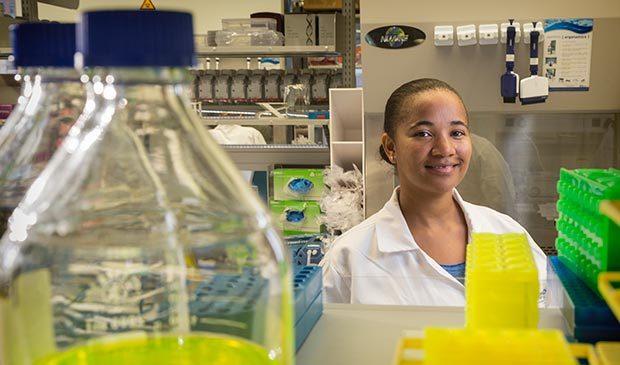
“A South African–US research collaboration has investigated how HIV can evolve to escape an antibody designed to prevent infection, revealing important insights into viral resistance. The findings could help researchers develop stronger antibody-based HIV prevention strategies, although further scientific work is required before the research can translate into improved prevention products.”
South African–US HIV Research Reveals How the Virus Can Escape Preventive Antibodies
Scientific collaboration investigates HIV antibody resistance
A South African–United States scientific collaboration has produced new insights into how HIV can evolve to escape an antibody designed to prevent infection, highlighting both the challenges and opportunities facing biotechnology research into HIV prevention.
The research, reported by the University of Cape Town (UCT), examines the relationship between viral evolution and antibody resistance. Scientists investigating HIV prevention have long sought to understand how the virus changes its genetic characteristics to evade immune responses and experimental antibody-based interventions.
The findings provide important scientific information that could support the development of stronger preventive strategies. However, they also underline the continuing need for research into viral resistance, antibody effectiveness and the biological mechanisms that influence HIV infection.
Understanding HIV and its capacity for genetic change
Human immunodeficiency virus, commonly known as HIV, remains one of the most significant infectious disease challenges facing South Africa and the wider African continent.
The virus attacks the immune system, particularly CD4 cells, which play an essential role in coordinating the body’s immune responses. Without effective treatment, HIV progressively weakens immune function and can eventually lead to acquired immunodeficiency syndrome, or AIDS.
Although antiretroviral medicines have transformed HIV into a manageable chronic condition for many people, preventing new infections remains an important public health priority.
One of the biological characteristics that makes HIV particularly challenging is its ability to change rapidly.
During viral replication, genetic variation can produce different viral variants. Some changes may influence how effectively antibodies recognise and bind to the virus. Consequently, certain variants may become less susceptible to particular immune responses.
This evolutionary capacity complicates efforts to develop vaccines and preventive antibodies capable of maintaining protection against diverse HIV variants.
Antibodies and the science of HIV prevention
Antibodies are proteins produced by the immune system that recognise particular structures on pathogens or other foreign substances.
In HIV research, scientists investigate antibodies capable of binding to the virus and preventing it from infecting susceptible cells.
Some antibodies can interfere with the biological processes HIV uses to enter human cells. These antibodies are of considerable interest because they may provide opportunities for prevention even when the immune system does not naturally produce sufficiently protective responses.
Antibody-based prevention research has therefore become an important component of the wider HIV biotechnology landscape.
However, the effectiveness of an antibody can depend on the characteristics of the viral strain it encounters.
If HIV changes its structure in a way that reduces antibody recognition, the virus may become less susceptible to that antibody.
The UCT-reported South African–US study examines precisely this scientific challenge, investigating how HIV can evolve to resist an antibody intended to prevent infection.
Viral resistance may involve biological trade-offs
An important aspect of the reported research is that escaping an antibody may come at a biological cost for HIV.
This observation is scientifically significant because viral resistance does not necessarily mean that a resistant variant becomes more successful in every respect.
Changes that help HIV evade an antibody may also affect other characteristics of the virus.
For example, particular genetic changes could influence viral fitness, replication efficiency or interactions with human cells.
Understanding these trade-offs can help scientists determine whether resistance mechanisms create weaknesses that could potentially be exploited in future prevention strategies.
Nevertheless, the consequences of specific changes must be investigated experimentally rather than assumed.
A resistant virus may remain capable of infection, while other changes may reduce its ability to reproduce efficiently. The relationship between resistance and viral fitness can depend on the particular antibody, viral variant and biological environment.
The research therefore contributes to a broader scientific effort to understand HIV evolution as a dynamic process.
Implications for antibody development
The findings could help scientists design antibodies with improved resistance to viral escape.
One approach in HIV biotechnology involves identifying antibodies that recognise relatively conserved regions of the virus.
Conserved regions are structures that remain comparatively stable across different viral variants because changes to them may interfere with important biological functions.
Targeting such regions could potentially make it more difficult for HIV to escape antibody recognition without compromising its ability to infect cells.
Another approach involves developing combinations of antibodies that recognise different viral targets.
If HIV escapes one antibody, another antibody in the combination may continue to provide protection.
Such strategies are being investigated in HIV prevention research, although their effectiveness depends on factors including antibody potency, viral diversity, delivery and duration of protection.
The new South African–US findings may contribute to the scientific understanding needed to evaluate and refine these approaches.
South Africa’s contribution to HIV biotechnology
South Africa occupies an important position in international HIV research because of its scientific expertise, research institutions and extensive experience addressing the epidemic.
Universities, medical research organisations, laboratories and clinical research networks contribute to investigations involving HIV epidemiology, immunology, genomics, vaccines and prevention technologies.
The country’s substantial HIV burden has also created a pressing need for prevention innovations that are effective, affordable and accessible.
Research collaborations involving South African institutions and international partners can strengthen scientific capacity while expanding access to specialised expertise and research infrastructure.
The latest UCT-reported collaboration demonstrates the importance of international scientific partnerships in addressing complex biological challenges.
Although the findings are not themselves a new preventive product, they may provide information that researchers can use when designing future antibody-based interventions.
Biotechnology and the importance of laboratory research
Biotechnology combines biological sciences with technological approaches to investigate organisms, develop products and address scientific challenges.
In HIV research, biotechnology supports the identification of viral genetic changes, the analysis of antibody interactions and the development of experimental prevention technologies.
Laboratory techniques can enable researchers to examine how particular viral mutations affect antibody binding and how those changes influence viral behaviour.
Genetic analysis can also help scientists identify patterns of variation across HIV populations.
Together, these approaches provide a foundation for understanding the mechanisms underlying antibody resistance.
The importance of such research extends beyond individual laboratory experiments. Findings can inform the design of subsequent studies, guide the selection of candidate antibodies and contribute to decisions about which experimental prevention approaches warrant further investigation.
Challenges facing HIV prevention research
Despite decades of scientific progress, developing broadly effective HIV prevention technologies remains challenging.
HIV exhibits considerable genetic diversity, meaning that viral populations can differ substantially between individuals and geographical regions.
An antibody that performs well against one viral variant may not provide equivalent protection against another.
Furthermore, viral evolution can introduce additional challenges as prevention technologies are developed and evaluated.
Scientists must therefore consider both existing viral diversity and the potential for future evolutionary changes.
Other challenges include determining how long antibodies remain active in the body, identifying suitable delivery methods and establishing the safety and effectiveness of experimental products.
Clinical research is particularly important because laboratory findings alone cannot establish whether a prevention intervention will successfully protect people under real-world conditions.
Consequently, promising scientific discoveries must progress through carefully designed studies before they can become established public health interventions.
Public health significance for South Africa
The implications of HIV prevention research are particularly important for South Africa, where preventing new infections remains a major health priority.
Improved prevention technologies could complement existing approaches, including antiretroviral treatment, condoms, testing, education and established biomedical prevention interventions.
However, scientific progress must be accompanied by effective implementation.
Accessibility, affordability, healthcare infrastructure and public awareness all influence whether prevention technologies can produce meaningful population-level benefits.
For biotechnology innovations to contribute substantially to HIV prevention, they must ultimately be supported by appropriate clinical evidence and equitable delivery systems.
South Africa’s research institutions therefore face the dual challenge of advancing scientific discovery and supporting the translation of discoveries into practical healthcare solutions.
The road from discovery to application
The newly reported findings represent a contribution to the scientific understanding of HIV antibody resistance rather than a completed clinical breakthrough.
Further research will be needed to establish how the observed mechanisms affect antibody performance across different HIV variants.
Scientists may also investigate whether resistance-associated changes can inform the design of improved antibodies or combinations of preventive agents.
Additional laboratory studies and clinical investigations will be essential to determine whether these insights can translate into stronger protection against HIV infection.
Such progress typically requires collaboration among virologists, immunologists, molecular biologists, biotechnology researchers and clinical investigators.
The process illustrates how basic scientific research can support the development of future healthcare technologies.
Conclusion
The South African–US investigation into HIV antibody resistance highlights the continuing importance of biotechnology in addressing infectious diseases.
By examining how HIV can evolve to evade an antibody intended to prevent infection, researchers are gaining insights into one of the central challenges of HIV prevention.
The reported possibility that viral escape may involve biological costs is particularly relevant to understanding the relationship between resistance and viral fitness.
For South Africa, the research reinforces the value of scientific collaboration, laboratory innovation and sustained investment in HIV prevention research.
Although further investigation is required before the findings can translate into new preventive products, the study contributes to a growing scientific foundation for developing stronger antibody-based strategies.
Ultimately, understanding how HIV changes—and how those changes affect its vulnerability to antibodies—could help researchers improve future prevention technologies and strengthen the global response to HIV.



