




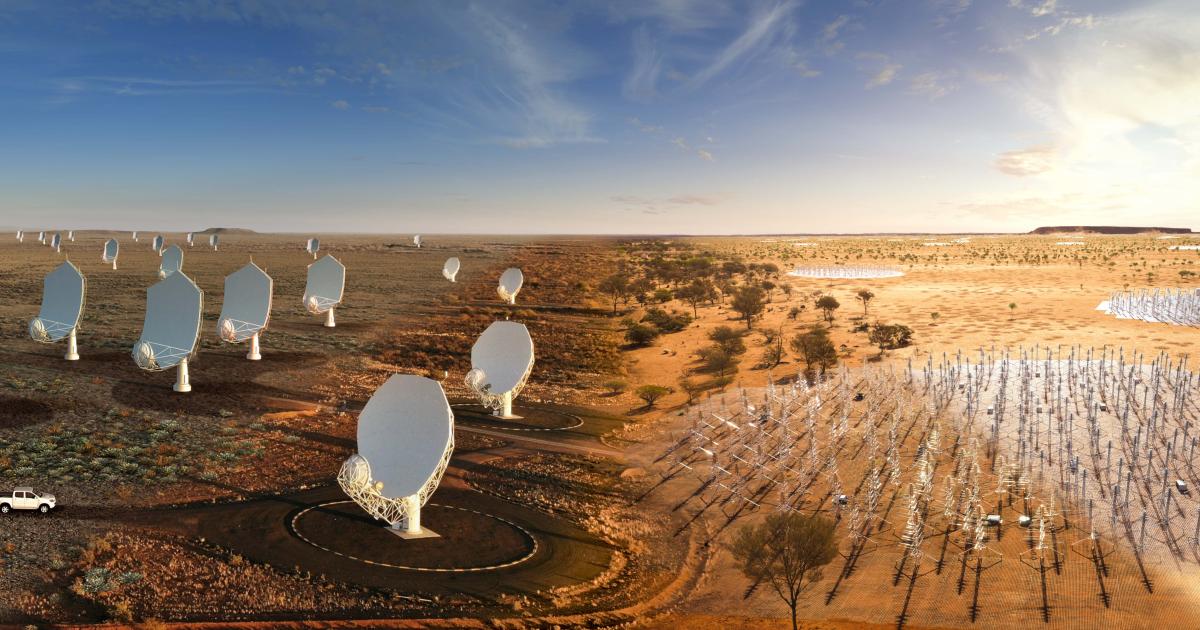
“Astronomers using South Africa’s MeerKAT radio telescope have detected the most distant hydroxyl megamaser ever observed, a rare cosmic laser emitted during a galaxy merger 8 billion light-years away. In response, the government has allocated nearly R2 billion in new funding to accelerate the SKA project, expanding MeerKAT into a 197-dish interferometer that will probe the early universe with unprecedented precision.”
South Africa has once again captured the world’s attention in the field of astronomy. The MeerKAT radio telescope, located in the Karoo desert, has achieved a milestone that places the country at the forefront of global space science. In just five hours of observation, scientists detected the most distant hydroxyl megamaser ever recorded — a naturally occurring “cosmic laser” produced during a violent galaxy merger more than 8 billion light-years away. This discovery not only advances our understanding of galactic evolution but also validates South Africa’s investment in cutting-edge astronomy infrastructure.
What is a Hydroxyl Megamaser?
Hydroxyl megamasers are rare phenomena that occur when galaxies collide, compressing gas clouds and triggering bursts of star formation. These collisions create conditions where hydroxyl molecules amplify radio signals, producing powerful emissions detectable across vast cosmic distances. Typically, detecting such signals requires hundreds of hours of telescope time. The fact that MeerKAT captured this megamaser in just five hours underscores its extraordinary sensitivity and wide bandwidth.
Scientific Significance
The detection offers a glimpse into galactic evolution when the universe was less than half its current age. By studying these signals, astronomers can better understand how galaxies formed, merged, and evolved over billions of years. The discovery also demonstrates the potential of MeerKAT and the upcoming SKA-Mid telescope to revolutionize our knowledge of the cosmos.
Government Response
Recognizing the importance of this achievement, the South African government announced a R1.98 billion capital contribution to the SKA project for the current financial year, effectively doubling previous forecasts. Over the next three years, an additional R3 billion in baseline spending will be unlocked. This funding will:
- Expand the existing MeerKAT framework.
- Establish specialized science and operations processing centers.
- Install a dedicated dark fibre link connecting the Northern Cape site to Cape Town data hubs.
The SKA-Mid Project
The SKA-Mid telescope will merge the 64 MeerKAT dishes with 133 newly constructed 15-meter dishes, forming a massive 197-dish interferometer. This will create one of the most powerful radio astronomy instruments ever built, capable of probing the early universe with unprecedented precision. Already, the SKA has achieved engineering milestones, including “first fringes” by linking newly assembled dishes to track a radio galaxy 2.6 billion light-years away.
Engineering Challenges
Operating such a massive array in the harsh Karoo climate presents unique challenges. Engineers are developing ruggedized, liquid-cooled microservers to handle the immense data flow. These innovations ensure that the SKA can process the “firehose” of information generated by its observations, transforming raw signals into meaningful scientific insights.
Global Impact
South Africa’s investment in the SKA positions the country as a leader in international astronomy. The project is part of a broader global collaboration, with partner nations contributing expertise and resources. The SKA will enable scientists worldwide to study phenomena ranging from the formation of the first stars to the nature of dark energy and dark matter.
Local Benefits
Beyond scientific prestige, the SKA project brings tangible benefits to South Africa. It creates jobs, fosters skills development, and stimulates technological innovation. The installation of dark fibre links and advanced computing infrastructure strengthens the country’s digital ecosystem, with potential spillover effects into other industries.
Conclusion
The detection of the most distant hydroxyl megamaser is more than a scientific milestone; it is a testament to South Africa’s vision and commitment to advancing human knowledge. With billions in new funding, the SKA project is set to transform the Karoo desert into a hub of cosmic discovery, offering humanity unprecedented insights into the origins and evolution of the universe.



