




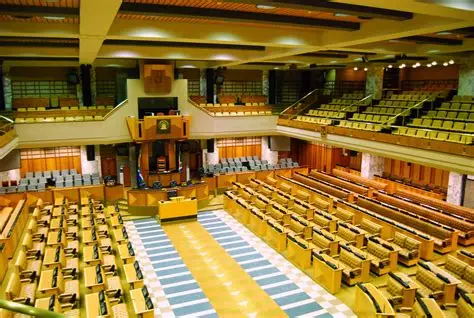
“South Africa has entered a new constitutional era with the enactment of the Constitution Eighteenth Amendment Act, expanding the High Court’s jurisdiction and strengthening judicial review of government actions. The reform enhances accountability, investor confidence, and democratic stability ahead of the upcoming local elections.”
On August 7, 2026, South Africa enacted the Constitution Eighteenth Amendment Act, a sweeping reform that expands the jurisdiction of the High Court and strengthens judicial oversight of parliamentary and executive actions. This legislation is being hailed as the most significant constitutional development since the country’s democratic transition in 1994. It signals a renewed commitment to accountability, transparency, and the rule of law.
Background and Context
South Africa’s constitutional democracy rests on the principle of checks and balances. Over the past three decades, disputes over land reform, employment equity, and healthcare regulation have exposed the limits of parliamentary and executive authority. The judiciary, particularly the Constitutional Court, has often intervened as the ultimate arbiter. Previous amendments focused on fiscal discipline and administrative reforms, but this latest change directly addresses judicial independence and constitutional enforcement.
The Government of National Unity (GNU), formed after the 2024 elections, has faced ideological divisions on key policy issues. The enactment of the Eighteenth Amendment is therefore both a legal and political milestone, offering a framework to resolve disputes through judicial oversight rather than political brinkmanship.
Key Provisions
- Expanded High Court Jurisdiction: The High Court now has broader authority to adjudicate constitutional matters, reducing reliance on the Constitutional Court for preliminary disputes.
- Strengthened Oversight Mechanisms: Parliament and executive actions are subject to stricter judicial review, reinforcing accountability.
- Erratum Notice: Corrections in the Gazette ensure clarity in the application of the amendment, minimizing ambiguity in interpretation.
These provisions collectively aim to enhance transparency, accountability, and efficiency within South Africa’s governance structures.
Political Implications
The amendment reshapes the balance of power between the judiciary, Parliament, and the executive.
- For opposition parties, it provides a stronger legal framework to challenge government decisions.
- For the ruling coalition, it demonstrates a commitment to accountability, potentially boosting investor confidence and public trust.
With local elections approaching, the timing of this reform is politically significant. It may influence voter perceptions of the GNU’s ability to uphold democratic principles.
Economic and Investor Confidence
South Africa’s economy has faced challenges in recent years, including slow growth, high unemployment, and investor uncertainty. By strengthening judicial oversight, the amendment reassures investors that government actions will be subject to rigorous legal scrutiny. This could improve foreign direct investment (FDI) inflows and stabilize financial markets.
Public Reaction
Civil society organizations have welcomed the amendment as a step toward greater accountability. Legal experts argue that it will reduce political interference in judicial processes. However, some critics caution that expanding the High Court’s jurisdiction may lead to case backlogs and strain judicial resources.
Comparative Perspective
Globally, constitutional democracies often rely on judicial oversight to maintain accountability. South Africa’s reform aligns with practices in countries such as Germany and India, where courts play a central role in reviewing government actions. This positions South Africa as a stronger constitutional democracy within the African continent.
Challenges Ahead
Despite its promise, the amendment faces practical challenges:
- Judicial Capacity: Expanding jurisdiction requires additional judges and resources.
- Implementation Clarity: Ensuring consistent application across provinces will be critical.
- Political Resistance: Some factions within the GNU may resist stricter oversight.
Conclusion
The Constitution Eighteenth Amendment Act represents a decisive step toward strengthening South Africa’s democratic institutions. By expanding judicial oversight, it enhances accountability, transparency, and investor confidence. As the country prepares for local elections, this reform will shape the political landscape and reinforce the principle that no branch of government is above the law.



