




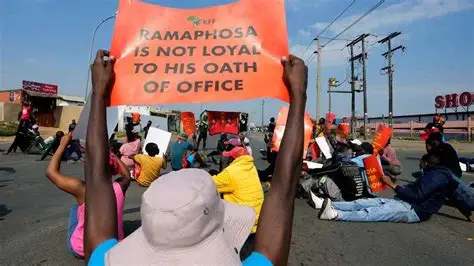
“South Africa’s anti-immigration protests have evolved into weekly nationwide demonstrations, driven by civic groups demanding the removal of undocumented migrants. The movement has heightened xenophobic tensions, triggered diplomatic protests from African nations, and forced the government to balance enforcement with constitutional protections.”
South Africa is witnessing one of its most sustained waves of political activism in recent years, as anti-immigration protests continue to dominate the national agenda. What began as sporadic demonstrations has now crystallized into weekly marches, reshaping the discourse around migration, governance, and social cohesion. The protests, spearheaded by groups such as March and March and Operation Dudula, have not only mobilized thousands across all nine provinces but also provoked diplomatic tensions with countries whose nationals have been targeted.
Background of the Movement
The protests gained momentum in late June 2026, when anti-migrant groups issued a “national shutdown” ultimatum demanding undocumented migrants leave South Africa. On June 30, more than 120 marches were held nationwide, accompanied by sporadic violence and heavy police presence. While some migrants reportedly left voluntarily, others faced intimidation and mob attacks. The groups have since vowed to continue weekly demonstrations every Thursday until their demands are met.
Key Actors and Organizations
- March and March: A civic group leading the protests, claiming success in pressuring migrants to leave.
- Operation Dudula: Known for grassroots mobilization, often accused of inciting xenophobic violence.
- South Africa First Forum: A newly established litigation body aiming to pursue legal action against migrants and government agencies accused of corruption.
Government Response
The South African government, led by International Relations Minister Ronald Lamola, has sought to defuse tensions by calling for Africa-wide migration talks. Officials argue that the crisis cannot be solved in isolation and must be addressed through regional cooperation. However, the African Union recently rejected Ghana’s proposal to include South Africa’s migration tensions on its October agenda, leaving Pretoria to push for discussions at the upcoming Southern African Development Community (SADC) summit.
Diplomatic Fallout
The protests have triggered diplomatic protests from Ghana, Nigeria, and other African nations, whose citizens have faced harassment and forced repatriation. These governments accuse South Africa of failing to protect foreign nationals and warn of long-term damage to regional solidarity. The crisis has also drawn international scrutiny, with academics and NGOs warning of the dangers of institutionalizing xenophobia.
Social and Economic Drivers
Underlying the protests are deep socio-economic grievances. South Africa’s sluggish economy, high unemployment, and strained public services have fueled resentment against migrants, who are often scapegoated for job scarcity and crime. Protest leaders have successfully mobilized unemployed youth and marginalized communities, framing migration as a threat to national survival.
Historical Context
Xenophobic violence is not new in South Africa. Similar unrest erupted in 2008, 2015, and 2019, resulting in dozens of deaths. What distinguishes the current wave is its sustained, organized nature and its explicit linkage to upcoming municipal elections in November 2026. Analysts warn that political actors may be exploiting the protests to galvanize support among disaffected voters.
Risks and Challenges
- Human Rights Concerns: Migrants, including those with legal permits, face intimidation and violence.
- Diplomatic Strain: Regional relations are being tested, with potential repercussions for trade and cooperation.
- Governance Dilemmas: Balancing constitutional protections with public pressure for stricter enforcement remains a challenge.
- Social Polarization: The protests risk deepening divisions within South African society.
Conclusion
South Africa’s anti-immigration protests represent a critical juncture in the nation’s political activism. While civic groups frame their actions as defending sovereignty, critics warn of the dangers of xenophobia and populist exploitation. As the government pushes for regional migration talks, the outcome will determine whether South Africa can navigate this crisis without sacrificing its democratic values or alienating its neighbors.



