




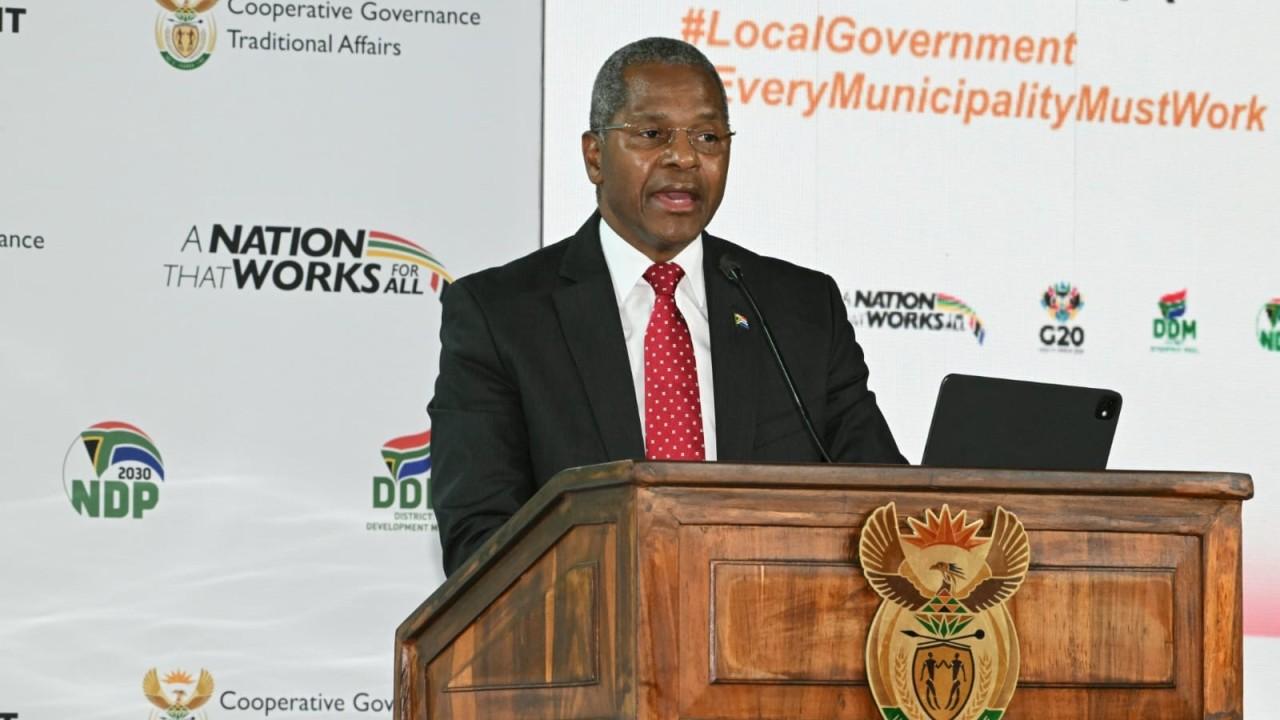
“South Africa is moving from years of debate about local-government reform to implementation of the Revised White Paper on Local Government, with Cooperative Governance Minister Velenkosini Hlabisa sayingthe government wants tighter controls over the appointment of senior municipal officials. The reforms are intended to strengthen accountability, professionalize municipalities, improve financial management and service delivery, and establish a more effective local-government system ahead of the 4 November 2026 municipal elections.”
South Africa’s local government policy enters implementation.
South Africa is moving from years of debate about local-government reform to a new phase in which the effectiveness of policy will be judged by what happens inside municipalities. Cooperative Governance and Traditional Affairs Minister Velenkosini Hlabisa said on 5 October that government wants to tighten the appointment of senior municipal officials, linking the change to the Revised White Paper on Local Government and an effort to repair weak governance, financial management and service delivery.
The development matters because local government directly affects daily life. Municipalities are responsible for services such as water, sanitation, electricity distribution in many areas, refuse removal, roads, planning and other functions that shape daily life. Yet many municipalities have struggled with financial instability, weak administration, political interference, poor accountability and inadequate service delivery. The new policy framework therefore represents an attempt to change not only what municipalities are expected to do, but how they are governed and held responsible.
Cabinet approved the Final Revised White Paper on Local Government, 2026, after a lengthy review process. According to government, the review responds to persistent governance, institutional, financial and service-delivery challenges. The policy places renewed emphasis on implementation, accountability, institutional coherence and financial sustainability, while Cabinet has endorsed a time-bound transition management system and a coordinated implementation programme involving the Department of Cooperative Governance, The Presidency and National Treasury.
Hlabisa has described the approval as a “game changer”, but the central question is whether the policy can overcome the implementation failures that have undermined previous reforms. The minister has stressed that the White Paper must not become another policy milestone without visible results. A 90-day transition plan is intended to identify immediate actions and establish workstreams responsible for turning recommendations into practical reforms.
One of the most important issues is the management of municipal leadership. Hlabisa said government wants to tighten the appointment of senior municipal officials and criticised the practice of appointing “friends, family and cronies”. Municipal managers and senior officials control key functions including finance, procurement, human resources and service delivery. If senior appointments are driven by political loyalty rather than competence, reform can be weakened before it reaches residents.
The proposed shift therefore has implications for professionalisation. Strong municipalities require qualified managers who understand public finance, procurement, infrastructure, labour relations, planning and regulatory requirements. Clear appointment standards, transparent recruitment and effective performance management could help municipalities build institutional memory and reduce instability. However, stronger rules will only matter if they are consistently enforced and if political leaders accept that professional administration must operate within lawful and accountable boundaries.
The timing also gives the policy added political importance. South Africa’s local government elections are scheduled for 4 November 2026, meaning municipalities will soon enter a new electoral cycle. The Department of Cooperative Governance says the first 18 months after the elections will be used to drive priority reforms and projects. These priorities are expected to have identified owners, implementation milestones and links to annual performance plans and budgets. That could make the White Paper more measurable because reforms would be connected to government planning and financial systems.
The elections also give newly elected councillors an opportunity to begin with a clearer understanding of the reform agenda. Government has indicated that councillor induction should cover governance, financial management, institutional capability, service delivery and the direction of local-government reform. This matters because councillors have political responsibilities that can influence municipal administration. Better training and clearer expectations could strengthen oversight, although training alone cannot solve deeper problems of political conflict, corruption or inadequate capacity.
Another major test will be municipal finances. Recent reporting on the local-government sector has highlighted the scale of wasteful and unauthorised expenditure and concerns about weak consequence management. BusinessTech reported on 5 October that a CoGTA annual report highlighted R268 billion in unauthorised, irregular, fruitless and wasteful spending. The figure underlines why financial sustainability is central to the new policy framework. Municipal reform cannot succeed if financial controls remain weak or if officials and political office-bearers face little consequence for serious failures.
The policy arrives amid public frustration over basic services. Communities in different parts of South Africa continue to experience unreliable water supplies, electricity problems, sewage failures, deteriorating roads and financially distressed municipalities. The government’s challenge is therefore not simply to produce better regulations. It must demonstrate that new rules lead to visible improvements in streets, households, businesses and public facilities.
A major strength of the new approach is its emphasis on whole-of-government coordination. Cabinet has endorsed implementation involving CoGTA, the Presidency and National Treasury rather than leaving reform to a single department. This is important because municipal problems often cross institutional boundaries. Financial distress can affect infrastructure, service delivery and staffing at the same time, while provincial and national departments may have responsibilities that intersect with municipal functions. Coordinated intervention could reduce duplication and clarify who is responsible for correcting failures.
At the same time, coordination creates a risk if responsibility becomes too diffuse. A reform programme involving several institutions needs clear authority, deadlines and public reporting. Residents should be able to understand which institution is responsible for a specific reform, when it is expected to be completed and what evidence will show whether it worked. Without that transparency, a complex implementation structure could make it harder to assign responsibility.
Public participation will remain another important measure of success. The review of the White Paper followed extensive consultation, and government has called on organised local government, traditional and Khoi-San leadership, civil society, business, labour and communities to support implementation. Communities need channels to monitor service standards, raise complaints, scrutinise municipal plans and understand how public money is spent.
The significance of the Revised White Paper is practical. South Africa does not lack policy documents; the recurring challenge has been translating policy into reliable administration and measurable outcomes. The government’s decision to establish a 90-day transition plan and focus on implementation is therefore a useful test of whether the latest reform effort can break that pattern.
For residents, the success of the policy will not be measured by the language of the White Paper. It will be measured by whether taps work, sewage systems are maintained, roads are repaired, municipal bills are managed properly, procurement is transparent and complaints receive responses. For businesses, it will be measured by whether municipalities provide predictable services and create conditions that support investment and local economic activity.
The next stage will demand discipline, professional administration and oversight. The 4 November elections may change the composition of municipal councils, but the basic need for capable and accountable local government will remain. If the reforms are implemented with clear responsibilities, strong financial controls, professional appointments and regular public reporting, the Revised White Paper could become an important foundation for rebuilding confidence in municipalities.
If implementation falters, however, the policy risks joining the long list of reform initiatives that generated expectations without delivering enough change. That is why Hlabisa’s warning against allowing the White Paper to become merely another policy milestone is central to the story. South Africa’s local-government policy now has a framework and a transition timetable. The decisive test is whether those commitments produce functioning municipalities and tangible improvements for communities.



