




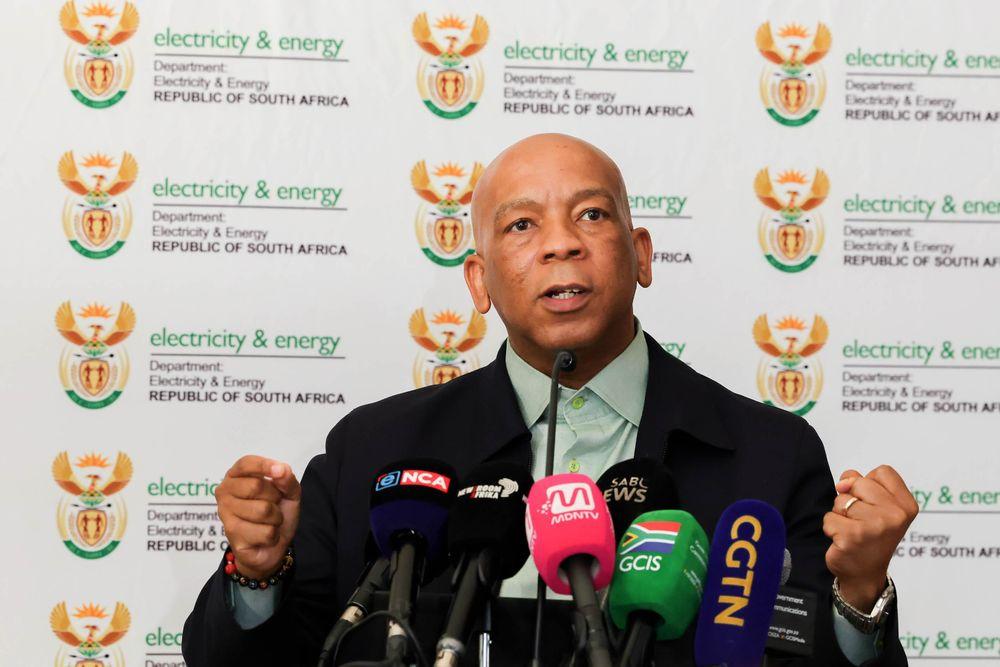
“South Africa’s Minister of Electricity and Energy, Kgosientsho Ramokgopa, has postponed a scheduled briefing on the Gas Independent Power Producer Procurement Programme, leaving developers and investors waiting for further details on the government’s gas-to-power plans. The delay comes as the government pursues a 9,600MW procurement programme comprising 4,600MW of battery energy storage and 5,000MW of gas-fired generation, intended to improve grid flexibility and support reliable electricity supply.”
South Africa’s 9.6GW energy procurement plan faces scrutiny as gas briefing is postponed
A crucial moment for South Africa’s energy sector
South Africa’s energy sector has reached an important stage in its efforts to establish a more reliable, flexible and economically sustainable electricity system. On 28 October 2026, the postponement of a scheduled government briefing on the Gas Independent Power Producer Procurement Programme brought renewed attention to the implementation of the country’s plans for gas-fired electricity generation and large-scale battery storage.
The briefing, which had been scheduled for the morning at the Government Communication and Information System’s Tshedimosetso House in Pretoria, was intended to provide an update on the procurement programme. According to Green Building Africa, the Department of Electricity and Energy announced the postponement, but a replacement date had not been confirmed when the report was published.
Although the delay leaves important questions unanswered, it should not be interpreted as evidence that the wider electricity procurement programme has been abandoned. Instead, the development highlights the importance of clear communication, predictable implementation schedules and transparent procurement procedures as South Africa works to secure the electricity capacity required by households, businesses and industry.
Government prioritises 9,600MW of new capacity
The immediate background to the postponed briefing is a ministerial determination announced on 7 October 2026 by Electricity and Energy Minister Kgosientsho Ramokgopa.
Under the determination, the government intends to facilitate procurement of 9,600MW of new capacity during the 2026–2037 planning period. The allocation consists of 4,600MW of battery energy storage systems and 5,000MW of gas-to-power capacity.
The decision forms part of the implementation of the Integrated Resource Plan 2025, which provides a framework for planning South Africa’s future electricity supply.
Battery storage and gas-fired generation address different challenges within the power system. Batteries can absorb electricity when supply is plentiful and release it later, while gas-fired plants can generate electricity when demand increases or renewable generation declines.
Consequently, the proposed combination is intended to improve the electricity system’s flexibility rather than simply increase the amount of installed generating capacity.
The government has also indicated that new wind and solar allocations will be addressed through a subsequent determination. Therefore, the current allocation should be understood as one stage of a broader electricity planning process, not a decision to exclude renewable energy from South Africa’s future energy mix.
Why battery storage is becoming increasingly important
Battery energy storage has become a central consideration in electricity planning as South Africa expands its renewable energy capacity and manages changing patterns of electricity supply.
Solar power plants, for example, can produce substantial amounts of electricity during daylight hours. However, production declines in the evening, when households return home and electricity demand may rise. Wind generation also fluctuates according to weather conditions.
Without sufficient storage, transmission capacity or flexible demand, electricity available at one time and location cannot always be used where and when it is needed.
The government says battery systems can charge using electricity that might otherwise be curtailed and discharge during periods of higher demand. This can help reduce wasted generation, improve balancing and provide support to the grid.
The proposed 4,600MW allocation could therefore create significant opportunities for battery manufacturers, engineering companies, construction contractors, project developers and financiers.
However, the eventual contribution of storage will depend on more than its installed power rating. The duration for which batteries can discharge, their locations, connection to the transmission network, operating arrangements and overall costs will determine their practical value.
Procurement will need to ensure that storage facilities can access electricity when charging and deliver it when required. Otherwise, network congestion could limit the benefits that the government expects these projects to provide.
Gas-to-power and the challenge of dependable electricity
The second component of the programme is 5,000MW of gas-to-power capacity.
Gas-fired power stations can provide dispatchable electricity, meaning that their output can be adjusted according to demand and system requirements. This flexibility could complement solar and wind generation, particularly during periods when renewable output is low.
Nevertheless, the successful development of gas-fired generation depends on securing dependable fuel supplies at competitive prices.
South Africa will need to consider where the gas will come from, how it will be transported, whether pipelines and other infrastructure will be available, and how fuel costs will affect electricity tariffs. Developers must also consider plant construction costs, financing, environmental requirements and the time required to bring projects into operation.
These questions are particularly important because a power station can be technically capable of producing electricity but economically unattractive if its fuel is expensive or unreliable.
International energy markets introduce further uncertainty. Changes in global gas prices, shipping costs and geopolitical conditions can influence the economics of imported fuel. Domestic supply opportunities, where commercially viable, may offer alternatives, but they also require infrastructure, investment and regulatory clarity.
The postponed briefing matters because prospective developers and investors need a clearer understanding of how the procurement programme will address these issues. However, the postponement itself does not establish that any particular fuel source, project or procurement deadline has changed.
Investment opportunities and private-sector participation
The government has stated that the Independent Power Producer Office will oversee the procurement processes arising from the determination. Participation is intended to be open to market participants, including Eskom.
This approach could encourage competition between developers and help mobilise private capital for infrastructure that the electricity system needs.
For investors, the most important questions will include the procurement timetable, project eligibility, technical specifications, electricity purchasing arrangements, grid access, payment security and the allocation of construction and operational risks.
Clear and consistent procurement rules can reduce uncertainty and help projects attract financing. Conversely, prolonged uncertainty over tender conditions or implementation schedules can increase development costs and make it more difficult for companies to commit capital.
The programme could also support domestic economic activity through engineering, construction, equipment installation, operations and maintenance. Nevertheless, the number and quality of jobs created will depend on the projects ultimately awarded, the extent of local procurement and the availability of relevant skills.
The government has also linked its broader energy programme to a state-led Power Parks initiative intended to lower barriers for emerging developers, support transmission integration and encourage local economic development.
For these benefits to materialise, procurement commitments will need to be translated into measurable implementation requirements rather than remaining general policy objectives.
Electricity prices and economic competitiveness
Reliable electricity is important for South Africa’s industrial economy. Mining operations, manufacturing facilities, commercial buildings, agricultural businesses and small enterprises all depend on predictable power supplies.
Electricity disruptions can interrupt production, increase operating costs and discourage investment. Additional flexible capacity could help reduce some of these risks if the projects are delivered on time and operated effectively.
However, new infrastructure also creates costs that must ultimately be recovered through electricity sales, contractual payments or other approved arrangements.
Battery systems require substantial upfront investment, while gas-fired power plants also face fuel and operating expenses. Their overall value must therefore be assessed against the electricity they provide, the reliability services they deliver and the alternative costs of managing the power system without them.
The least expensive project on a construction-cost basis is not necessarily the least expensive option over its entire operating life. Equally, additional capacity does not automatically translate into lower consumer bills.
Transparent cost assessments and competitive procurement will be essential to determine whether the proposed investments provide value for money. The effects on electricity tariffs will depend on financing arrangements, operating costs, contract terms, utilisation rates and the wider energy mix.
Renewable energy and the wider transition
The decision to prioritise storage and gas in the current determination has attracted attention because it does not allocate new wind or solar capacity in this first stage.
However, the government has indicated that renewable energy will be addressed in a subsequent determination. Its stated rationale for prioritising storage includes reducing curtailment and making better use of electricity that is already available but cannot always be accommodated by the network.
This highlights a wider challenge facing electricity systems around the world: generating electricity is only one part of the task. Transmission networks, storage, demand management and flexible generation must work together to deliver power reliably.
Battery storage can support the integration of renewable electricity, while gas-fired generation may provide flexibility when renewable output declines. Nevertheless, gas infrastructure carries fuel-price and emissions risks that must be considered alongside its reliability benefits.
South Africa’s long-term energy outcomes will therefore depend on how well new projects are coordinated with renewable generation, transmission expansion, electricity-market reform and environmental objectives.
What happens next?
The immediate outstanding development is confirmation of a new date for the postponed gas procurement briefing. As of the original report’s publication, no replacement date had been announced.
Market participants will be watching for further information about the procurement structure, project timelines, fuel arrangements, technical requirements and financing conditions.
The government will also need to demonstrate how the proposed battery and gas capacity fits into the wider implementation of the Integrated Resource Plan 2025. Coordination between generation procurement and grid development will be particularly important because new plants cannot deliver their full benefits if electricity cannot be transported efficiently to consumers.
Investors, energy companies and electricity customers should distinguish between announced policy intentions and projects that have completed procurement, secured financing, entered construction or begun commercial operation. Each stage represents a different level of progress.
Conclusion
South Africa’s postponed gas-to-power briefing is an important energy-sector development because it comes during preparations for a major procurement programme covering 9,600MW of battery storage and gas-fired generation.
The programme could help improve grid flexibility, reduce avoidable renewable-energy curtailment and support dependable electricity supply. It also presents potential opportunities for private investment, local manufacturing, infrastructure development and employment.
However, its success will depend on transparent procurement, reliable fuel supplies, appropriate grid connections, competitive costs and timely project delivery. Battery storage and gas-fired generation must also be coordinated with renewable energy and the country’s broader electricity-market reforms.
The next briefing will be an opportunity for the government to clarify implementation arrangements and give prospective participants greater certainty. Until further details are published, the postponement remains a delay in communication rather than proof of a change to the underlying 9,600MW plan.



