




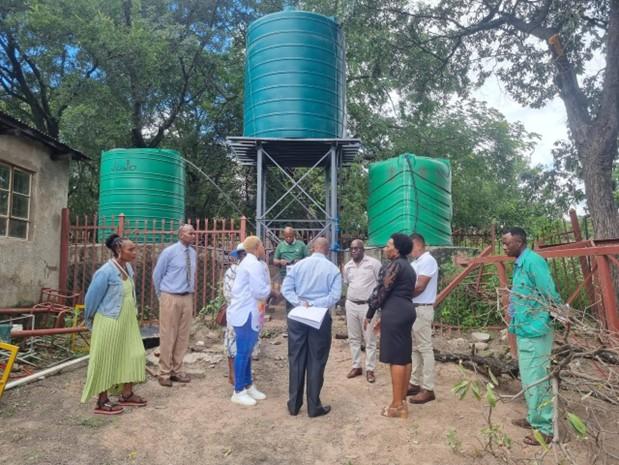
“South Africa and the New Development Bank have signed a US$200 million loan agreement to finance the first stage of the Olifants Management Model Programme, a major bulk-water infrastructure project serving Mogalakwena Local Municipality in Limpopo. The project places government capacity, public-private cooperation, infrastructure financing, and reliable municipal water provision at the centre of a broader governance challenge involving service delivery and long-term water security.”
South Africa has secured a US$200 million loan from the New Development Bank (NDB) to support the first stage of a major bulk-water infrastructure programme in Limpopo, placing water security and public-sector implementation firmly on the national governance agenda. The agreement, announced on 25 September 2026, involves the Olifants Management Model Programme (OMMP) and is intended to address bulk-water supply requirements in Mogalakwena Local Municipality.
The development is significant from a governance perspective because access to water depends not only on financial resources but also on the ability of national, provincial and local institutions to plan, finance, construct, operate and maintain infrastructure. The new financing therefore represents both an infrastructure investment and a test of public administration, accountability and cooperation between government and private-sector stakeholders.
According to National Treasury, the project will abstract water from Flag Boshielo Dam on the Olifants River. The water will be supplied through a bulk-water system to industrial users, while water treatment infrastructure will provide potable water to communities in Mogalakwena.
The New Development Bank’s project documentation identifies the Republic of South Africa as the borrower, while the Department of Water and Sanitation and the Badirammogo Water User Association (BWUA) are involved in implementation. The NDB says the project is targeted for completion by the end of 2028.
A Governance Issue as Much as an Infrastructure Project
The importance of the project extends beyond the construction of pipes, treatment facilities and pumping stations. Water infrastructure is closely connected to the performance of government institutions responsible for delivering basic services.
The NDB describes Limpopo as facing growing water scarcity caused by factors including variable rainfall, drought and limited surface- and groundwater resources. In Mogalakwena Local Municipality, the bank says demand increasingly exceeds available supply, leaving approximately one-third of demand unmet.
This places pressure on government to ensure that infrastructure investments translate into actual improvements for residents and businesses. Financing a project is only one stage of the process. Authorities must also manage procurement, construction, environmental requirements, financial controls, maintenance and the eventual operation of the completed infrastructure.
For local government, this means the project will ultimately be judged by whether communities receive dependable water services rather than simply by whether construction milestones are achieved.
The governance implications are particularly important because South Africa’s municipalities have responsibilities for many frontline services. Where infrastructure is inadequate, communities can experience interruptions or limited access even when water resources exist elsewhere in a region.
Public-Private Partnership
The OMMP also provides an example of cooperation between the public and private sectors. According to National Treasury, the programme is funded jointly by government and private industrial users represented by the Badirammogo Water User Association.
The NDB financing is specifically directed toward the public-sector contribution to Stage 1. Engineering News reported that Stage 1 forms part of a broader multi-stage source-to-tap programme designed to expand bulk raw and potable water infrastructure in Limpopo.
This arrangement illustrates how governments can use partnerships and development-finance institutions to mobilise capital for large infrastructure programmes. It also creates a requirement for clear institutional responsibilities.
Public-private infrastructure projects require transparent agreements concerning who finances which components, who manages construction, who operates facilities and how risks are distributed. Effective oversight is consequently important throughout the project lifecycle.
The NDB states that the Department of Water and Sanitation will be responsible for overall planning, execution and achievement of the project’s intended results, while BWUA will undertake responsibilities connected with design, procurement, construction and commissioning.
Why the Financing Matters
The US$200 million agreement is also important because infrastructure projects require substantial upfront capital, while the benefits often accumulate over many years.
The NDB’s project information records the current financing limit at US$200 million and identifies additional commercial borrowing and other sources of approximately R6.555 billion for the project. The bank’s financing therefore forms part of a broader capital structure rather than representing the entire cost of Stage 1.
Engineering News reported that the NDB loan has an 11-year tenor and a three-year grace period, terms that can provide additional time for infrastructure investments to begin generating their intended economic and social benefits.
For government, such financing can help spread infrastructure costs over time rather than requiring the full public contribution from a single year’s budget. However, borrowing also creates long-term financial obligations, making project management, cost control and delivery important elements of fiscal governance.
Water Security and Economic Activity
The project has implications for both households and economic activity.
National Treasury said that expanding reliable water supplies is expected to strengthen water security and support economic activity in the region.
Mogalakwena is an important economic area, with industrial and mining activity contributing to demand for reliable water. A dependable bulk-water system can therefore support industrial users while also feeding treatment works intended to supply communities.
The governance challenge is to ensure that economic and community requirements are addressed through a coordinated system. Industrial development can increase demand for water, while population growth and household requirements also place pressure on existing resources.
A properly planned bulk-water system can help government manage these competing demands through additional capacity and improved infrastructure.
Environmental and Social Oversight
Large water projects also carry environmental and social responsibilities. The NDB has classified the project as Category B under its Environmental and Social Framework. It identifies potential construction-related risks including physical and economic displacement, biodiversity impacts, vegetation disturbance, soil erosion, waste generation and handling of hazardous substances.
These requirements make environmental governance an important component of implementation.
The project must therefore balance the need to expand water infrastructure with the responsibility to minimise harm to affected communities and ecosystems. The NDB says environmental and social risks are to be addressed through the implementing entities’ management systems, national systems and actions outlined in the relevant impact-management plan.
The Bigger Governance Picture
South Africa’s water challenge illustrates why infrastructure governance remains an important national issue. Building infrastructure requires cooperation between national departments, municipalities, development-finance institutions, private companies and affected communities.
The Limpopo project demonstrates one approach: combine public financing with private-sector participation and development-bank funding to deliver infrastructure with a long-term service objective.
The immediate task, however, is implementation. The NDB says the project is intended to be completed by the end of 2028.
Between the signing of the financing agreement and completion, authorities will need to manage procurement, construction, environmental safeguards, expenditure, technical performance and coordination between the participating institutions.
For communities, the central issue will remain straightforward: whether improved infrastructure results in more reliable access to potable water.
For government, the project provides an opportunity to demonstrate how external financing, public-private partnerships and institutional coordination can be translated into practical service delivery.
The US$200 million NDB agreement is therefore not simply a financing announcement. It is part of a wider governance effort to address water shortages, strengthen infrastructure and support economic development in Limpopo. Its eventual impact will depend on how effectively the institutions involved convert financial commitments into functioning infrastructure and sustainable public services.



