




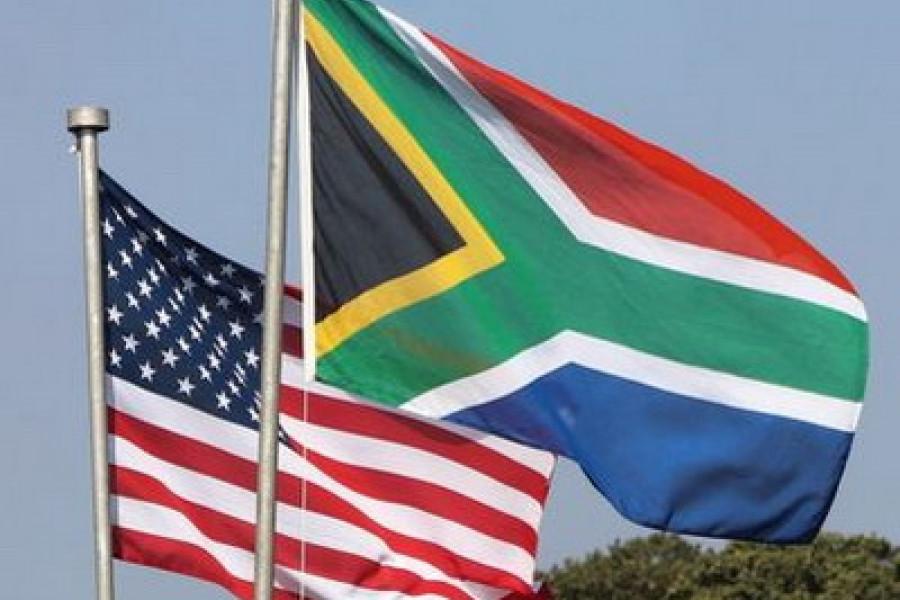
“South Africa is seeking to strengthen economic ties with China, India and other international markets as disagreements with the United States create uncertainty around trade, foreign policy and bilateral relations. President Cyril Ramaphosa’s approach highlights Pretoria’s effort to diversify its economic partnerships without abandoning established relationships or its commitment to independent decision-making.”
South Africa’s diplomatic balancing act enters a critical phase
South Africa is navigating an increasingly complicated international environment as its relationship with the United States faces renewed pressure and its government looks to strengthen commercial ties with China, India and other global markets. The situation places international relations at the centre of important domestic questions, including employment, economic growth, investment, historical inequality and the country’s ability to make independent foreign-policy decisions.
President Cyril Ramaphosa has signalled that South Africa needs to expand its international economic relationships as uncertainty surrounding Washington’s approach to Pretoria continues. Reporting by the Financial Times on 20 October 2026 highlighted the government’s interest in widening trade opportunities, particularly with China and India, while dealing with deteriorating relations with the United States.
The issue is important because South Africa’s international relationships are not simply diplomatic arrangements between governments. They affect the conditions under which domestic businesses export goods, international companies invest, workers find employment and consumers access products. Decisions made in Pretoria and foreign capitals can therefore have consequences far beyond diplomatic meetings and official statements.
The government’s challenge is to diversify its partnerships without creating unnecessary confrontation with existing trading partners. Achieving this balance will require careful diplomacy, predictable economic policy and sustained engagement with countries that have different political systems and strategic interests.
Washington and Pretoria disagree over domestic policy
Relations between South Africa and the United States have been strained by disagreements over South Africa’s domestic policies and its international positions. Issues raised in the dispute include land reform, Black economic empowerment, racial inequality and Pretoria’s legal action against Israel at the International Court of Justice.
South Africa maintains that its democratic institutions and constitutional framework provide the basis for addressing the enduring consequences of apartheid. Its government argues that measures designed to reduce historical inequality must be understood in the context of the country’s past and its constitutional commitment to building a more inclusive society.
In a statement published on 16 September 2026, South Africa’s Department of International Relations and Cooperation, led by Minister Ronald Lamola, objected to visa restrictions announced by US Secretary of State Marco Rubio. The government urged Washington to respect South Africa’s democracy, sovereignty and right to develop laws through its own constitutional processes.
The disagreement illustrates a broader question in international relations: how should governments manage conflicting interpretations of domestic policies while preserving cooperation on matters of mutual interest?
For Pretoria, the principle of sovereignty means that disagreements with foreign governments should be addressed through established diplomatic channels rather than pressure that appears to dictate domestic decisions. For Washington, the disputes reflect its own political and policy priorities. Both governments must decide whether these differences can be managed without damaging the broader relationship.
A sustained deterioration could make cooperation more difficult across trade, investment, security, education and diplomatic engagement. Conversely, effective communication could help the two countries identify areas where their interests remain aligned despite political differences.
Diplomatic protests highlight the seriousness of the dispute
The tensions have also been reflected in formal diplomatic exchanges. On 2 October 2026, South Africa’s parliamentary Portfolio Committee on International Relations and Cooperation expressed concern following confirmation that DIRCO had issued a third diplomatic protest, known as a demarche, to US Ambassador Leo Brent Bozell III.
Parliament said disagreements involving trade, visa restrictions and domestic policy should be raised through recognised diplomatic channels. It also emphasised that the United States remains an important trading and investment partner and supported continued engagement between the governments.
A demarche is a formal way for one government to communicate a concern or objection to another. Although it does not automatically mean diplomatic relations are breaking down, repeated protests can indicate that normal communication is under strain.
The challenge is to prevent individual disputes from becoming a permanent feature of bilateral relations. Diplomatic representatives are expected to communicate their governments’ positions while respecting the laws and diplomatic conventions of the countries where they serve.
South Africa has an interest in protecting its constitutional independence while keeping channels open for practical cooperation. The United States, meanwhile, has significant economic and strategic interests in Africa and benefits from maintaining constructive relations with major regional economies.
The future of the relationship will depend partly on whether both sides can separate policy disagreements from opportunities for cooperation. Dialogue may not eliminate their differences, but it can help prevent disputes from escalating into broader economic or political confrontation.
China becomes an increasingly important economic partner
South Africa’s interest in expanding trade with China reflects the importance of the Asian economy to its international commercial strategy. China is a major global manufacturing and trading power, and the relationship offers opportunities for South African producers seeking access to large markets.
South African agricultural exports, mineral resources, manufactured products and other goods can contribute to trade with China. In return, commercial relationships provide access to machinery, industrial equipment, technology and consumer products that support different parts of the domestic economy.
The Financial Times reported that China’s zero-tariff initiative for qualifying African imports had already benefited South African products, including apples and wine. Such measures can create opportunities for exporters, although the benefits depend on eligibility rules, market demand, logistics and the ability of producers to compete.
Nevertheless, expanding trade with China is not an automatic solution to South Africa’s economic challenges. Exporters must meet quality standards, maintain reliable supplies and manage transport costs. Smaller firms may also need financing, market information and technical support before they can benefit from opportunities in larger overseas markets.
South Africa must consider the structure of its trade relationships as well as their total value. Exporting raw materials can generate revenue, but greater domestic processing and manufacturing may create additional employment and support industrial development.
A more diversified partnership with China could therefore involve not only selling more products, but also encouraging productive investment, technology transfer and opportunities for South African businesses to participate in international supply chains.
At the same time, Pretoria must avoid replacing dependence on one market with excessive dependence on another. A resilient trade strategy requires multiple destinations, reliable commercial agreements and a domestic economy capable of adapting when global conditions change.
India offers another route to market diversification
India is another important part of South Africa’s effort to broaden its economic partnerships. Its large population, expanding economy and established commercial links with African countries create potential opportunities across agriculture, pharmaceuticals, technology, manufacturing, energy and services.
The reported revival of discussions around a preferential trade agreement between South Africa and India points to the possibility of improving market access and strengthening economic cooperation. However, negotiations do not guarantee a final agreement, and any eventual arrangement would depend on the terms accepted by both governments.
A preferential trade agreement could reduce selected barriers to commerce and provide businesses with clearer conditions for selling goods across borders. Depending on its design, it could also encourage investment and help firms establish longer-term partnerships.
For South African exporters, India offers a market that differs from both the United States and China. This matters because demand, competition and consumer preferences vary between countries. Companies able to adapt their products and business models may find new commercial opportunities.
However, increased trade requires more than diplomatic announcements. Businesses need efficient ports, dependable transport networks, predictable regulations and clear procedures for meeting export requirements. Without these foundations, improved access to a foreign market may produce fewer benefits than expected.
South Africa and India will also need to identify areas where their economies complement one another. Cooperation in skills development, digital services, research and industrial production could potentially strengthen the relationship beyond the exchange of goods.
The central opportunity is to build partnerships that contribute to domestic economic capacity while giving both countries practical reasons to maintain long-term cooperation.
Trade uncertainty places jobs and investment at risk
The economic consequences of diplomatic tensions are particularly important for South Africa because unemployment remains a major national challenge. The country’s export industries support employment directly through production and indirectly through transport, logistics, retail, maintenance and other services.
The Financial Times reported that South Africa was concerned about its future position under the African Growth and Opportunity Act, commonly known as AGOA, which supports eligible African exports entering the US market under preferential trade arrangements. The programme’s extension through 2028 does not remove uncertainty about South Africa’s future eligibility.
Potential exclusion would be a concern for exporters that depend on access to the American market. Agricultural producers and vehicle manufacturers, among others, need stable trading conditions to plan production, secure contracts and maintain relationships with overseas buyers.
Uncertainty can affect business decisions even before a formal trade restriction is introduced. Companies may postpone investment, reconsider expansion or seek alternative suppliers and destinations if they cannot predict future market access.
South Africa’s response should therefore include diplomatic engagement and practical preparation. Exporters need timely information about trade rules, while government departments must communicate changes clearly and help businesses understand their options.
Diversification can reduce exposure to an individual market, but replacing established supply chains takes time. Companies may have existing contracts, specialised equipment and distribution arrangements that cannot easily be transferred elsewhere.
For that reason, the most effective strategy is likely to combine the preservation of existing commercial relationships with gradual expansion into additional markets. This approach would provide businesses with more options without assuming that new partners can immediately replace established ones.
South Africa’s foreign policy and strategic independence
Beyond trade, the dispute raises questions about how South Africa defines its position in a changing international system. Pretoria has traditionally sought to preserve room for independent decision-making and to engage with countries whose political systems and international priorities differ.
This approach can provide diplomatic flexibility. A country that maintains relationships across competing geopolitical groupings may have more opportunities to negotiate, attract investment and participate in international discussions.
However, strategic independence also requires careful judgement. Public disagreements with major powers can carry economic consequences, while close relationships with any single partner can create their own vulnerabilities.
South Africa must therefore distinguish between maintaining independent positions and allowing disagreements to undermine practical cooperation. A sustainable foreign policy should protect constitutional principles while recognising that international relationships require negotiation, compromise and clear communication.
The country’s positions on international law and multilateral institutions are also relevant. Pretoria has used international legal mechanisms to advance its interpretation of global responsibilities, including through its case against Israel at the International Court of Justice. Those positions may strengthen its profile among some international audiences while generating disagreement with others.
The task for diplomats is to explain South Africa’s positions consistently and support them with credible legal and policy arguments. Effective diplomacy requires not only stating principles but also building relationships with governments that may have different views.
In this context, expanding trade with China and India should be understood as one part of a broader effort to preserve economic options, rather than proof that South Africa has abandoned all other partnerships.
Domestic economic reform will determine the benefits
International agreements can create opportunities, but South Africa’s ability to benefit from them depends heavily on domestic conditions. Businesses need dependable electricity, efficient transport infrastructure, access to finance, appropriate skills and a regulatory environment that supports productive investment.
Ramaphosa has pointed to infrastructure and logistics improvements as important foundations for future economic expansion. These priorities matter because international customers expect exporters to deliver goods reliably and at competitive prices.
If transport costs remain high or supply chains are unreliable, South African producers may struggle to compete even when favourable trade arrangements exist. Similarly, investors considering new factories or processing facilities need confidence that projects can operate efficiently over many years.
Government policy should consequently connect foreign relations with domestic development. Trade negotiations are most valuable when businesses can use the resulting opportunities to expand production, improve productivity and employ more people.
Small and medium-sized enterprises also deserve attention. Large exporters may have the resources to enter foreign markets, but smaller firms often face difficulties with certification, shipping, marketing and international payment arrangements.
Support for export readiness, skills development and market information could help more businesses participate in international trade. A broader base of exporters would make the economy less dependent on a limited number of large companies or sectors.
The success of South Africa’s diplomatic strategy should ultimately be assessed not only by the number of agreements signed, but by whether international partnerships contribute to investment, sustainable employment and stronger domestic productive capacity.
What to watch next
Several developments will help determine the direction of South Africa’s international relations in the coming months.
First, the progress of discussions with Washington will indicate whether the two governments can manage disagreements over domestic policy, visas and trade without further damaging bilateral cooperation. Formal dialogue and predictable communication will be important indicators of progress.
Second, developments concerning AGOA and South Africa’s access to the US market will matter to exporters and workers. Clear information about eligibility and applicable trade arrangements will be essential for business planning.
Third, negotiations with India and opportunities linked to China’s trade initiatives will show whether diversification produces tangible commercial gains. The key measures will include actual market access, export growth, investment and participation by South African firms.
Finally, domestic improvements in logistics, energy reliability and industrial capacity will influence whether companies can turn international opportunities into lasting economic benefits.
Conclusion
South Africa faces a significant diplomatic challenge as it seeks to preserve relations with the United States while strengthening partnerships with China, India and other international markets. The government’s position reflects the need to protect national sovereignty while responding pragmatically to economic uncertainty.
Neither confrontation nor diversification alone will guarantee success. Pretoria must maintain open diplomatic channels, negotiate predictable trade arrangements and improve domestic conditions for businesses and investors.
For South African citizens, the most important outcome will be whether foreign policy contributes to stronger economic opportunities, sustainable employment and greater resilience to global shocks. The country’s international standing will depend not only on the positions it takes abroad, but also on its ability to translate those positions into practical benefits at home.
The coming months will test South Africa’s ability to balance principle with pragmatism. A carefully managed approach could allow the country to broaden its international options without sacrificing valuable existing relationships.



