




“South Africa is seeking to expand agricultural trade with Saudi Arabia, Oman and the United Arab Emirates, following a government-led mission aimed at opening markets, resolving livestock-export constraints and strengthening commercial relationships. The initiative is particularly important for South African farmers affected by foot-and-mouth disease restrictions and comes as the Middle East becomes an increasingly significant destination for the country’s agricultural products.”
South Africa seeks wider agricultural export access in Middle East
South Africa is intensifying efforts to expand agricultural exports into the Middle East as the government seeks new markets for farmers, livestock producers and agricultural businesses facing an increasingly complex international trading environment.
A South African agriculture delegation recently held discussions in Saudi Arabia, Oman and the United Arab Emirates, focusing on market access, livestock exports, sanitary and phytosanitary requirements, commercial partnerships and future trade agreements. The Department of Agriculture worked with South Africa’s diplomatic missions in the region during a working visit from 27 to 30 September 2026.
The initiative comes at an important time for South Africa’s agricultural sector. Farmers are facing pressure from disease-related trade restrictions, logistics costs, international tariff uncertainty and geopolitical disruption. At the same time, agricultural exports remain one of the country’s strongest sources of international trade earnings, making market diversification an increasingly important economic strategy.
The latest mission therefore represents more than a diplomatic engagement. It is part of a broader attempt to ensure that South African agricultural producers have access to multiple international markets rather than becoming overly dependent on a small number of destinations.
Middle East offers significant export potential
The Middle East has become an increasingly important market for South African agriculture. According to agricultural trade analysis, the region accounts for about 8% of South Africa’s agricultural exports, with countries including the UAE, Saudi Arabia and Qatar offering considerable opportunities because of their reliance on imported food.
South Africa is well positioned to supply a wide range of agricultural products. These include citrus, apples, pears, grapes, wine, beef, lamb, nuts and other high-value agricultural commodities.
The opportunity is particularly significant because Saudi Arabia and the UAE are major agricultural importers. Expanding South Africa’s presence in these markets could provide producers with alternative destinations when traditional export markets become more difficult to access.
The National Agricultural Marketing Council reported that South African agricultural exports increased by 11% year on year in the first quarter of 2026 to approximately US$3.71 billion. Africa remained the largest regional destination, while the EU and Asia and the Middle East were also important markets.
The figures demonstrate why maintaining and expanding international market access is important for the agricultural economy.
Foot-and-mouth disease creates urgency
One of the immediate motivations behind the government’s Middle East engagement is the continuing impact of foot-and-mouth disease (FMD) on livestock exports.
South African livestock producers have experienced difficulties accessing some international markets because animal-health concerns can lead importing countries to introduce restrictions or require additional certification.
The delegation’s visit therefore placed particular emphasis on creating confidence in South Africa’s animal-health systems and identifying mechanisms that can allow trade to continue while protecting importing countries from disease risks.
The Department of Agriculture has previously stressed that disease control and market access must operate together. Government has engaged trading partners to maintain confidence in South Africa’s animal-health systems and establish risk-management arrangements that allow exports to continue where appropriate.
The latest delegation included representatives of the South African livestock industry who are interested in accessing Middle Eastern markets.
For producers, successful negotiations could provide an important commercial lifeline. Livestock farmers depend heavily on predictable export channels, particularly when domestic supply conditions and prices make international markets essential to maintaining profitability.
Saudi Arabia emerges as a major target
Saudi Arabia was a major focus of the delegation’s visit.
South African officials met representatives from the Saudi Food and Drug Authority, the Saudi Agricultural and Livestock Investment Company and the General Authority for Foreign Trade.
The discussions covered opportunities for South African agricultural exports as well as products that Saudi Arabia could potentially export to South Africa. The delegation also met South Africa’s embassy and business stakeholders and potential buyers.
Saudi Arabia’s large food-import requirement makes it an attractive market for South African producers.
Agricultural economist Wandile Sihlobo has highlighted the country’s importance, noting that Saudi Arabia imports roughly $30 billion worth of agricultural products annually, while the UAE imports about $20 billion.
For South Africa, increasing its share of these markets could create opportunities across both established and emerging agricultural industries.
However, gaining access does not automatically translate into higher exports. Producers must meet importing countries’ quality, safety, traceability and certification requirements. This means market-access negotiations need to be accompanied by improvements throughout the agricultural supply chain.
Oman and UAE discussions broaden the strategy
The South African delegation also held discussions in Oman, where it met officials from the Ministry of Environment, Water, Fisheries and Agriculture as well as representatives of the Omani Chamber of Commerce and Industry.
The discussions focused on strengthening bilateral agricultural relations and exploring opportunities in food and agriculture. Both sides indicated a willingness to increase trade while ensuring that sanitary and phytosanitary requirements are respected.
The delegation then travelled to Dubai, where it met representatives of the UAE’s Ministry of Climate Change and Environment.
South Africa and Oman, as well as South Africa and the UAE, are working towards finalising memoranda of understanding, according to the Department of Agriculture. Future cooperation could include business-to-business engagements, information exchanges, trade missions and additional market-access discussions.
These arrangements could eventually give South African exporters a more structured pathway into the markets.
Diversification becomes increasingly important
The push into the Middle East is part of a wider strategy of agricultural export diversification.
South Africa recorded agricultural exports of about US$15.1 billion in 2025, representing approximately 10% growth from the previous year. Government has attributed part of the sector’s resilience to efforts to maintain existing markets while opening new destinations.
Diversification has become particularly important because international trade conditions are changing rapidly.
South African agricultural exporters face tariff risks, geopolitical tensions, shipping disruptions and rising logistics costs. NAMC has warned that higher shipping costs and trade-related pressures could affect export competitiveness, particularly for perishable products that depend on reliable transport and timely delivery.
The Middle East presents both an opportunity and a challenge in this respect. The region has strong demand for imported food, but geopolitical instability can disrupt shipping routes and increase transport costs.
For South African exporters of citrus, grapes, apples and other fresh products, delays can quickly reduce the commercial value of shipments.
Disease control will determine future success
Market access negotiations will ultimately depend on South Africa’s ability to demonstrate reliable animal and plant-health controls.
Agricultural researcher Christiaan Mostert said expanded livestock access would require credible evidence of consistent compliance with sanitary and phytosanitary requirements. He also pointed to disease surveillance, rapid response, vaccination where appropriate, movement controls and traceability as important components of restoring confidence among international buyers.
This means South Africa’s trade strategy cannot be separated from domestic agricultural reform.
Export growth requires farmers to produce competitively, but it also requires effective veterinary services, laboratories, border controls, traceability systems, transport infrastructure and certification processes.
If these systems work efficiently, producers can respond more quickly when new international opportunities emerge.
A strategic opportunity for South African farmers
The Middle East initiative could ultimately benefit producers beyond the immediate livestock sector.
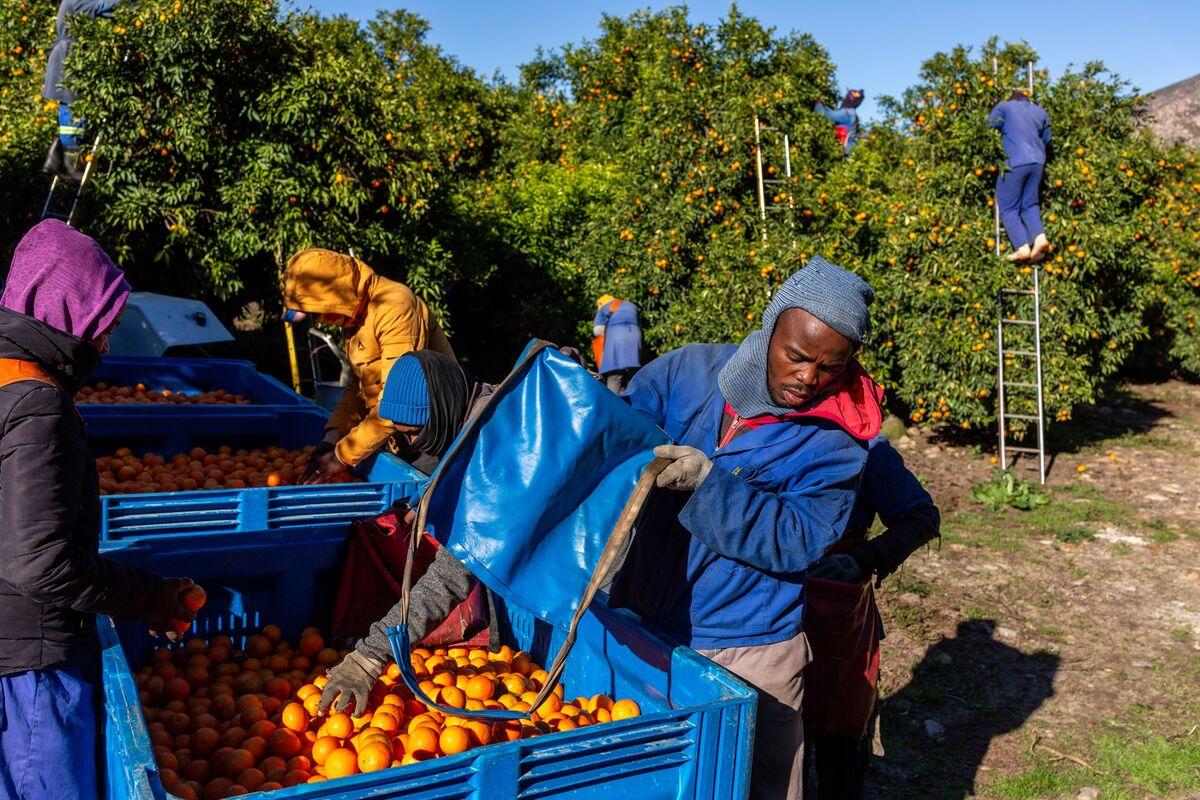
South African citrus, fruit, wine, meat, nuts and other agricultural industries already have established relationships with Middle Eastern buyers. Strengthening these relationships could increase export volumes while helping producers reduce dependence on individual markets.
The opportunity is particularly relevant as South Africa continues to manage changes in major trading relationships around the world.
The country has already demonstrated that market diversification can support agricultural export performance. Government data show that South Africa’s agricultural sector achieved strong export growth despite significant international trading pressures.
The challenge now is converting diplomatic engagement into commercially meaningful contracts.
That will require government, agricultural organisations, exporters and individual producers to work together. Market-access protocols must be completed, standards must be understood, logistics must be competitive and buyers must have confidence that South Africa can supply consistently.
Looking ahead
South Africa’s engagement with Saudi Arabia, Oman and the UAE signals a deliberate effort to strengthen the country’s position in one of the world’s major food-importing regions.
For the livestock industry, the immediate priority is to address disease-related restrictions and rebuild or expand market access. For the wider agricultural sector, the longer-term opportunity is to increase exports of high-value products and establish stronger commercial partnerships.
The initiative also fits into South Africa’s broader approach of diversifying agricultural markets. With exports already reaching record levels, further growth will increasingly depend on finding new destinations, improving logistics and meeting increasingly demanding international standards.
The Middle East cannot eliminate every risk facing South African agriculture. Geopolitical instability, shipping disruptions, disease outbreaks and international competition will continue to influence trade.
Nevertheless, the combination of strong food demand, substantial import requirements and growing commercial relationships makes the region strategically important.
For South African farmers, successful market expansion could mean more buyers, greater export resilience and new opportunities to grow production. For the national economy, stronger agricultural exports could support foreign-exchange earnings, rural employment, investment and broader economic growth.
The government’s latest mission therefore represents an important step in South Africa’s continuing effort to build a more diversified and resilient agricultural export economy.



