




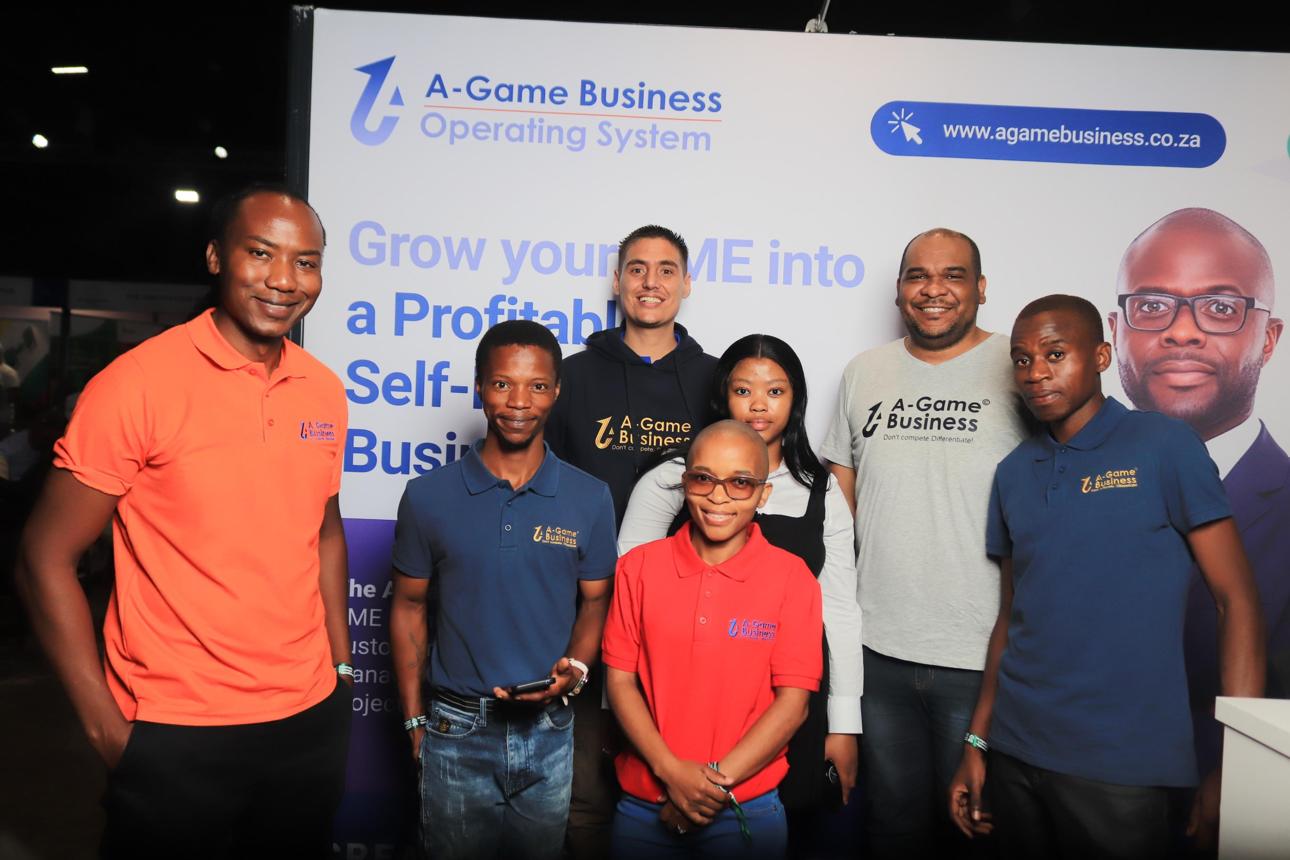
“Artificial intelligence is emerging as an increasingly important tool for South African small and medium-sized businesses, with entrepreneurs using technology to improve operations, compete more effectively, and pursue growth. Moneyweb reports that Rinku director Gift Lubele discussed how an AI-powered platform can bring together fragmented business-support functions, potentially giving SMEs more practical tools to manage and expand their businesses.”
AI Is Changing the Game for South Africa’s SMEs as Entrepreneurs Seek Smarter Ways to Grow
Artificial intelligence is moving rapidly from the world of large technology companies into the everyday operations of small and medium-sized businesses. In South Africa, where entrepreneurs face persistent challenges around access to capital, skills, markets, technology and business support, AI is increasingly being viewed not simply as a futuristic innovation but as a practical tool that can help smaller companies operate more efficiently.
That development is at the centre of a new Moneyweb Mzansi Business episode published on 6 October 2026. The programme features Rinku director Gift Lubele discussing how an AI-powered platform is bringing together elements of a fragmented support system and changing how small businesses operate, compete and grow. Moneyweb describes its Mzansi Business series as a platform examining the forces shaping South African entrepreneurship, with particular attention to SMEs, innovators, entrepreneurs and industry leaders.
The significance of the development extends beyond technology itself. For entrepreneurs, the value of AI lies in what it can do with limited resources. A small business may not have the financial capacity to employ specialists across marketing, customer service, administration, research, data analysis and other functions. AI tools can potentially help entrepreneurs handle some of these activities more quickly, allowing owners and employees to concentrate on decisions that require human judgement, creativity and relationships.
A New Opportunity for South African SMEs
South Africa’s SME sector operates in a complicated environment. Entrepreneurs must find customers, manage cash flow, comply with regulations, compete with established businesses and adapt to changes in consumer behaviour. They must often perform several roles simultaneously.
For a small company, the founder can be the salesperson in the morning, financial manager at lunchtime, marketing manager in the afternoon and customer-service representative in the evening.
Technology can change that equation.
AI can assist businesses with repetitive and information-heavy activities. Depending on the tool and business model, entrepreneurs can use AI to organise information, analyse customer trends, produce initial marketing material, automate communications, support research and improve internal workflows.
The important shift is that these technologies are becoming increasingly accessible to smaller businesses rather than remaining tools reserved for large corporations.
Moneyweb’s report is therefore significant because it places AI within the context of South African entrepreneurship, rather than treating it only as a technology story. The discussion focuses on how an AI-powered platform can bring together parts of a business-support environment that entrepreneurs may otherwise have to navigate separately.
Breaking Down the Business-Support Problem
One of the biggest challenges facing entrepreneurs is not necessarily the complete absence of support. Instead, support can be fragmented.
An entrepreneur might need funding information from one organisation, business-development assistance from another, market information from another source and technology assistance somewhere else. Finding the right information can consume valuable time.
For a small business owner, time is an important resource.
Every hour spent searching for information is an hour that could have been spent selling products, meeting customers, improving a service or managing employees.
The idea behind AI-enabled business platforms is therefore particularly relevant. Instead of forcing entrepreneurs to navigate multiple disconnected systems, technology can potentially help bring information and services together in a more accessible format.
That does not eliminate the underlying challenges facing SMEs, but it can reduce some of the friction associated with finding and using business support.
AI Could Help Level the Playing Field
Large corporations have traditionally enjoyed advantages that smaller businesses cannot easily match.
A major company can employ teams of analysts, marketers, consultants, researchers and technology specialists. A small business may have only a handful of employees.
AI has the potential to narrow part of this gap.
An entrepreneur who understands how to use AI effectively may be able to conduct research faster, prepare marketing campaigns more efficiently and automate certain administrative processes without immediately increasing headcount.
This does not mean that AI makes small businesses equal to large corporations. Capital, distribution networks, brand recognition and access to markets remain important advantages.
However, technology can lower the cost of performing certain tasks.
That matters in entrepreneurship because small differences in efficiency can have significant consequences. A company operating with narrow margins needs to use its available resources carefully. If technology helps reduce wasted time or improve productivity, the resulting savings can potentially be redirected towards growth.
AI and the Future of Entrepreneurial Competition
The emergence of AI also changes the nature of competition.
In the past, entrepreneurs could compete through product quality, price, location, customer service and branding. Increasingly, technological capability is becoming another competitive factor.
A business that uses data more effectively may understand customers better. A company that automates routine processes may respond faster. An entrepreneur who uses AI for research may identify opportunities earlier.
This creates both an opportunity and a warning.
The opportunity is that South African entrepreneurs can use AI to become more productive and innovative.
The warning is that businesses that ignore technological change may gradually become less competitive.
However, successful AI adoption should not mean replacing human thinking. Entrepreneurs still need to understand their customers, make strategic decisions and build relationships.
Technology can support those activities, but it cannot remove the need for sound business judgement.
The Human Element Remains Important
One of the most important considerations for entrepreneurs is that AI should be treated as a tool rather than a substitute for leadership.
A business can have sophisticated software and still fail because it does not understand its market.
Entrepreneurship ultimately depends on identifying a genuine problem and developing a product or service that customers are willing to pay for.
AI can help with parts of that process, but entrepreneurs remain responsible for determining whether the information generated by a system is accurate, relevant and useful.
Human oversight is therefore essential.
This is particularly important for small businesses because an incorrect decision can have a larger impact on a company with limited financial reserves. Entrepreneurs need to evaluate AI-generated information rather than automatically accepting it.
Opportunities for Young Entrepreneurs
The expansion of AI also creates new opportunities for young South Africans.
Entrepreneurship has long been discussed as one avenue for addressing unemployment and creating economic opportunities. Digital technology potentially expands the range of businesses that young entrepreneurs can establish.
Instead of requiring expensive physical infrastructure, some technology-driven businesses can begin with relatively limited resources.
Young entrepreneurs can build services around digital marketing, automation, software, online commerce, data services and other technology-enabled activities.
At the same time, AI creates opportunities within traditional sectors.
A retailer, agricultural entrepreneur, tourism operator, professional service provider or manufacturer does not necessarily have to become a technology company to benefit from AI.
The technology can be incorporated into an existing business.
That distinction is important. The future of entrepreneurship is unlikely to consist only of technology startups. Instead, traditional SMEs may increasingly become technology-enabled businesses.
Financing Remains a Critical Issue
AI cannot solve every problem facing South African entrepreneurs.
Access to finance remains crucial.
A business may have an excellent technology strategy but still require working capital to purchase inventory, employ staff, expand premises or enter new markets.
Recent South African entrepreneurship coverage has repeatedly highlighted the importance of funding and business support. SME South Africa, for example, reported on the launch of the Absa Youth Entrepreneurship Fund on 5 October, while its entrepreneurship section has also highlighted programmes such as the Telkom FutureMakers Township Innovation Incubator.
This demonstrates that entrepreneurship support is developing along several fronts.
Funding can provide the financial foundation.
Incubators can provide mentorship.
Technology can improve productivity.
Market-access programmes can help entrepreneurs find customers.
The greatest impact may therefore come from combining these forms of support rather than relying on one intervention.
AI Could Strengthen Township and Informal Businesses
The potential impact may be especially significant for businesses operating outside traditional corporate centres.
South Africa has a substantial informal and township economy. Entrepreneurs in these markets often operate with fewer resources and face barriers to finance, infrastructure, technology and market access.
Affordable digital tools could help some of these businesses professionalise their operations.
For example, entrepreneurs could potentially use technology to manage customer information, improve digital marketing, communicate with customers and make better use of business data.
However, adoption will depend on affordability, connectivity, digital literacy and trust.
Simply making AI available does not guarantee that entrepreneurs will benefit from it.
Business owners need training and practical guidance that explains how the technology can solve specific problems.
The Importance of Digital Skills
AI adoption will also increase the importance of digital skills.
Entrepreneurs do not necessarily need to become programmers. However, they increasingly need to understand how digital systems work and how technology can be incorporated into business processes.
This means entrepreneurial education will need to evolve.
Traditional business training typically focuses on areas such as accounting, marketing, business planning, customer service and financial management. These remain essential, but entrepreneurs will increasingly need digital capabilities as well.
Understanding how to evaluate AI outputs, protect business information, use automation responsibly and identify useful applications will become part of modern business literacy.
South Africa’s Broader Economic Challenge
The AI opportunity comes at a time when South African businesses are operating under significant economic pressure.
Recent business data has shown the difficult operating environment. Reuters reported that South Africa’s private sector contracted sharply in September, with falling new orders, supply bottlenecks and fuel-related cost pressures weighing on companies.
For entrepreneurs, these conditions make efficiency even more important.
When operating costs increase and demand becomes uncertain, businesses need to identify ways of doing more with available resources.
AI cannot eliminate high fuel costs, weak demand or supply-chain problems. Nevertheless, technology can potentially help businesses improve processes and make faster use of available information.
This is where the entrepreneurship story becomes broader than AI.
It is about resilience.
The Next Stage of South African Entrepreneurship
The development highlighted by Moneyweb points towards a broader transformation in the South African SME landscape.
Entrepreneurs are increasingly expected to operate in an environment where technology, data and innovation influence almost every aspect of business.
The companies that succeed will not necessarily be those that adopt the most technology.
They will be those that use technology most effectively.
That means identifying a genuine business problem, choosing an appropriate tool, training employees, monitoring results and continuously improving processes.
For entrepreneurs, the central question should therefore not be, “How can I use AI because everyone else is using it?”
A better question is, “Which part of my business could work better if I used AI correctly?”
That distinction could determine whether technology becomes an expensive experiment or a meaningful competitive advantage.
Conclusion
The rise of AI in South African SMEs represents an important development in the country’s entrepreneurship landscape. Moneyweb’s 6 October report on Rinku and director Gift Lubele highlights how AI-powered platforms are being positioned to bring fragmented business-support functions together and help small businesses operate, compete and grow more effectively.
For entrepreneurs, the opportunity is substantial. AI can potentially reduce repetitive work, improve access to information, support decision-making and allow small teams to achieve more.
However, technology alone will not create successful businesses.
Entrepreneurs still need viable products, paying customers, financial discipline, strong relationships and the ability to adapt to changing market conditions.
The real opportunity is therefore not simply AI replacing traditional entrepreneurship. It is AI strengthening entrepreneurship.
As South African SMEs continue to navigate economic pressures, financing challenges and intense competition, the entrepreneurs who learn to combine technology with human creativity, local market knowledge and disciplined execution may be better positioned to build resilient businesses.
The message emerging from today’s entrepreneurship coverage is increasingly clear: AI is becoming another tool in the entrepreneur’s toolkit. The businesses that learn how to use that tool strategically could gain an important advantage in South Africa’s evolving economy.



