




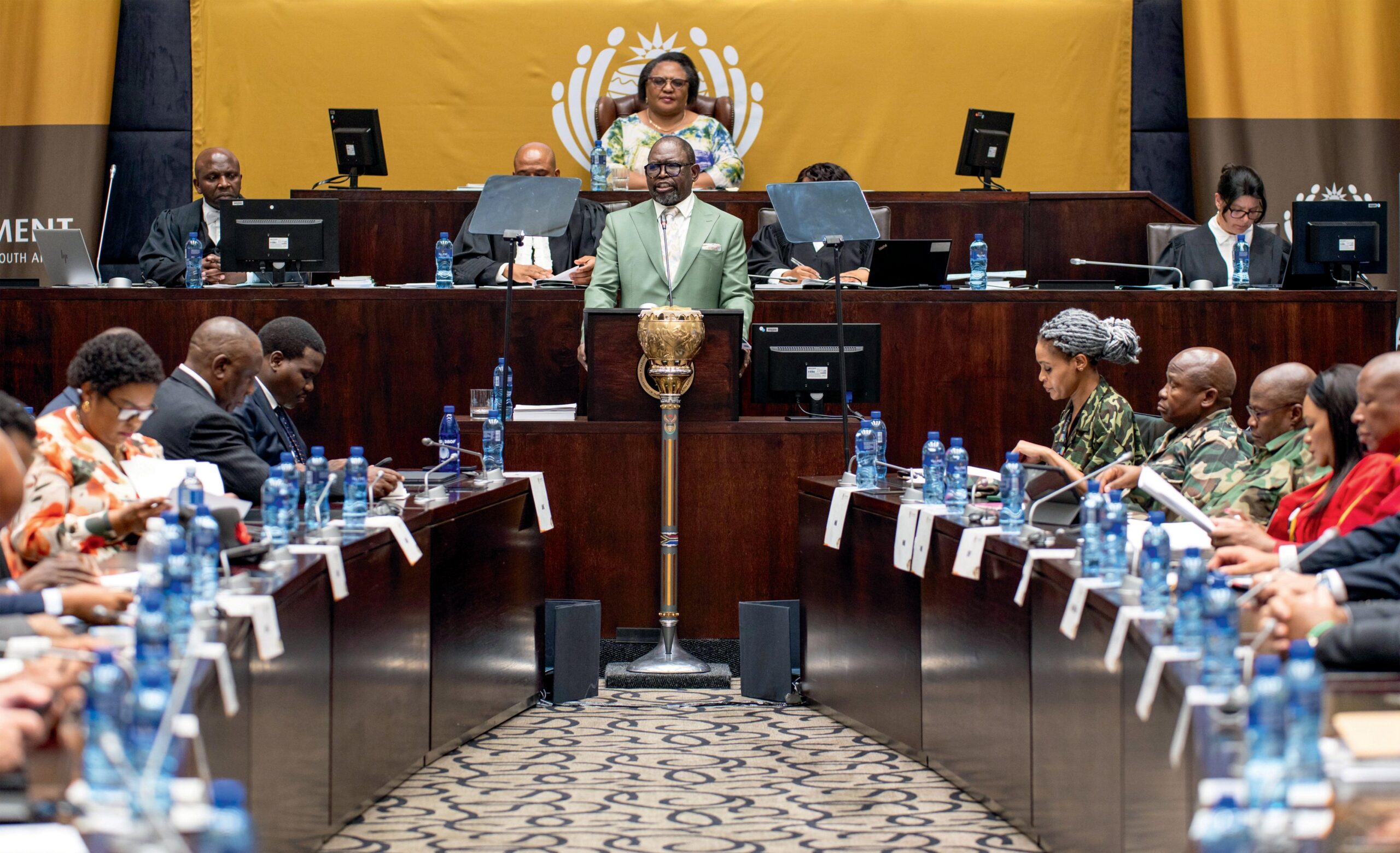
“South African Finance Minister Enoch Godongwana is expected to outline further municipal financial reforms in the Medium-Term Budget Policy Statement, with greater oversight of municipal grants and spending accountability emerging as key priorities ahead of the 4 November local government elections. Political parties are pressing for stronger financial controls, credible recovery plans and consequences for municipal mismanagement as concerns grow over unpaid obligations, declining household incomes and failures in essential public services.”
South Africa Faces Growing Pressure to Strengthen Municipal Governance and Financial Accountability
Municipal reform moves into the political spotlight
South Africa’s municipal governance challenges are taking centre stage as Finance Minister Enoch Godongwana prepares to present the 2026 Medium-Term Budget Policy Statement (MTBPS) to Parliament on Wednesday, 21 October. With local government elections scheduled for 4 November, the announcement comes at a politically significant moment when residents, businesses and political parties are demanding better financial management, reliable services and greater accountability from municipalities.
According to a report published by Eyewitness News on 21 October, the minister is expected to announce further municipal reforms during the budget presentation. National Treasury has already indicated its intention to strengthen controls over municipal grants to ensure that public money is spent on its designated purposes.
The developments place municipal governance firmly within the broader debate about South Africa’s public finances. Municipalities are responsible for delivering essential services, including water, sanitation, electricity distribution, refuse collection, roads and local infrastructure. When these institutions experience financial or administrative difficulties, the consequences extend beyond government balance sheets and directly affect residents’ daily lives.
Financial management under increased scrutiny
A central issue facing municipal authorities is whether public funds are being managed effectively and used for their intended purposes.
Conditional grants are allocated for specific objectives, such as infrastructure development and service delivery programmes. Stronger oversight of these funds could help prevent inappropriate expenditure and ensure that money reaches the projects for which it was approved.
Godongwana previously indicated that National Treasury intended to tighten municipal grant spending controls. Eyewitness News reported on 1 October that the government was considering changes to municipal budgeting and spending processes, with further announcements expected following the local government elections.
These proposed measures matter because financial discipline is fundamental to effective public administration. Municipalities need budgets that accurately reflect their income, expenditure commitments and operational requirements.
When expenditure exceeds available resources without a credible funding plan, local authorities can struggle to maintain infrastructure, pay suppliers and deliver services. In addition, weak internal controls may make it harder to identify waste, irregular expenditure or poor financial decisions before they create larger problems.
However, stricter financial controls alone will not automatically resolve municipal difficulties. Their effectiveness will depend on implementation, monitoring, institutional capacity and whether officials are held responsible when established rules are ignored.
Political parties demand stronger accountability
Municipal financial management has become an important issue in political campaigning ahead of the November elections.
The Democratic Alliance has called for greater municipal accountability, particularly regarding the collection of water and electricity revenue and the payment of bulk suppliers. Its finance spokesperson, Kingsley Wakelin, has argued that municipal failures pose economic and fiscal risks, affecting businesses and employment.
The party has also called for a municipal financial recovery and accountability plan focused on service delivery, alongside strict conditions and consequences attached to debt relief.
These demands highlight the connection between local government finances and the broader economy. Businesses depend on reliable electricity distribution, water supplies, functioning roads and predictable municipal administration. Where these services deteriorate, operating costs can rise, investment decisions can be delayed and employment opportunities may be affected.
Rise Mzansi has also called for guidance on reviving struggling municipalities, pointing to the pressure declining household incomes can place on municipal revenue. The African Christian Democratic Party has emphasised residents’ right to receive value for their taxes through proper municipal services.
Although political parties may disagree about the causes of municipal problems and the best solutions, their public statements reflect a shared challenge: local authorities must demonstrate that they can manage public resources responsibly.
The crucial test will be whether election commitments translate into measurable improvements after voting concludes.
The consequences of municipal financial distress
Municipal finances are closely connected to the quality of services residents receive.
Local authorities generally rely on a combination of service charges, property rates, transfers from national government and other revenue sources. When residents and businesses cannot pay their accounts, collection systems fail or economic conditions weaken, municipalities may have fewer resources available for operations and maintenance.
At the same time, municipalities must continue meeting obligations to suppliers and maintaining infrastructure.
Failure to pay electricity and water suppliers can put pressure on service continuity. Outstanding pension fund contributions and other unpaid obligations can also expose weaknesses in financial administration and undermine confidence among employees, creditors and the public.
Eyewitness News reported concerns about municipalities failing to meet certain payment obligations, including pension-related contributions. These concerns have strengthened calls for a more comprehensive recovery strategy.
Nevertheless, municipal financial distress cannot be treated as a single problem with one universal solution. Each municipality has its own revenue base, infrastructure requirements, administrative capacity and spending pressures.
A sustainable recovery strategy therefore needs to identify the specific causes of financial difficulty. These could include inadequate revenue collection, weak expenditure controls, ageing infrastructure, excessive costs or poor planning.
Without credible assessments, blanket interventions risk overlooking local circumstances and producing limited results.
What the Medium-Term Budget Policy Statement could mean
The MTBPS is an important part of South Africa’s annual budgeting process. It updates economic and fiscal projections, reviews government expenditure and establishes the framework for the national budget that follows.
Parliament confirmed that Godongwana was scheduled to present the 2026 statement at 14:00 on 21 October. The presentation provides an opportunity for lawmakers to scrutinise the government’s financial plans and consider the relationship between fiscal sustainability, economic growth and service delivery.
For municipal governance, the significance lies in the government’s ability to align financial support with stronger oversight.
Municipalities need adequate resources to maintain essential services and invest in infrastructure. However, financial transfers must be accompanied by appropriate safeguards, transparent reporting and clear performance expectations.
If further reforms are announced, their details will matter. Residents and financial observers will need to understand how the proposed controls will work, which municipalities will be affected, how compliance will be assessed and what happens when financial requirements are not met.
The distinction between announcing reform and implementing it is particularly important. A policy can establish strong principles on paper but deliver little improvement if institutions lack the staff, information systems or authority needed to enforce it.
The full ministerial announcement and subsequent government documentation will therefore be necessary to establish the precise measures adopted. As of the publication of the Eyewitness News report, the additional reforms were anticipated rather than fully detailed.
Protecting residents while enforcing financial discipline
One of the most difficult questions facing national government is how to enforce financial discipline without making life harder for residents who already receive inadequate services.
When municipalities fail to meet financial requirements, withholding funding or imposing other sanctions may be considered. Yet interventions that reduce available resources can also affect infrastructure maintenance and the delivery of essential services.
Godongwana has previously defended Treasury’s use of financial measures against municipalities that failed to comply with requirements designed to improve their finances. Reporting on 1 October indicated that the government was considering further instruments, potentially including legal action, while also acknowledging the need to avoid unfairly penalising residents.
On the one hand, municipal authorities should not expect unlimited financial support without demonstrating responsible management. On the other hand, residents should not bear the full consequences of failures they did not cause and cannot directly correct.
A carefully designed recovery programme could combine financial oversight with technical assistance, realistic spending plans, improved revenue collection and regular progress assessments.
Where misconduct is established, appropriate investigations and lawful disciplinary or legal processes would also help reinforce accountability.
The objective should be to restore institutional capacity and improve service delivery rather than simply punish municipalities experiencing difficulties.
Transparency and public participation
Effective governance requires residents to understand how public money is collected, allocated and spent.
Municipal budgets, financial statements, procurement decisions and service delivery reports should be accessible and understandable. Public participation is particularly valuable when residents are asked to pay for services but experience interruptions, infrastructure failures or delays in resolving complaints.
Transparent reporting can help communities assess whether promised projects are being completed and whether municipal leadership is responding to identified problems.
It can also strengthen the work of councillors, auditors, oversight bodies and journalists by providing information against which official claims can be evaluated.
For reform to succeed, municipal performance should be measured through practical indicators. These could include the reliability of water and electricity services, the maintenance of roads, the completion of infrastructure projects, the settlement of legitimate supplier invoices and improvements in revenue collection.
Regular reporting against these indicators would give residents a clearer picture of whether municipal recovery programmes are producing results.
Furthermore, transparency should extend to the reasons behind poor performance. Where projects are delayed, authorities should explain whether the causes involve funding shortages, procurement problems, technical difficulties or administrative failures.
Clear explanations cannot replace effective delivery, but they can help establish public trust and create a basis for corrective action.
Local elections increase pressure for measurable results
The 4 November local government elections add urgency to the governance debate.
Municipal elections allow residents to evaluate political leadership based on service delivery, financial management and responsiveness to community concerns. Candidates and parties will face questions about water shortages, electricity distribution, sanitation, infrastructure maintenance and the use of municipal revenue.
However, election promises must be assessed against practical plans and available resources.
Voters can examine whether parties identify specific problems, explain how proposed interventions will be funded and establish realistic timelines for implementation. They can also assess whether candidates acknowledge previous failures and offer credible mechanisms for reporting progress.
The challenge extends beyond election day. New and returning municipal leaders will need to work within legal financial frameworks, cooperate with national and provincial authorities and demonstrate consistent improvements in administrative performance.
Political competition may encourage public debate, but durable reform requires institutions that continue operating effectively regardless of which party holds office.
Conclusion: Implementation will determine the success of municipal reform
South Africa’s renewed focus on municipal financial accountability reflects a fundamental governance challenge: public institutions must demonstrate that resources are being used responsibly and that government decisions produce tangible benefits for residents.
Godongwana’s scheduled Medium-Term Budget Policy Statement offers an important opportunity to clarify the government’s approach to municipal spending controls, financial recovery and oversight. Political parties have already highlighted concerns about unpaid obligations, weak service delivery and the economic consequences of failing local authorities.
Yet the long-term success of any proposed reforms will depend on their practical implementation. Clear rules, credible financial assessments, transparent reporting, appropriate enforcement and support for institutional capacity will all be essential.
Municipalities must also recognise that sound financial management is not merely an accounting exercise. It is directly connected to reliable water supplies, functioning infrastructure, local economic activity and the public’s confidence in democratic government.
As South Africa approaches its local government elections, residents will be looking for evidence that political commitments can lead to better services and more responsible administration.
Ultimately, municipal reform will be judged not by the number of announcements made in Parliament, but by whether municipalities manage public money more effectively, meet their obligations and deliver measurable improvements in people’s lives.



