




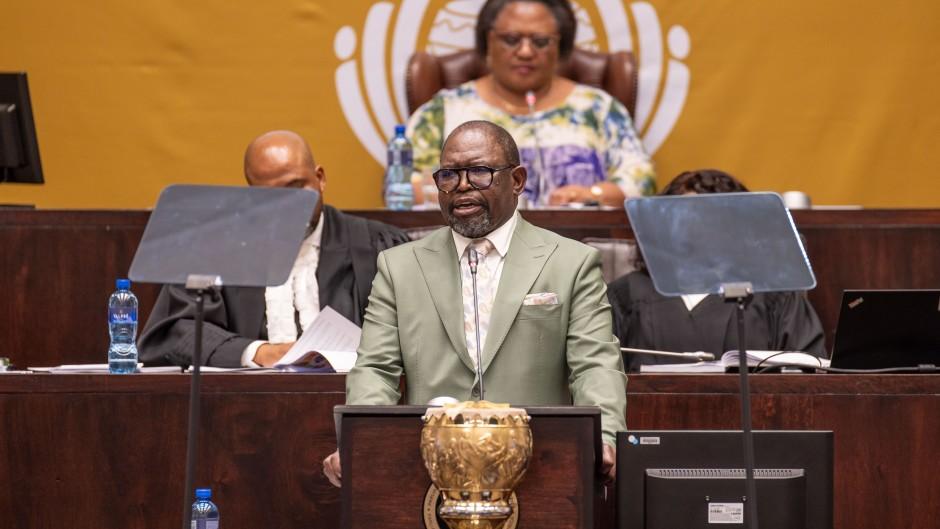
“South Africa’s Medium-Term Budget Policy Statement (MTBPS), scheduled for presentation by Finance Minister Enoch Godongwana on 21 October 2026, is a major policy event that will update the government’s fiscal outlook, spending priorities and economic forecasts. The statement comes amid pressure from rising living costs, global energy uncertainty and demands for improved public services, making its implications for households, businesses and government departments particularly important.”
South Africa’s budget policy faces a decisive test as government balances fiscal stability with public needs
South Africa’s Medium-Term Budget Policy Statement is one of the country’s most important annual public-policy announcements because it sets out how government intends to manage public finances, allocate resources and respond to economic challenges before the next national budget. Finance Minister Enoch Godongwana is scheduled to present the 2026 statement in Parliament on Wednesday, 21 October, at 14:00. The announcement comes at a critical moment, as policymakers face competing demands for fiscal discipline, economic growth, job creation and relief for households confronting rising living expenses.
Fiscal policy takes centre stage
The MTBPS provides an updated assessment of government revenue, expenditure, borrowing requirements and economic forecasts. It also establishes the direction of fiscal policy for the coming years, allowing Parliament, businesses, investors and the public to evaluate whether government plans are financially sustainable.
Unlike the main national budget, which sets out detailed financial allocations for the coming fiscal year, the medium-term statement reviews changing economic conditions and adjusts expectations. Its conclusions help determine how much money government can spend, which priorities receive funding and how public debt will be managed.
According to the South African government’s announcement, the statement will outline spending and revenue estimates alongside economic projections covering the next three years. It also provides Parliament with an opportunity to scrutinise Treasury’s assessment of the country’s financial position.
The policy challenge is significant. Government must maintain confidence in its ability to meet financial obligations while addressing persistent social and economic problems. Unemployment, infrastructure weaknesses, uneven municipal performance and pressure on household budgets continue to create demands for public intervention.
Consequently, the success of the MTBPS will depend not only on whether government can control expenditure, but also on whether its financial decisions support sustainable economic development.
Stronger revenue collections create an opportunity
One important development ahead of the statement has been stronger tax revenue. Reporting before the announcement indicated that higher corporate tax receipts, alongside personal income tax and value-added tax collections, could improve the fiscal outlook.
Reuters reported that financial institutions expected revenue to exceed earlier projections substantially, although Treasury was expected to incorporate only part of the potential additional income into its forecasts. These were estimates ahead of the minister’s address, rather than confirmed final budget figures.
Stronger revenue could provide government with greater flexibility. Additional income might help reduce borrowing, stabilise public debt or support essential services without requiring immediate tax increases.
However, policymakers must distinguish between temporary revenue gains and improvements that can be sustained over several years. Corporate tax receipts can fluctuate with commodity prices, business profitability and wider economic conditions. A government that increases recurring expenditure using temporary income could face difficult funding decisions when revenues weaken.
A cautious approach would therefore involve strengthening public finances while directing available resources towards clearly defined priorities. The government must demonstrate that better collections translate into durable fiscal improvements rather than short-term relief followed by renewed financial pressure.
Household affordability remains a major concern
For ordinary South Africans, the central question is whether government’s fiscal strategy will improve living conditions.
Households continue to face pressure from transport, food, electricity and other essential expenses. Fuel prices are particularly important because South Africa imports most of its petroleum requirements, leaving domestic costs exposed to international oil prices and exchange-rate movements.
Ahead of the statement, reporting highlighted expectations that the minister might face calls to cushion consumers against rising fuel costs. Economists and other commentators also questioned whether fiscal improvements would provide meaningful relief to households.
Any relief measures, however, would require careful consideration of their cost and duration. Broad subsidies may provide immediate assistance, but they can also increase government expenditure and benefit higher-income consumers alongside those who need support most.
Targeted interventions could offer an alternative if government can identify eligible recipients and administer assistance effectively. Nevertheless, targeting requires reliable systems, clear eligibility rules and sufficient administrative capacity.
Social protection is another important issue. The National Treasury must balance the needs of vulnerable households against the cost of sustaining assistance over time. Before the statement, the future of the Social Relief of Distress grant, scheduled to expire in March 2027, was identified as an important policy question. Its continuation or replacement would require credible funding arrangements.
For policymakers, the challenge is to protect vulnerable people without undermining the long-term stability needed to finance public services.
Municipal finances and service delivery demand attention
Municipal government is another major policy concern as South Africa approaches the local government elections scheduled for 4 November 2026.
Municipalities are responsible for essential services, including water, sanitation, electricity distribution and local infrastructure. When they struggle financially, the consequences affect residents, businesses and the wider economy.
Ahead of the MTBPS, eNCA and EWN reporting highlighted concerns about municipal finances, grant spending and accountability. EWN reported that Treasury was expected to address further municipal reforms, including tighter controls intended to ensure grants are spent for their designated purposes.
The policy problem extends beyond the amount of funding municipalities receive. Effective financial management, accurate billing, revenue collection, procurement controls and responsible expenditure are equally important.
Municipalities that fail to collect payments or manage resources efficiently can accumulate debts and struggle to maintain infrastructure. This weakens service delivery and may discourage businesses from investing in affected communities.
At the same time, imposing strict financial conditions without considering local circumstances could create additional difficulties for municipalities already facing severe capacity constraints.
National Treasury therefore needs an approach that combines oversight with practical support. Clear reporting requirements, measurable recovery plans and consequences for misuse of public funds could strengthen accountability. Technical assistance and improved administrative systems may also help municipalities manage their responsibilities.
For residents, the ultimate measure of success will be whether these reforms lead to more reliable services, better-maintained infrastructure and greater transparency in the use of public money.
Economic growth must accompany fiscal discipline
Reducing borrowing and controlling expenditure are important, but they cannot independently resolve South Africa’s economic challenges.
Sustained growth requires productive investment, reliable infrastructure, competitive businesses and a workforce equipped with relevant skills. When economic activity expands, companies can employ more people, households earn additional income and government collects revenue from a broader economic base.
Conversely, weak growth can undermine fiscal consolidation. Even when government limits expenditure, sluggish economic activity may restrict tax collections and make existing debt burdens harder to manage.
Reuters reporting before the MTBPS described expectations of an improved fiscal outlook alongside continuing concerns about weak growth and international energy pressures. The International Monetary Fund’s growth outlook was also cited as a reminder that South Africa’s economic expansion remained limited.
Infrastructure investment is particularly important. Efficient transport networks, dependable electricity, functioning water systems and modern logistics facilities can reduce operating costs and improve productivity.
Nevertheless, infrastructure spending must be properly planned and monitored. Poor procurement, project delays and inadequate maintenance can prevent public investment from delivering its intended benefits.
Government must therefore demonstrate not only how much it plans to spend, but also how expenditure will translate into measurable economic improvements. Clear project milestones, transparent procurement and independent oversight can help strengthen public confidence.
Private-sector investment is equally important. Businesses are more likely to commit capital when policy is predictable, infrastructure works and regulatory requirements are transparent. The MTBPS can contribute to confidence by presenting credible financial projections and explaining how government intends to support sustainable growth.
Public debt and investor confidence
Government borrowing is another central consideration in the policy debate.
When debt rises rapidly, interest payments consume resources that could otherwise support education, healthcare, infrastructure and social development. Reducing the cost of servicing debt can therefore create additional room for productive public expenditure.
Before the statement, Reuters reported expectations that South Africa’s budget deficit could narrow, supported by stronger revenue collections. Financial analysts were also watching for further details of a possible fiscal anchor designed to strengthen control over borrowing and debt.
A fiscal anchor provides a framework for guiding government financial decisions over time. Depending on its design, it can establish principles or targets intended to prevent borrowing from becoming unsustainable.
Its effectiveness would depend on transparency, credibility and implementation. Investors and credit-rating agencies are likely to examine whether the framework contains clear rules, whether deviations can be explained and whether government has a credible plan for correcting financial deterioration.
Improved confidence could eventually support lower borrowing costs. However, stronger credit ratings are not guaranteed by a single budget announcement. Analysts also consider economic growth, institutional strength, debt trends and the government’s ability to implement reforms.
For South Africa, the objective should be to establish a durable fiscal position that supports economic development rather than pursuing short-term improvements at the expense of essential services.
Parliament’s oversight role remains essential
The MTBPS is not simply a Treasury announcement. It forms part of a broader democratic process through which elected representatives examine the government’s financial plans.
Parliamentary committees can assess expenditure proposals, scrutinise departmental performance and consider whether public money is being used effectively. The process also allows stakeholders to contribute to discussions about the revised fiscal framework and revenue proposals.
This scrutiny matters because budget allocations do not automatically guarantee results. Departments must implement programmes effectively, maintain proper records and demonstrate that public spending achieves its intended objectives.
Members of Parliament should therefore examine both the financial projections and the practical consequences of government decisions. Where programmes consistently underperform, corrective action should be clear and measurable.
Public participation also strengthens accountability. Civil society organisations, business associations, labour representatives and ordinary citizens have an interest in how government raises revenue and distributes public resources.
Transparent communication can help the public understand the difficult choices involved in fiscal policy. It can also allow citizens to assess whether the government’s priorities reflect national needs.
What the policy statement means for South Africa
The 2026 MTBPS presents government with an opportunity to demonstrate that financial discipline and social development can reinforce one another.
A credible plan would need to explain how government intends to manage debt, maintain essential services, respond to household pressures and improve the conditions for investment. It should also clarify how public institutions will be held accountable for spending decisions.
The immediate details of the minister’s announcement are important, but implementation will ultimately determine whether the policy succeeds. Revenue projections must remain realistic, expenditure commitments must be affordable and reforms must produce measurable improvements.
South Africans should therefore assess the statement against practical outcomes: whether infrastructure improves, municipalities become more reliable, public money is used transparently and economic opportunities expand.
The government must also communicate the trade-offs involved. Fiscal stability may require difficult decisions, but those decisions should be explained openly and evaluated according to their effects on different communities.
Conclusion
South Africa’s Medium-Term Budget Policy Statement is a significant test of the government’s economic and public-policy priorities. Stronger tax collections may offer an opportunity to improve the fiscal position, but rising living costs, weak economic growth, municipal financial problems and demands for social assistance continue to complicate the outlook.
The central challenge for Enoch Godongwana and National Treasury is to turn financial stability into tangible public benefits. That requires responsible borrowing, efficient expenditure, effective oversight and reforms that encourage productive investment.
As Parliament examines the revised fiscal framework, the country will need more than encouraging forecasts. It will need evidence that government decisions can strengthen public finances while improving services, supporting vulnerable households and creating the conditions for sustained employment and economic growth.
The final judgement on the MTBPS will depend on what happens after the announcement: whether the plans are implemented, whether public institutions deliver and whether South Africans begin to experience meaningful improvements in their daily lives.



