




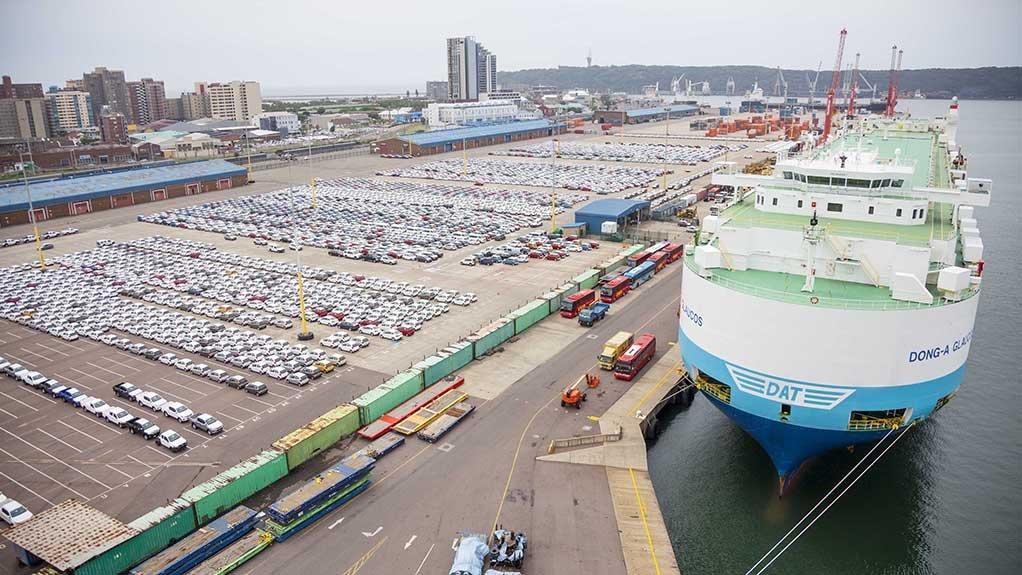
“South Africa plans to phase out existing semi-knocked-down vehicle assembly operations and withhold policy support from new facilities that rely on importing nearly complete vehicle kits, according to Minister Parks Tau. The policy aims to increase local content in vehicle production from an average of 38% to 60%, strengthen domestic manufacturing, support employment and help the country achieve a larger share of global vehicle production by 2035.”
South Africa’s Automotive Policy Shift Puts Local Manufacturing and Jobs in Focus
South Africa is preparing to reshape an important part of its industrial policy by phasing out support for semi-knocked-down vehicle assembly operations. The announcement, made by Trade, Industry and Competition Minister Parks Tau at South African Auto Week on 15 October 2026, signals a stronger government preference for automotive production that creates deeper domestic industrial activity rather than relying heavily on imported vehicle kits. The decision forms part of a broader effort to strengthen manufacturing, increase local sourcing and support employment in one of the country’s strategically important industries.
A policy change aimed at deeper production
The government’s decision distinguishes between semi-knocked-down assembly, commonly called SKD, and complete-knocked-down manufacturing, known as CKD. SKD operations generally involve importing vehicles in partially assembled form, with substantial components already supplied as a kit. CKD production involves more extensive assembly and manufacturing activity, potentially creating greater opportunities for domestic component suppliers and other industrial businesses.
According to Reuters, existing SKD operations will be phased out of policy support, while new facilities based on this model will not receive such support. Medium and heavy commercial vehicles are excluded from the announced change. Authorities also intend to tighten the definition of CKD manufacturing to ensure that businesses claiming the status undertake genuine production activities.
The distinction matters because industrial incentives are designed to influence commercial decisions. When a government offers favourable treatment to particular manufacturing activities, companies can respond by investing in factories, equipment, training and local supplier networks. However, if the rules reward limited assembly without encouraging substantial domestic production, the economic benefits may be smaller than policymakers intended.
South Africa’s revised approach seeks to make industrial support more closely connected to the economic outcomes the country wants to achieve.
Local content becomes a central objective
One of the policy’s main ambitions is to increase the domestic content of vehicles manufactured in South Africa from an average of 38% to 60%. The country’s Automotive Master Plan also seeks to double employment in the sector and increase South Africa’s share of global vehicle output to 1% by 2035. These objectives place local sourcing and industrial competitiveness at the centre of the policy debate.
Local content measures the proportion of a product’s value generated domestically. In automotive manufacturing, this can include locally produced components, materials, manufacturing services and other qualifying inputs. Increasing this share can create opportunities for companies supplying seats, wiring systems, tyres, metal parts, electronics, glass, interiors and other vehicle components.
Nevertheless, achieving a higher local-content target requires more than changing incentive rules. Suppliers need reliable demand, access to financing, modern production equipment, technical skills and consistent quality standards. They must also manufacture at costs that allow vehicle producers to compete against international rivals.
The government’s challenge is therefore to encourage manufacturers to buy more locally without making South African production unnecessarily expensive. A successful policy would help local suppliers become more productive while enabling vehicle manufacturers to sell competitively priced products at home and abroad.
Why the existing model attracted criticism
The move follows criticism from established manufacturers who argued that SKD assembly could allow businesses to benefit from favourable import treatment without making comparable investments in local production.
Reuters reported that BMW Group South Africa chief executive Peter van Binsbergen had called for what he described as an SKD loophole to be closed. Toyota South Africa Motors chief executive Andrew Kirby also supported phasing out SKD operations, arguing that the industry had progressed beyond the need for this approach.
These concerns reflect a wider question in industrial policy: how should governments balance openness to imports with incentives for local investment?
Importing vehicle kits can provide a relatively accessible route into a market. It may reduce the capital expenditure needed to establish operations and allow businesses to respond to demand. However, if assembly involves limited local activity, the resulting benefits for component manufacturers, skilled workers and industrial technology development may be restricted.
Conversely, full-scale manufacturing usually requires greater investment and more extensive supply chains. Such facilities can create additional opportunities for local companies, but they also expose manufacturers to substantial costs and commercial risks.
South Africa’s policy shift seeks to encourage investment in the latter model. Its success will depend on whether companies see a credible commercial reason to expand domestic production rather than simply changing how they import and assemble vehicles.
The Automotive Production and Development Programme under review
The announcement is part of a wider review of the Automotive Production and Development Programme, the incentive framework supporting the sector. The government is conducting the review with industry body NAAMSA, component manufacturers’ association NAACAM and organised labour.
This consultation is important because automotive policy affects businesses across the entire production chain. Vehicle manufacturers make long-term investment decisions, while component suppliers often need to commit capital before receiving guaranteed orders. Workers and unions, meanwhile, have an interest in job security, training and the quality of employment created.
A well-designed framework must therefore provide predictable rules. Manufacturers need clarity about which activities qualify for support, how incentives will be calculated, what transition arrangements apply and what obligations accompany government assistance.
For existing SKD operations, the phase-out timetable and implementation details will be especially important. Abrupt changes could disrupt business plans, while an excessively long transition could delay the intended increase in local production. Clear communication and realistic deadlines will help businesses plan investments and workforce requirements.
The review also presents an opportunity to assess whether existing incentives deliver measurable results. Policymakers can examine investment commitments, local procurement, employment, exports and supplier development rather than judging success solely by the number of facilities operating in the country.
Potential effects on employment and small businesses
The proposed changes could influence employment beyond the large vehicle assembly plants. A stronger local supplier network may create opportunities for small and medium-sized enterprises involved in engineering, logistics, maintenance, packaging, industrial services and specialised manufacturing.
For example, a manufacturer that increases its domestic sourcing may need additional suppliers capable of producing components to precise technical specifications. Local businesses that meet these requirements could gain access to longer-term contracts, invest in equipment and employ additional workers.
However, these benefits are not automatic. Smaller suppliers often face high financing costs, limited access to advanced machinery and difficulty meeting the certification standards required by major manufacturers. Some may also struggle to compete with established international suppliers that benefit from larger production volumes.
Government policy could help address these obstacles through supplier-development programmes, technical training, financing access and transparent procurement arrangements. Such measures would complement the change in vehicle assembly incentives by helping domestic businesses become capable of serving the industry.
Employment outcomes will also depend on productivity. Increased localisation should ideally support sustainable, skilled jobs rather than simply increase costs. Businesses must be able to improve quality, adopt new technologies and compete in export markets if additional jobs are to endure.
Pickup trucks and the question of additional protection
The government is also considering whether the light commercial vehicle segment, particularly ladder-frame vehicles such as pickup trucks, requires additional support. Tau indicated that the International Trade Administration Commission would investigate the matter before a final decision is made. Any additional protection would be accompanied by reciprocal commitments covering production, localisation, employment, transformation, exports and investment.
This approach highlights the difference between providing protection and securing economic results. Import tariffs or other protective measures can give domestic producers room to compete, but protection alone cannot guarantee innovation or productivity. If companies receive support without clear obligations, consumers may face higher prices without corresponding improvements in domestic industrial capacity.
Linking assistance to measurable commitments could help ensure that businesses receiving additional protection contribute to national development objectives. The effectiveness of such conditions would depend on transparent measurement, regular monitoring and credible consequences when commitments are not fulfilled.
The investigation must also consider the interests of consumers, dealers, fleet operators and businesses that depend on affordable commercial vehicles. Pickup trucks serve a wide range of uses in agriculture, construction, transport and small-business operations. Policy decisions affecting their prices and availability could therefore have implications well beyond vehicle manufacturing.
Competitiveness, exports and international investment
South Africa’s automotive industry operates in an international market where manufacturers compare production costs, logistics, supplier capabilities, skills and access to customers across several countries.
Increasing local content could strengthen the country’s industrial base, particularly if suppliers become more technologically advanced and manufacturers use South African facilities to serve export markets. Greater domestic production could also reduce dependence on some imported components, although this would depend on the availability and competitiveness of local alternatives.
At the same time, companies may reconsider investments if policy changes create uncertainty or if local production becomes substantially more expensive than competing options. The government must therefore communicate its objectives clearly and provide a stable framework within which investors can make long-term decisions.
Exports will be especially important. A larger domestic supply chain cannot rely indefinitely on local demand alone. Manufacturers need access to overseas markets, efficient transport infrastructure, reliable energy and internationally competitive production standards. Industrial incentives are most effective when they support companies capable of succeeding beyond a protected domestic market.
The policy’s 2035 ambitions will consequently require coordination between manufacturing incentives, skills development, infrastructure investment, trade policy and supplier innovation.
What businesses should monitor next
For manufacturers, suppliers and investors, the next phase will be defined by the detailed rules emerging from the programme review. Businesses should monitor the formal definition of CKD production, the transition arrangements for existing SKD operations and the criteria used to determine eligibility for future support.
Component manufacturers should assess whether they can meet potential increases in local demand and identify where investment in technology, staff training or certification may be necessary. Small businesses hoping to enter automotive supply chains should investigate supplier-development opportunities and establish relationships with manufacturers early.
Investors will also want to understand how the revised framework affects project costs, expected returns and the availability of incentives. Workers and labour organisations will be watching whether the reforms lead to new production capacity, better skills opportunities and sustainable employment.
The government, for its part, will need to publish clear implementation arrangements and evaluate outcomes against measurable targets. Progress should be assessed through actual investment, domestic sourcing, employment, exports and productivity, rather than announcements alone.
Conclusion: Policy support must deliver measurable results
South Africa’s decision to phase out support for SKD vehicle assembly represents a significant adjustment in industrial policy. It signals that government assistance should increasingly favour manufacturing activities capable of strengthening domestic supply chains, developing skills and creating economic value within the country.
The strategy offers opportunities for vehicle manufacturers, component suppliers and workers, but it also carries risks if implementation is uncertain or local production costs rise without corresponding productivity improvements. Its success will depend on consistent rules, capable suppliers, effective monitoring and a competitive business environment.
Ultimately, the measure should be judged by whether it generates additional investment, raises local content, supports sustainable employment and expands exports. If those outcomes materialise, the automotive policy shift could help reinforce South Africa’s manufacturing base. If they do not, changing the rules alone will not deliver the industrial transformation the country seeks.



