




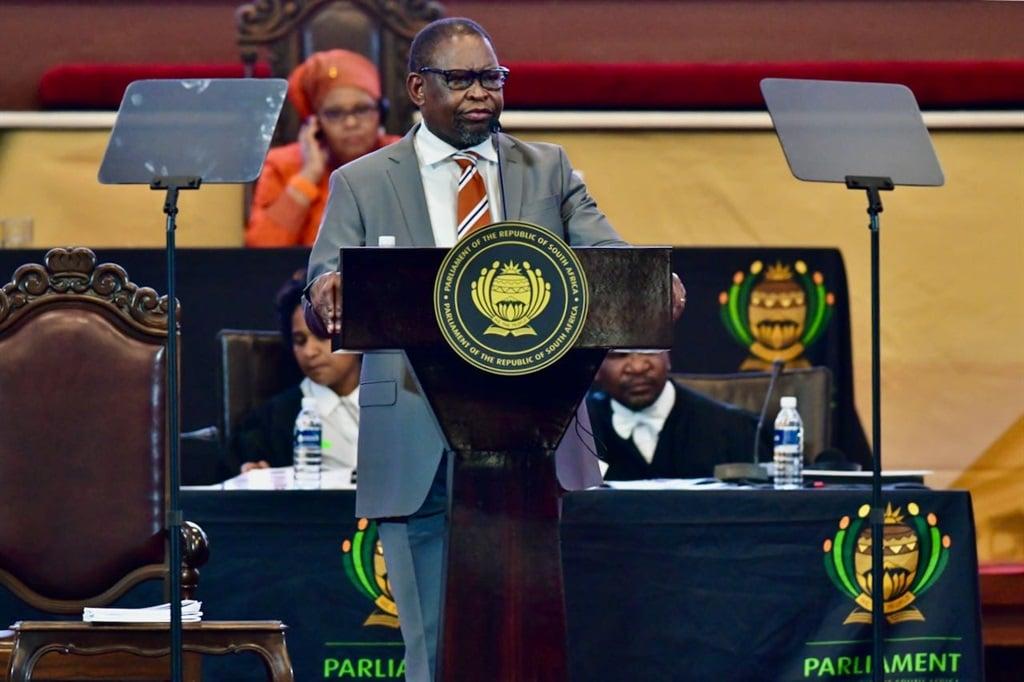
“Moody’s Ratings has described South Africa’s latest Medium-Term Budget Policy Statement as positive for the country’s credit profile, pointing to continued fiscal consolidation, tighter monetary policy and measures intended to manage public debt despite elevated oil prices. However, the ratings agency cautioned that weaker nominal economic growth and the government’s substantial interest burden remain important challenges, while emphasising that proposed fiscal rules will need consistent implementation to establish credibility.”
Moody’s Welcomes South Africa’s Budget Policy Progress as Fiscal Discipline Faces Growth Challenges
South Africa receives positive assessment of its fiscal direction
South Africa’s efforts to strengthen public finances have received a positive assessment from Moody’s Ratings, placing the government’s budget strategy in the spotlight as policymakers attempt to improve economic stability, restore investor confidence and create conditions for sustainable business growth.
In a report released on Monday, 26 October 2026, Moody’s described the country’s latest Medium-Term Budget Policy Statement (MTBPS) as positive for its credit profile. The agency highlighted continued fiscal consolidation and tighter monetary policy, even as higher oil prices and weaker-than-expected nominal gross domestic product growth complicate the economic outlook.
The assessment is important because South Africa’s fiscal decisions affect the cost of government borrowing, investor perceptions, public infrastructure investment and the broader operating environment for businesses. However, the positive assessment does not constitute a new sovereign credit-rating upgrade. Reuters reported that Moody’s maintained South Africa’s Ba2 rating with a positive outlook and did not announce a rating action on 26 October.
The development therefore represents encouragement for the government’s policy direction rather than confirmation that the country’s financial challenges have been resolved.
Government tightens its budget deficit target
A central feature of the latest budget statement is the government’s revised deficit forecast. South Africa reduced its consolidated fiscal deficit target for the 2026/27 financial year to 3.9% of GDP, compared with the 4.0% forecast in February.
According to Reuters, the improvement was supported partly by a R17.1 billion upward revision in projected gross tax revenue. Higher collections provide the government with additional fiscal room, although the durability of these gains remains uncertain because some of the improvement reflects stronger commodity prices.
The policy challenge is how to use the additional revenue responsibly. Governments can allocate unexpected revenue towards immediate spending pressures, reduce borrowing requirements or increase investment in infrastructure and other productive activities.
Each option carries different implications. Additional spending can support public services and economic activity, while reducing borrowing can limit future interest payments. Productive investment may improve long-term economic capacity, provided projects are well planned and implemented efficiently.
For businesses, predictable public finances are particularly valuable. Companies make investment decisions based partly on expectations about taxation, government spending, interest rates and the stability of economic policy. A credible fiscal framework can reduce uncertainty and help firms plan expansion, hiring and financing.
Nevertheless, a lower deficit target does not automatically translate into stronger economic growth. The benefits depend on whether fiscal adjustments are accompanied by reforms that improve productivity, infrastructure reliability and business confidence.
Public debt remains a central policy concern
South Africa has spent years managing a heavy public debt burden, which has constrained the government’s ability to expand services and invest without increasing borrowing costs.
Moody’s estimates that government debt could decline from approximately 86.8% of GDP in fiscal 2025 to 84.9% by fiscal 2028. The agency indicated that the debt burden has probably peaked.
A stabilising debt trajectory would represent an important development for economic policy. When debt grows faster than the economy for extended periods, governments may need to devote increasing amounts of revenue to interest payments. That leaves less funding available for transport, electricity, water infrastructure, education and other public priorities.
However, the debt outlook depends on several factors, including economic growth, government revenue, expenditure management and borrowing costs.
If growth disappoints, tax revenue may underperform and debt ratios may improve more slowly than expected. Similarly, higher global interest rates can increase financing costs, particularly when governments must refinance existing debt or issue new bonds.
South Africa’s policy challenge is therefore not simply to reduce borrowing. It must also strengthen the productive capacity of the economy so that future revenue growth can support public services without placing excessive pressure on taxpayers.
High interest costs limit fiscal flexibility
Despite its positive assessment, Moody’s identified debt affordability as a significant weakness. Interest payments absorbed 18.8% of general government revenue in fiscal 2025, according to the Reuters report.
This figure highlights the trade-off facing policymakers. Revenue used to service debt cannot simultaneously fund new infrastructure, improve municipal services or expand programmes supporting vulnerable households.
The pressure can also affect the private sector indirectly. If government borrowing remains expensive, financing costs can influence interest rates across the economy and affect the availability of capital for investment.
Small and medium-sized businesses are particularly sensitive to financing conditions. Companies seeking loans to purchase equipment, open new premises or expand production must account for borrowing costs when calculating whether an investment is commercially viable.
However, lower government borrowing costs do not automatically guarantee cheaper credit for every business. Commercial lending rates also depend on monetary policy, bank funding costs, borrower risk and wider market conditions.
The government must therefore combine fiscal discipline with measures that improve economic competitiveness and make investment more attractive.
Fiscal rules could strengthen policy credibility
Another important development is the proposed introduction of a more formal fiscal framework.
Finance Minister Enoch Godongwana’s Medium-Term Budget Policy Statement outlined plans to establish fiscal sustainability as a principle within the Public Finance Management Act. The proposed legislation is expected to be introduced in Parliament in 2027.
The framework is intended to require each administration to set out its fiscal objectives, explain its progress through budget processes and account for significant deviations. The Financial and Fiscal Commission would have a role in independently assessing consistency between the government’s fiscal plans and its stated objectives.
The proposal is significant because business confidence depends not only on current economic indicators but also on expectations about future government decisions.
A transparent fiscal framework can help investors understand how authorities intend to manage spending, borrowing and debt over time. It can also make it easier for businesses to evaluate policy risks when planning long-term investments.
However, Moody’s warned that the proposed framework’s credibility would depend on consistent application, particularly because it does not impose a binding numerical target.
That distinction matters. A fiscal rule can improve accountability, but only if governments follow the framework when economic and political pressures make difficult decisions necessary.
Flexibility is also important. A rigid rule may be unsuitable during a recession, natural disaster or other emergency. The policy objective is to maintain discipline while allowing a transparent and defensible response to changing economic conditions.
Slower nominal growth complicates the outlook
Although Moody’s welcomed the budget’s fiscal direction, weaker nominal GDP growth than anticipated in February remains a concern.
Nominal GDP measures economic output at current prices, combining changes in production and price levels. It matters for public finances because tax receipts, debt ratios and the size of the economy are commonly evaluated against nominal economic activity.
Weak nominal growth can complicate debt management even when the government controls spending. If the economy expands more slowly than expected, debt can remain relatively high compared with national output, while revenue growth may prove insufficient to support existing commitments.
South Africa’s latest budget statement also lowered its forecast for real economic growth in 2026 to 1.2%, from the 1.6% projected in February. The Treasury cited a difficult global environment and domestic economic pressures.
This outlook illustrates the tension between stabilising public finances and creating enough economic momentum to expand employment.
Businesses need reliable electricity, efficient transport networks, predictable regulation and access to finance. Without improvements in these areas, fiscal consolidation alone may not generate the growth required to reduce unemployment and broaden the tax base.
Consequently, the government must ensure that expenditure restraint does not undermine essential investment that could strengthen future economic performance.
Oil prices and monetary policy remain important risks
Global oil prices are another source of uncertainty for South Africa’s economic policy.
Higher oil prices can increase transport, manufacturing and distribution costs. Businesses may respond by raising prices, absorbing lower margins or reducing other expenditure. Households can also face greater pressure on disposable incomes, potentially weakening demand for goods and services.
For policymakers, higher energy costs create a difficult balancing act. They can contribute to inflationary pressure while weakening economic activity, complicating decisions about interest rates and government support.
Moody’s cited tighter monetary policy as one of the factors supporting its positive assessment of South Africa’s fiscal position.
Monetary policy and fiscal policy operate through different channels, but their effects are interconnected. Interest-rate decisions influence borrowing costs and inflation, while government taxation and spending affect aggregate demand and public borrowing requirements.
Coordination and credibility are therefore essential. If fiscal policy creates sustained inflationary pressure, monetary authorities may face greater difficulty controlling prices. Conversely, predictable fiscal management can support broader economic stability.
The appropriate response to global shocks must nevertheless take account of domestic conditions. Policies that protect short-term stability should also preserve the ability of firms to invest, employ workers and compete internationally.
Infrastructure and public-sector reform are essential for business confidence
South Africa’s budget strategy also places emphasis on infrastructure investment and improving government implementation.
In his October 2026 budget statement, Godongwana said the Infrastructure Finance and Implementation Support Agency was supporting projects across government with a potential investment value exceeding R217 billion. The government also reported a pipeline of public-private partnership projects intended to improve infrastructure delivery.
These initiatives matter because inadequate infrastructure can raise costs across the economy. Electricity constraints, unreliable water services, transport bottlenecks and inefficient municipal administration can reduce production and discourage investment.
Public-private partnerships may help mobilise private capital and technical expertise. However, their success depends on appropriate risk allocation, transparent procurement, sound project preparation and effective oversight.
Infrastructure expenditure must also produce functioning assets rather than merely increasing budget allocations. Delayed or incomplete projects can weaken public confidence and reduce the economic return on government spending.
The same principle applies to broader public financial management reforms. Clear accountability, effective procurement and stronger enforcement against financial misconduct can improve the value delivered by public expenditure.
For businesses considering long-term commitments, these practical improvements may be as important as the headline deficit figures.
Implications for businesses and investors
The Moody’s assessment offers a cautiously positive signal to domestic and international investors. It suggests that the government’s fiscal consolidation efforts are receiving recognition from a major ratings agency.
However, businesses should distinguish between an encouraging assessment and a comprehensive improvement in economic conditions.
Companies will continue to monitor borrowing costs, currency movements, inflation, energy prices, taxation and the pace of infrastructure reform. Exporters will also need to assess global demand and trade conditions, while domestic firms must consider how household purchasing power affects sales.
For smaller businesses, the most important outcomes may be practical rather than financial-market driven: reliable electricity, faster payments for public contracts, efficient transport, accessible credit and clearer regulatory requirements.
Investors, meanwhile, will want evidence that the government can sustain fiscal discipline while improving economic growth and employment.
The positive outlook is therefore an opportunity for policymakers to reinforce confidence through implementation. Announcements must be followed by measurable results in public finances, infrastructure and service delivery.
Conclusion: Positive recognition, but implementation will determine success
Moody’s assessment of South Africa’s latest budget policy represents a constructive development for the government’s economic strategy. The lower deficit forecast, improved revenue expectations and proposed fiscal framework indicate a continued effort to strengthen public finances.
Nevertheless, high interest costs, relatively weak economic growth and exposure to global energy shocks remain substantial challenges.
For the business community, the central question is whether improved fiscal management will translate into stronger investment, more reliable infrastructure and a more predictable operating environment.
The government’s task is to maintain credible public finances while creating the conditions for faster, more inclusive growth. If fiscal discipline is matched by effective implementation and structural reform, South Africa could strengthen investor confidence and improve its capacity to create jobs.
The positive assessment is an encouraging step, but sustained progress will depend on consistent policy execution and demonstrable economic results.



