




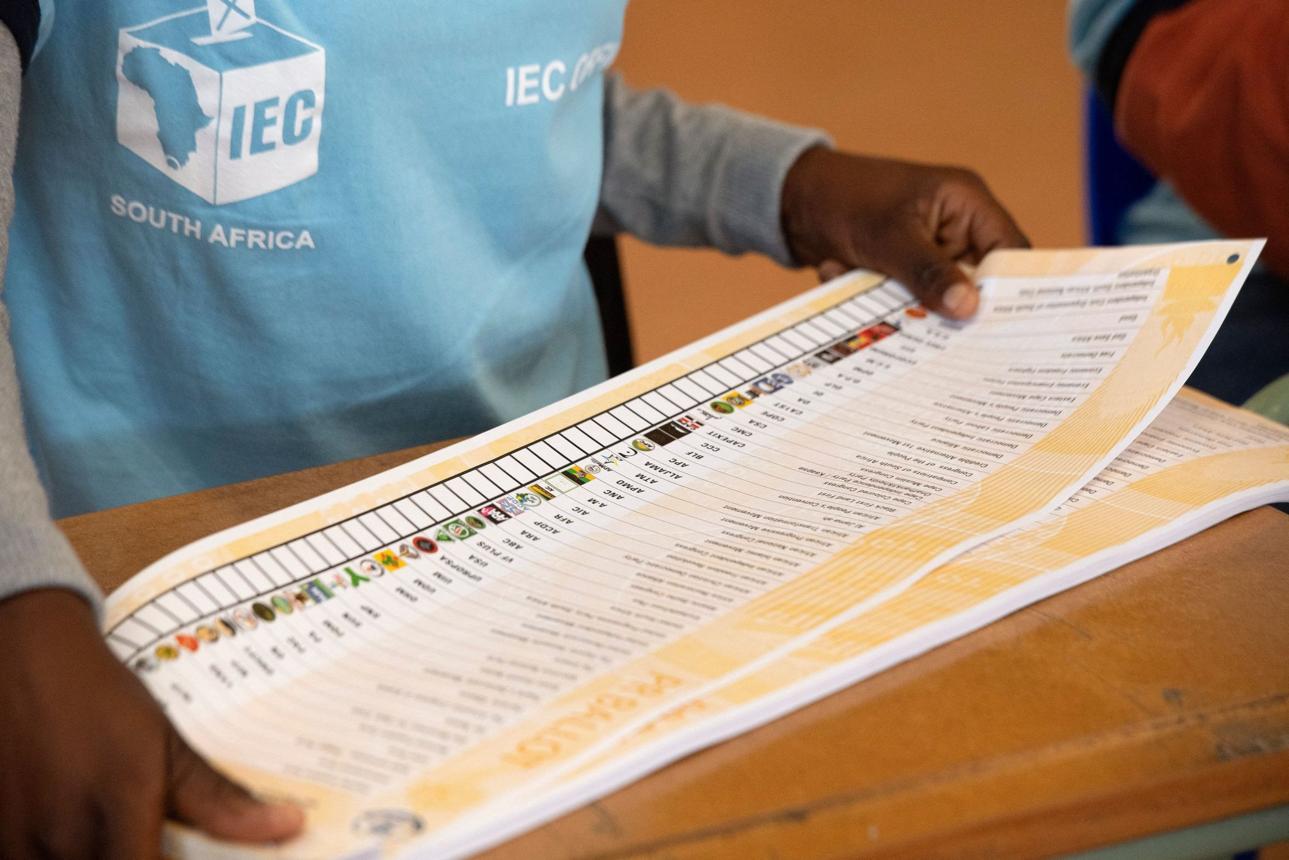
“South Africa’s Constitutional Court ruled on 15 October 2026 that the IEC must take the necessary steps to include 181 ANC candidates whose nominations had been excluded from the November local government election ballots. The decision resolves a dispute over candidate-list submissions but leaves the electoral commission with urgent work to update affected ballot papers, manage additional printing costs and maintain preparations for voting on 4 November.”
Court ruling changes the election landscape
South Africa’s preparations for the 4 November 2026 local government elections have entered a critical phase following a Constitutional Court ruling that allows 181 ANC candidates to be included in the electoral process. The judgment, delivered on Thursday, 15 October, overturns the earlier decision that had prevented the candidates from appearing on ballots in six municipalities.
The ruling is significant because local government elections determine the political leadership responsible for delivering municipal services, managing local infrastructure and overseeing important aspects of community development. The inclusion of candidates affects the choices available to voters and the responsibilities of the officials organising the elections.
According to eNCA’s reporting, the Constitutional Court granted the ANC leave to appeal and set aside the Electoral Court’s earlier order. The commission must now implement the judgment and ensure that the affected candidates are properly represented on the relevant ballots.
The dispute over candidate nominations
The dispute originated in the process for submitting candidate lists ahead of the election. Political parties were required to complete their nominations through the IEC’s online system before the prescribed deadline of 28 August 2026.
The ANC argued that a technical problem with the commission’s online nomination system prevented its candidate lists from being successfully captured and processed. The party maintained that the problem affected its ability to complete the submission process and challenged the exclusion of the candidates.
The Electoral Court previously dismissed the ANC’s appeal, leaving the candidates excluded from the election. The party subsequently took the matter to the Constitutional Court, seeking an order that would allow its nominees to contest the municipal elections.
The disagreement raised important questions about compliance with electoral deadlines, the reliability of digital nomination systems and the remedies available when a political party claims that a technical failure has affected its submission.
However, the dispute must be understood within the specific circumstances of the case. A claim that a technical system contributed to a missed submission is not, by itself, proof that every requirement was satisfied. Similarly, the existence of a deadline does not remove the courts’ authority to examine whether an electoral decision should stand.
The Constitutional Court’s order has now determined the immediate outcome of this particular dispute. The IEC’s responsibility is to implement that order while continuing to administer the broader election process.
Six municipalities affected by the judgment
The case concerns 181 ANC candidates across six municipalities in KwaZulu-Natal, the Free State and the Eastern Cape. The ruling therefore has direct implications for the ballot papers used in the affected municipal contests.
Municipal elections differ from national elections because voters select representatives for local councils, where political representation is closely connected to services and decisions in their communities. Depending on the applicable electoral arrangements, ballots can include competing parties and candidates for different municipal positions.
Consequently, an alteration to candidate lists can require changes to the physical materials used by election officials. Ballots must accurately reflect the candidates and parties legally entitled to participate.
The court’s decision restores the affected candidates’ opportunity to contest the election. It does not, however, determine whether they will be elected. That outcome will depend on voters’ decisions and the electoral processes applicable to the municipalities concerned.
For residents in those areas, the immediate issue is whether the electoral commission can implement the ruling accurately and on time. Voters should consult official IEC information for confirmed details about their voting districts, candidates and polling arrangements.
IEC faces an urgent ballot-printing deadline
The judgment presents a logistical challenge because ballot production was already well advanced when the court ruled.
On 14 October, the IEC reported that more than 66% of the 79 million ballot papers required for the local government elections had been printed. The commission expected the original printing process to be completed by 18 October. The subsequent judgment means that affected ballots must be amended or reprinted where necessary to include the candidates covered by the order.
IEC chairperson Mosotho Moepya welcomed the court’s decision and said the commission would proceed with the necessary reprinting. The commission has emphasised that its immediate responsibility is to comply with the judgment and complete preparations for the election.
The timetable leaves limited room for delays. Printing is only one part of election preparation: ballots must also be checked, organised, distributed and delivered to the appropriate voting stations. Any changes must be coordinated with these activities.
The commission therefore needs to balance speed with accuracy. Producing replacement ballots quickly would be of limited value if the materials contained errors, reached the wrong destinations or disrupted the delivery arrangements already established.
Election administrators must ensure that revised ballots correspond to the correct municipalities and electoral contests. They must also ensure that obsolete versions are not mistakenly used where replacements are required.
These operational requirements make the ruling an important test of the IEC’s capacity to respond to a judicial decision during the final stages of election preparation.
Financial implications and public accountability
Reprinting ballots could create additional costs for the electoral commission. Before the judgment, the IEC warned that printed materials affected by the dispute might have to be replaced, resulting in expenditure that could not be recovered.
Deputy chief electoral officer Masego Sheburi said the commission had developed contingency plans for implementing a possible court order. He also cautioned that the implications could extend beyond the ANC case because other parties might face similar circumstances.
The precise additional cost of the reprinting process should not be assumed without an official financial assessment. Relevant expenses may include replacement printing, quality checks, transportation, administrative work and the management of existing ballot stocks.
Public accountability requires transparent reporting of these expenses. The commission should be able to explain which materials require replacement, why the replacements are necessary and how the work is being financed within its election budget.
At the same time, the financial implications should be considered alongside the legal requirement to implement the court’s order. Avoiding additional expenditure cannot, on its own, justify disregarding a binding judgment.
The case highlights a broader administrative challenge: election authorities must establish procedures that protect both the integrity of nomination deadlines and the effective participation of eligible candidates.
The wider importance of electoral fairness
Candidate-list disputes can affect confidence in democratic institutions because they determine which political choices appear before voters.
Political parties must follow nomination procedures, meet deadlines and maintain accurate records of their submissions. Electoral authorities, in turn, must administer those procedures consistently and provide reliable systems through which parties can complete the required steps.
Digital systems can make election administration more efficient, but they also create a need for clear procedures for reporting technical problems, recording submissions and resolving disputes. Reliable timestamps, submission confirmations and accessible support channels can help establish what occurred when a disagreement arises.
The ANC case demonstrates why electoral rules need both consistent administration and effective legal oversight. The IEC initially defended its handling of the candidate-list process, while the ANC challenged the exclusion through the courts. The Constitutional Court’s ruling has now established the outcome that the commission must implement in this matter.
The judgment should not be interpreted as eliminating the need for political parties to comply with election regulations. Nor should the original exclusion be treated as proof of deliberate wrongdoing without evidence establishing that conclusion. The legal outcome concerns the specific dispute and the relief granted by the court.
For the public, confidence depends on the process being transparent, legally compliant and open to scrutiny. Parties, election officials, observers and voters all have an interest in ensuring that disputes are resolved through established institutions rather than misinformation or intimidation.
Election preparations continue alongside the dispute
The ballot controversy is unfolding while the IEC prepares to manage millions of votes across the country.
The commission reported that it had approved 2,655,067 special-vote applications for the 2026 local government elections, representing a 131% increase compared with the 1,147,759 applications approved for the comparable 2021 election. The applications include home visits for eligible voters unable to travel to voting stations and voting-station-based special votes for those unable to vote on election day.
These figures demonstrate the scale of the administrative operation taking place alongside the candidate-list dispute. Election officials must coordinate staffing, voting materials, transport, voter assistance and the counting of ballots across numerous locations.
Special voting is particularly important for eligible people whose circumstances prevent them from attending their voting stations on the main election day. The commission must manage this process without compromising the requirements that protect ballot secrecy and electoral integrity.
The additional ballot work must therefore fit within a much larger operational plan. It cannot be treated as an isolated printing exercise because changes may affect the organisation and distribution of election materials in the relevant municipalities.
Voters can help by checking official election announcements, confirming their registration details and relying on verified information about voting procedures.
What happens next?
The immediate priority is implementing the Constitutional Court’s order. The IEC must identify the affected ballots, arrange replacements where required and ensure that the revised materials reach the correct voting locations before voting begins.
The commission must also communicate clear information to political parties and other stakeholders about the practical arrangements arising from the judgment. Transparent communication can reduce uncertainty and help prevent outdated information from circulating.
The ANC candidates will have the opportunity to contest the relevant municipal elections, but their inclusion does not guarantee electoral success. Voters will make their own decisions based on the candidates, parties and local issues before them.
Political parties will continue campaigning, while election administrators concentrate on completing the remaining technical and logistical requirements. Any further legal developments or administrative announcements could affect the remaining preparations and should be assessed using verified information.
The IEC’s performance in the coming weeks will be judged through its ability to comply with the ruling, manage public resources responsibly and deliver a credible voting process. The commission must meet these responsibilities while maintaining the broader timetable for the elections.
Conclusion
South Africa’s Constitutional Court ruling on the 181 ANC candidates is a significant development in preparations for the 4 November 2026 local government elections. It resolves a closely watched dispute over candidate nominations while requiring the IEC to undertake urgent ballot-related work.
The case highlights the relationship between electoral deadlines, digital nomination systems, judicial oversight and the practical demands of organising elections. It also demonstrates how a legal dispute involving a limited number of candidates can create consequences for printing schedules, administrative expenditure and election logistics.
Ultimately, the priority is to implement the judgment lawfully and ensure that eligible voters can participate in an orderly, transparent and credible election. The next stage will depend on the commission’s ability to complete the required changes, communicate reliably with stakeholders and maintain preparations for voting day.



