




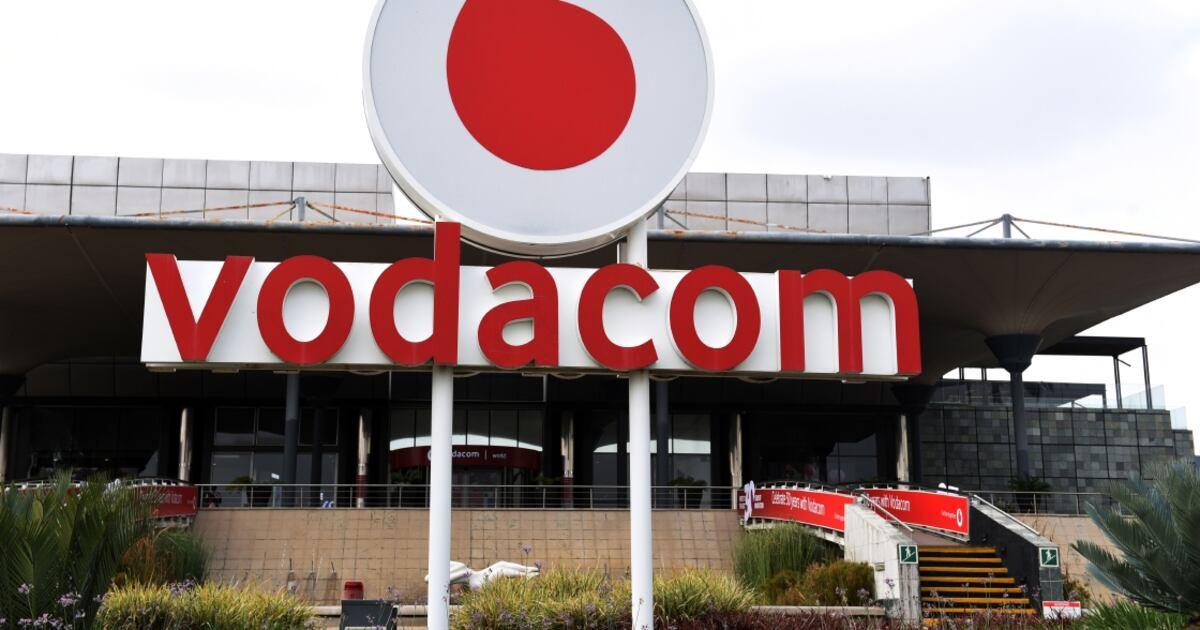
“Vodacom Group reported a 25.6% increase in revenue to R102.5 billion for the six months ended 30 September 2026, while headline earnings per share rose 25.7% to 587 cents and the interim dividend increased 7.6% to 355 cents. The company’s growth was supported by Safaricom consolidation, expanding financial services, rising customer numbers and network investment, with its shares trading higher following the announcement.”
Vodacom’s Strong Interim Results Put Earnings Growth and Financial Services at the Centre of South African Market Attention
Vodacom delivers stronger earnings as financial services and regional expansion drive growth
South Africa’s telecommunications sector received an important market development on Tuesday, 10 November 2026, after Vodacom Group announced stronger interim financial results for the six months ended 30 September 2026. The company’s performance highlighted the growing importance of telecommunications infrastructure, digital connectivity, mobile financial services and regional expansion within the country’s investment landscape.
Vodacom reported revenue of R102.5 billion, representing an increase of 25.6% compared with the corresponding period in 2025. Headline earnings per share increased 25.7% to 587 cents, while the company’s interim dividend rose 7.6% to 355 cents per share. These results provided investors with an important indication of the group’s earnings performance and its ability to generate shareholder distributions while continuing to invest in infrastructure and business expansion.
The announcement attracted attention across the South African financial markets because Vodacom is one of the country’s major listed telecommunications businesses. Its operations connect millions of customers to mobile communications, internet services and financial products, making the company’s performance relevant to investors assessing the broader economy.
Revenue growth reflects expansion and changing business composition
The reported increase in Vodacom’s revenue reflected several factors, including the consolidation of Safaricom and continued growth in telecommunications and financial services operations.
Service revenue reached R85.1 billion, increasing 29.4% on a reported basis. The group also recorded EBITDA of R42.7 billion, representing reported growth of 40%. Headline earnings per share increased to 587 cents from 467 cents in the previous comparable period.
However, interpreting the reported growth requires consideration of the group’s changing composition. The consolidation of Safaricom means that the current reporting period incorporates a broader business base than the corresponding period previously reported.
Consequently, reported growth percentages do not represent purely organic expansion. Investors examining the results need to distinguish between acquisition-related contributions, underlying business growth and currency effects.
Vodacom also reported pro-forma service revenue growth of 13.3%, while EBITDA increased 18% on the same basis. These figures provide additional insight into underlying operating momentum after accounting for the expanded group structure.
This distinction is particularly important for financial markets because investors generally assess whether earnings growth can continue beyond the immediate effects of acquisitions.
Financial services become an increasingly important growth engine
One of the most significant developments in Vodacom’s results was the expansion of its financial services business.
Financial services revenue increased 99% to R15.9 billion on a reported basis. Including Safaricom on a pro-forma basis, revenue growth in the segment was 19.2%.
The performance demonstrates how telecommunications companies are increasingly developing business models beyond traditional voice calls and data packages.
Mobile financial services can provide customers with payment capabilities, digital transaction services and other financial products through mobile technology. These services are particularly relevant in African markets, where mobile networks can help expand access to financial transactions.
For Vodacom, financial services represent an opportunity to strengthen customer relationships while increasing revenue from existing telecommunications infrastructure.
The business can potentially benefit from customers using multiple services rather than relying exclusively on mobile connectivity.
Nevertheless, financial services expansion also introduces operational responsibilities. Companies must maintain reliable platforms, manage cybersecurity risks, comply with regulatory requirements and protect customer information.
Investors therefore need to assess both revenue opportunities and the costs associated with developing sustainable digital financial services operations.
Safaricom consolidation strengthens the regional business
Vodacom’s regional strategy also remains central to its investment proposition.
The company reported strong contributions from Egypt and Safaricom, alongside continued momentum across its international operations.
Egypt delivered local-currency service revenue growth of 36.3% and EBITDA growth of 31.3%. Safaricom recorded service revenue growth of 13.1% and EBITDA growth of 27.5%.
These results illustrate the importance of geographically diversified operations to the group’s financial performance.
South African companies operating across several African markets can benefit from different consumer trends, economic conditions and growth opportunities. At the same time, international operations introduce exposure to currency movements, political developments, regulatory differences and changing competitive conditions.
The performance of individual regional businesses can therefore influence consolidated earnings and investor expectations.
For Vodacom, the combination of South African operations and regional businesses creates a larger platform for telecommunications infrastructure, mobile financial services and digital expansion.
However, investors must also evaluate the quality of earnings generated in different markets, including the effects of exchange rates and local operating conditions.
Dividend growth reinforces shareholder-return expectations
Vodacom’s board declared an interim dividend of 355 cents per share, representing an increase of 7.6% from the previous comparable period.
The dividend announcement is important because income-oriented investors frequently evaluate telecommunications companies partly on their ability to distribute cash consistently.
Dividend increases can indicate confidence in earnings generation and cash-flow prospects. However, they also need to be assessed alongside investment requirements, debt levels and the company’s financial obligations.
Vodacom reported net debt to EBITDA of 1.6 times, compared with 0.9 times in the corresponding previous period. The increase highlights the importance of monitoring the balance between expansion, borrowing and shareholder distributions.
The company indicated that its revised payout policy balances commitments to deleveraging with growth opportunities. This suggests that management is considering both financial resilience and the potential benefits of continued investment.
Investors will consequently be interested in whether earnings and operating cash flows remain sufficient to support dividends while maintaining the company’s infrastructure requirements.
Infrastructure investment remains essential to future growth
Telecommunications companies require significant investment to maintain network quality and accommodate increasing demand for digital connectivity.
Vodacom invested R13.3 billion during the six-month reporting period, expanding network capacity and supporting adoption of data, financial services, digital platforms and fixed connectivity.
The company also reported construction of 3,388 additional 4G sites and 4,328 additional 5G sites across its group over the preceding 12 months.
These investments are important because telecommunications demand increasingly depends on reliable connectivity, adequate network capacity and improved customer experience.
For businesses, households and government institutions, digital connectivity supports communication, commerce, information access and various economic activities.
Network investment can therefore contribute to the development of digital infrastructure while strengthening the company’s competitive position.
However, infrastructure expenditure also requires careful capital allocation. Telecommunications operators must balance network expansion with profitability, affordability, customer demand and the cost of financing.
The financial market implications extend beyond Vodacom itself because telecommunications infrastructure supports a broad range of economic activities.
South African market conditions remain an important consideration
Vodacom’s results emerged during a period when South African financial markets were responding to international developments, commodity prices, exchange-rate movements and domestic economic indicators.
The Johannesburg Stock Exchange recorded a substantial advance on Monday, 9 November, with the All Share Index rising 2.04% to approximately 115,038 points. Resources stocks were particularly strong, supported by precious metals performance.
The rand also strengthened during the previous session, while investors continued assessing domestic political developments following municipal elections.
On Tuesday, market participants were also monitoring employment and manufacturing indicators.
Reuters reported that the rand was trading around R16.36 to the dollar ahead of labour-market data, while South African government bond yields remained relatively firm.
These developments provide the broader economic setting in which listed companies announce their financial results.
For investors, corporate earnings and macroeconomic conditions interact. A company’s operating performance may be strong, but its share price can still respond to interest rates, currency movements, market sentiment and expectations about future economic growth.
Investors examine earnings quality and valuation
Vodacom’s reported earnings growth provides an important foundation for evaluating its financial performance, but the investment implications depend on valuation.
A strong financial announcement does not automatically mean a company’s shares are inexpensive.
Investors generally compare earnings growth with the share price, expected future profitability, dividend yields and financial risks.
For telecommunications businesses, valuation considerations may also include capital expenditure requirements, competitive pricing, customer retention and the sustainability of network investments.
The company’s reported headline earnings per share of 587 cents and interim dividend of 355 cents offer useful information for assessing profitability and shareholder distributions.
Nevertheless, investors need to consider future earnings expectations rather than relying exclusively on historical results.
The company’s ability to maintain operating momentum across South Africa, Egypt, Safaricom and other regional operations will be particularly important in determining whether its growth trajectory remains sustainable.
Competition and affordability remain structural challenges
South Africa’s telecommunications industry operates within a competitive environment characterised by established operators, alternative service providers and evolving digital technologies.
Customers increasingly demand affordable connectivity, reliable coverage and improved digital services.
These expectations can create opportunities for operators that successfully combine network quality with competitive pricing and innovative products.
However, competition can also place pressure on average revenue per customer and profitability.
Telecommunications companies must therefore balance affordability with investment requirements.
For Vodacom, the expansion of financial services and digital platforms may help diversify revenue sources and strengthen customer engagement.
The company’s ability to deliver these services efficiently will be an important consideration for investors examining its longer-term prospects.
Employment and economic conditions influence demand
South Africa’s economic environment remains relevant to telecommunications demand.
Household purchasing power, employment conditions and business confidence influence how customers spend on connectivity and digital services.
Reuters reported on 10 November that South Africa’s unemployment rate edged higher in the third quarter, highlighting continuing labour-market challenges.
High unemployment can place pressure on household budgets, potentially affecting discretionary spending and customers’ ability to purchase additional telecommunications services.
Businesses also depend on economic conditions when deciding whether to expand operations, invest in digital infrastructure or increase staffing.
Consequently, telecommunications companies must manage their growth strategies within an economy where consumers and businesses face varying financial pressures.
Affordable connectivity and efficient digital services may become increasingly important as customers seek value from their spending.
Market outlook: growth opportunities alongside financial discipline
Vodacom’s interim results demonstrate the continuing importance of telecommunications and digital financial services within South Africa’s listed corporate sector.
The company delivered higher revenue, stronger headline earnings, an increased dividend and significant investment in infrastructure.
Its regional operations and financial services business provide additional dimensions to its growth strategy.
However, the sustainability of these developments will depend on operating performance, capital allocation, competitive conditions and broader economic developments.
Investors will continue monitoring customer growth, underlying service revenue, profitability, cash generation and debt management.
The performance of Safaricom, Egypt and South African operations will also remain relevant to consolidated earnings expectations.
Conclusion
Vodacom’s 10 November 2026 interim results represent an important corporate development for South African markets, highlighting the relationship between digital infrastructure, regional expansion and financial services growth.
The group’s R102.5 billion revenue, 25.7% increase in headline earnings per share and higher interim dividend provide investors with significant information about its operating performance.
At the same time, the results demonstrate why investors must distinguish between reported and underlying growth, evaluate debt alongside shareholder distributions and consider the long-term costs of telecommunications infrastructure investment.
Ultimately, Vodacom’s ability to sustain earnings growth while maintaining financial discipline will determine how effectively it converts its regional scale and digital capabilities into lasting shareholder value.
The announcement reinforces the importance of corporate earnings analysis within South Africa’s financial markets, where company-specific developments increasingly interact with economic conditions, global investment trends and changing consumer demand.



