




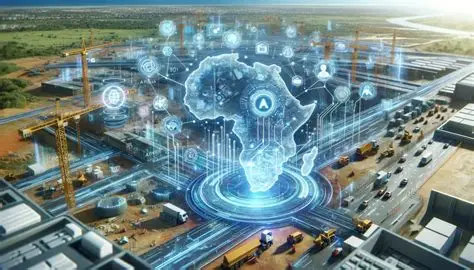
“At the Huawei South Africa Connect 2026 conference, Communications Minister Solly Malatsi urged the country to treat AI as a transformative opportunity rather than a threat, calling for stronger collaboration between government and industry. Analysts project AI could contribute between R1 trillion and R1.4 trillion to GDP by 2030, creating up to 400,000 jobs, though skills shortages and infrastructure gaps remain pressing challenges.”
South Africa stands at a pivotal moment in its digital transformation journey. Artificial Intelligence (AI), once considered experimental, is now being positioned as a strategic pillar of economic growth and competitiveness. At the Huawei South Africa Connect 2026 conference, policymakers, industry leaders, and technology providers converged to discuss how AI can reshape industries, improve public services, and strengthen the nation’s global standing.
The Case for AI in South Africa
Minister Solly Malatsi emphasized that AI should not be feared as a disruptive threat but embraced as a tool to solve developmental challenges. From healthcare delivery to education and industrial productivity, AI offers solutions to long-standing inefficiencies. Malatsi’s message was clear: AI is not a passing trend but a cornerstone of South Africa’s digital economy strategy.
Huawei South Africa CEO Will Meng outlined a three-stage path to AI readiness:
- Informatisation – building robust connectivity infrastructure.
- Digitalisation – harnessing data for actionable insights.
- Intelligence – creating new economic value through AI-driven systems.
This framework aligns with South Africa’s ambition to leverage AI across energy, finance, telecommunications, and public services.
Economic Potential
Analysts estimate that AI could contribute between R1 trillion and R1.4 trillion to GDP by 2030, while creating up to 400,000 new jobs. Case studies already demonstrate AI’s impact:
- Rail security systems reduced cable theft by 80%.
- AI-driven drones inspect industrial plants, improving safety and efficiency.
- Predictive analytics in financial services enhance fraud detection and customer insights.
These examples illustrate AI’s ability to reduce costs, improve efficiency, and enhance safety across industries.
Challenges Ahead
Despite the promise, South Africa faces significant hurdles:
- Skills Shortage: A projected shortfall of 200,000 AI and ICT professionals by 2030 threatens progress.
- Limited Enterprise Adoption: Fewer than 35% of businesses have identified how AI can unlock value in their data.
- Infrastructure Gaps: Affordable devices and reliable connectivity remain barriers to widespread adoption.
These challenges highlight the need for investment in education, training, and infrastructure to ensure AI’s benefits are widely distributed.
Building an Innovation Ecosystem
Speakers at the conference emphasized that AI’s success depends on collaboration between government, academia, and industry. Key initiatives include:
- Expanding AI-focused academic programs to address the skills gap.
- Encouraging public-private partnerships to accelerate adoption.
- Developing open ecosystems where partners, developers, and customers co-create value.
Huawei executives stressed that AI’s future cannot be built by one company alone—it requires a collective effort across sectors.
Global Context and South Africa’s Position
South Africa ranks first in sub-Saharan Africa for AI readiness, positioning it as a regional leader. However, global competition is fierce, with countries like China, the U.S., and India investing heavily in AI infrastructure and talent. To remain competitive, South Africa must scale adoption quickly and strategically.
Sustainability Considerations
While AI promises economic growth, it also raises sustainability concerns. Expanding data centers and AI infrastructure could strain South Africa’s fragile energy and water systems. Policymakers must balance innovation with environmental responsibility, ensuring that AI-driven growth does not exacerbate resource shortages.
Conclusion
The Huawei South Africa Connect 2026 conference underscored a critical message: AI is South Africa’s opportunity to leapfrog into a new era of innovation and competitiveness. With the right investments in skills, infrastructure, and partnerships, AI could transform industries, create jobs, and strengthen the nation’s global standing. Yet, without addressing challenges such as skills shortages and infrastructure gaps, the promise of AI may remain unfulfilled.
South Africa’s leaders now face a defining choice: to treat AI as a strategic pillar of development or risk falling behind in the global digital economy.



