




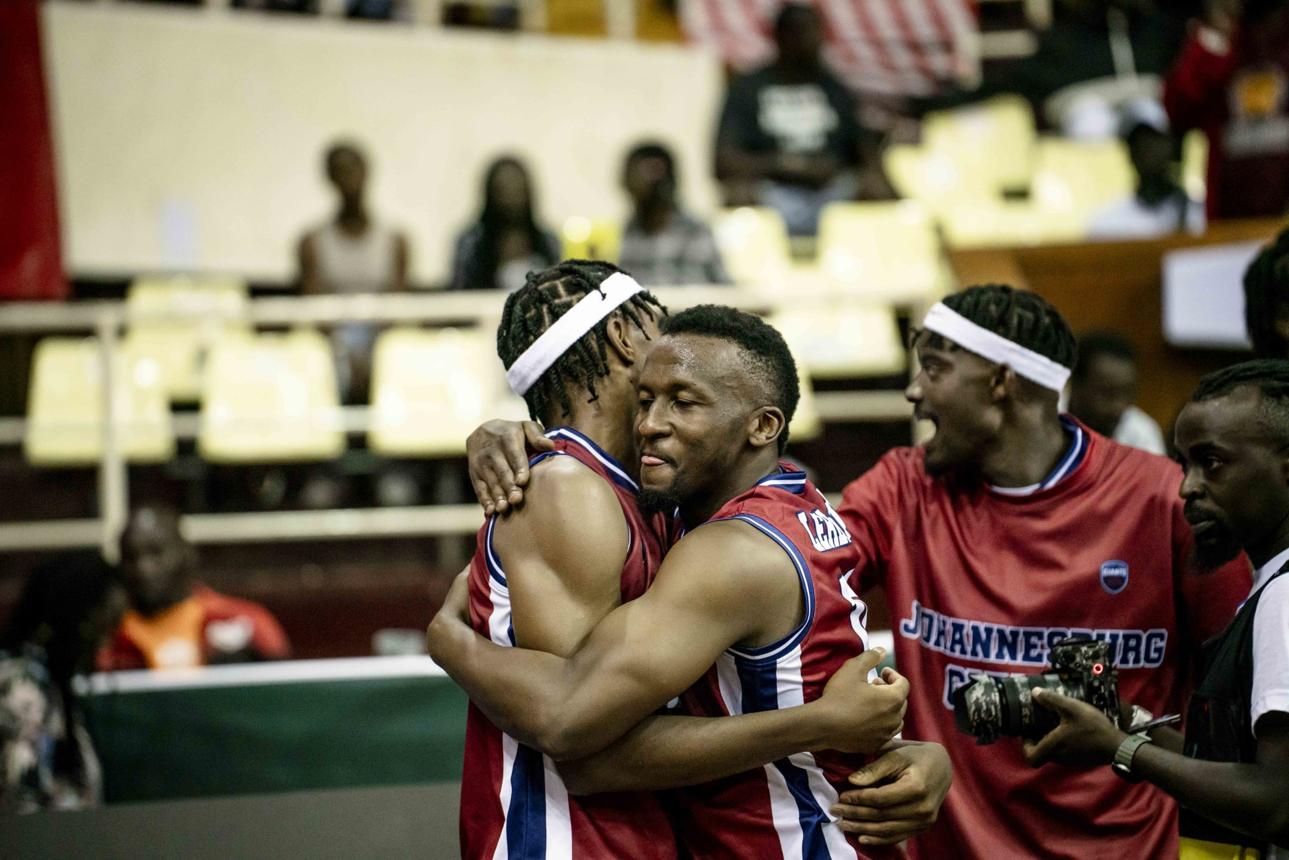
“South African basketball faces renewed uncertainty over its representative for the 2027 Basketball Africa League qualification competition following a disagreement between Basketball South Africa and the Basketball National League involving Johannesburg Giants and Soweto Panthers. The dispute has raised questions about competition recognition, sporting governance, transparency and the country’s pathway into continental professional basketball.”
South African Basketball Faces a Defining Governance Battle as Johannesburg Giants and Soweto Panthers Dispute Road to BAL 2027 Representation
South African Basketball Confronts a Major Governance Challenge
South African basketball is facing renewed uncertainty following a dispute over the country’s representative for the 2027 Basketball Africa League (BAL) qualification competition. The disagreement involving Basketball South Africa (BSA), the Basketball National League (BNL), Johannesburg Giants and Soweto Panthers has brought questions about competition recognition, sporting governance and institutional accountability to the forefront.
The controversy emerged in October 2026 after the Basketball National League announced that Soweto Panthers would represent South Africa in the Road to BAL 2027 qualification competition. However, Basketball South Africa subsequently challenged the decision, maintaining that Johannesburg Giants were the legitimate national champions and the club officially confirmed through its national championship process.
The dispute has become an important development in South African basketball because it concerns not only the selection of a continental representative but also the broader relationship between domestic competitions and the country’s basketball governing structures.
Soweto Panthers Receive BNL Backing for Continental Qualification
On 15 October 2026, the Basketball National League announced that Soweto Panthers had been confirmed as South Africa’s representative for the Road to BAL 2027 qualification cycle.
According to the league’s announcement, the confirmation followed the Panthers’ success in the 2026 Basketball National League championship and engagements involving FIBA Africa and relevant South African sporting authorities.
The announcement represented a significant opportunity for the Soweto-based club to pursue continental competition and potentially establish itself among Africa’s emerging professional basketball teams.
The Panthers have a longstanding association with basketball development in Soweto. Established in Meadowlands in 1986, the club has built a reputation for competitive participation, youth development and community involvement.
Their proposed participation in the Road to BAL qualification competition therefore represents an important sporting opportunity for players, coaches, supporters and management.
Nevertheless, the announcement immediately encountered opposition from Basketball South Africa.
Johannesburg Giants Challenge the Representative Selection
Basketball South Africa rejected the appointment of Soweto Panthers, maintaining that Johannesburg Giants were the legitimate national champions and the appropriate representatives for continental competition.
The federation argued that Johannesburg Giants had been confirmed through its national club championship process and that their details had already been submitted to the FIBA Africa Competitions office.
According to Eyewitness News reporting published on 19 October 2026, BSA described the Panthers’ appointment as irregular and procedurally flawed.
The federation indicated that it intended to pursue a formal objection and appeal through FIBA Africa and FIBA headquarters in Switzerland.
The competing claims have created uncertainty about which club should represent South Africa in the Road to BAL 2027 qualification competition.
Importantly, the disagreement involves different interpretations of domestic competition recognition, organisational authority and the procedures governing international club participation.
The matter therefore requires clarification through the relevant sporting authorities rather than simply being resolved through public statements.
Johannesburg Giants’ National Championship Achievement
Johannesburg Giants entered the controversy following their successful participation in the 2026 Basketball South Africa National Clubs Championship.
The Johannesburg-based team secured consecutive national championship titles after completing the competition with an unbeaten four-win record.
Their performances demonstrated strong competitive organisation, offensive efficiency and defensive consistency.
The Giants concluded their championship campaign at the Mandeville Complex in Johannesburg on 11 October 2026, defeating MBB 99–57 in their final round-robin encounter.
Dylan Whitbread led the scoring with 20 points, while Joshua Ozabor contributed 19 points. Championship Most Valuable Player Aviwe Mahlong added 15 points.
The performance strengthened the Giants’ competitive credentials and provided the foundation for Basketball South Africa’s position concerning continental representation.
However, the existence of competing domestic competitions has complicated the process of determining which championship result should carry decisive authority.
This distinction is central to understanding the dispute.
The Breakdown Between BSA and BNL
The disagreement over South Africa’s continental representative reflects a broader breakdown in the relationship between Basketball South Africa and the Basketball National League.
According to documents referenced in Eyewitness News reporting, BSA formally notified the BNL in June 2024 that its licensing agreement would not be renewed.
The correspondence referred to an agreement originally signed in October 2013 and stated that the contractual relationship had ended on 30 September 2023.
Basketball South Africa subsequently indicated that competitions organised by the BNL were no longer supported or endorsed by the federation.
The league, meanwhile, continued organising domestic competitions and subsequently announced Soweto Panthers as its champions and continental representatives.
This situation has contributed to uncertainty regarding competition recognition and the relationship between domestic league achievements and national championship structures.
The disagreement also highlights the importance of establishing clear institutional arrangements for the organisation of professional basketball competitions.
Without effective cooperation between governing bodies and competition organisers, disputes over eligibility, representation and competition authority can become increasingly difficult to resolve.
Governance Reform Remains Important for Basketball Development
South African basketball has experienced wider governance challenges during 2026.
The Department of Sport, Arts and Culture, FIBA Africa and the South African Sports Confederation and Olympic Committee have been involved in initiatives intended to address administrative difficulties and strengthen the governance of the sport.
Sports Minister Gayton McKenzie has engaged relevant stakeholders as part of efforts to support basketball’s development and establish more sustainable organisational arrangements.
These initiatives have included discussions concerning the establishment of a properly governed national federation, improved leadership structures and sustainable development programmes.
FIBA Africa has also provided oversight and technical guidance through its involvement in the governance process.
The broader objective is to establish a more stable environment in which basketball can develop through effective administration, credible leadership and transparent competition structures.
Such improvements are important for protecting athletes, supporting clubs and strengthening the confidence of sponsors and supporters.
The dispute involving Johannesburg Giants and Soweto Panthers demonstrates why these reforms remain necessary.
Basketball Africa League Offers Important Opportunities
The Basketball Africa League continues to provide an important platform for professional basketball development across the continent.
Established through cooperation between the National Basketball Association and FIBA, the competition brings together leading African clubs and creates opportunities for players to gain international exposure.
The 2026 season featured 12 clubs representing different African countries, with games staged in Pretoria, Rabat and Kigali.
Johannesburg Giants represented South Africa during the 2026 BAL season, marking the club’s first participation in the competition.
The league’s growing popularity demonstrates the potential benefits of continental basketball participation for South African clubs.
These opportunities include increased visibility, commercial partnerships, international competition experience and improved professional development for athletes.
Consequently, securing a clear and credible qualification pathway remains important for the country’s basketball ambitions.
Potential Implications for Players and Supporters
The dispute over South Africa’s representative has implications extending beyond administrative organisations.
Players require certainty concerning their competition schedules, training preparations and professional opportunities.
Clubs also need sufficient time to arrange sponsorship agreements, travel logistics, player recruitment and technical preparations.
A prolonged disagreement could create uncertainty for whichever team eventually participates in the Road to BAL qualification competition.
For supporters, the controversy raises questions about the direction of South African basketball and the stability of its governing structures.
However, the competing claims also demonstrate that the country possesses several clubs capable of producing competitive basketball.
Johannesburg Giants and Soweto Panthers have both established themselves within the domestic basketball environment, highlighting the potential depth of talent available in South Africa.
A constructive resolution could therefore benefit the broader basketball community rather than simply one club.
The Importance of Transparency and Accountability
The Road to BAL dispute underscores the importance of transparent competition procedures and clearly defined organisational responsibilities.
Sporting organisations need reliable mechanisms for determining championship recognition, eligibility and international representation.
Such procedures should be communicated clearly to clubs, athletes, supporters and administrators.
Furthermore, decisions concerning continental participation should be supported by appropriate documentation and established regulations.
FIBA Africa’s role in examining the competing claims remains particularly important because the organisation oversees continental basketball competitions and qualification structures.
A transparent process would help establish the relevant facts, clarify the authority of the participating organisations and provide greater certainty for South African basketball.
The dispute also presents an opportunity for stakeholders to strengthen cooperation and prevent similar disagreements from affecting future competitions.
South African Basketball’s Future Depends on Stronger Cooperation
The controversy involving Johannesburg Giants and Soweto Panthers represents an important moment for South African basketball.
The country’s domestic clubs have demonstrated competitive potential, while the Basketball Africa League provides an increasingly valuable platform for international participation.
However, sustained development requires effective governance, transparent administration and constructive cooperation between sporting organisations.
The immediate challenge is to resolve the disagreement over the Road to BAL 2027 representative in accordance with the applicable regulations and procedures.
Beyond that decision, South African basketball stakeholders must continue working towards stronger competition structures, improved youth development and sustainable professional opportunities.
The future of the sport will depend not only on achievements on the court but also on the ability of its governing organisations to provide a stable and credible administrative environment.
For Johannesburg Giants, Soweto Panthers and the wider basketball community, the outcome of this dispute could influence the direction of domestic basketball development and the country’s continental ambitions.
Ultimately, a fair, transparent and timely resolution would help protect the integrity of South African basketball while creating stronger opportunities for clubs, players and supporters.



