




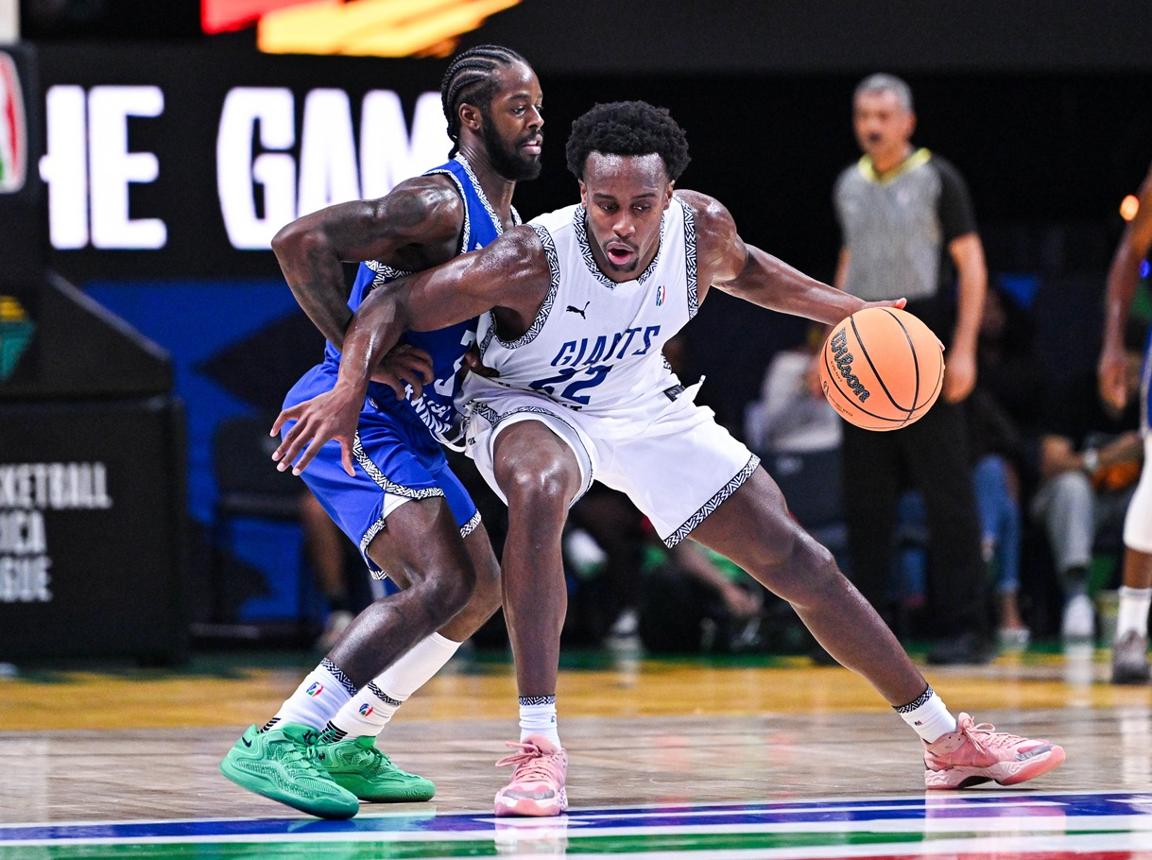
“South African basketball faces a significant test after the Basketball National League announced that FIBA Africa had confirmed the Soweto Panthers as the country’s representatives for the Road to the Basketball Africa League 2027, despite Basketball South Africa disputing the selection and backing the Johannesburg Giants. The controversy has intensified debate about sporting governance, national representation and the need for a transparent qualification process as the Panthers prepare for continental competition.”
South African basketball reaches a defining moment
South African basketball is approaching an important crossroads as a dispute over the country’s representative in the Road to the Basketball Africa League (BAL) 2027 qualification competition raises questions about governance, sporting authority and the future of the domestic game.
The latest development centres on the Soweto Panthers, whose participation in the continental qualification competition was announced by the Basketball National League (BNL) following confirmation attributed to FIBA Africa. However, Basketball South Africa (BSA) has challenged the selection, maintaining that the Johannesburg Giants earned the right to represent the country after winning the federation’s national club championship.
The disagreement extends beyond the identity of one basketball club. It highlights the challenges that can arise when different sporting organisations disagree over competition recognition, administrative authority and the procedures used to select teams for international tournaments.
For players, coaches, supporters and sponsors, a clear resolution is essential. South Africa needs a credible route through which its clubs can compete internationally while domestic basketball continues to develop.
Soweto Panthers receive an opportunity to compete internationally
The BNL announced that FIBA Africa had confirmed the registration of the Soweto Panthers as South Africa’s representatives for the Road to BAL 2027. The league described the development as an important opportunity for the club and for the wider South African basketball community.
According to the BNL announcement, the decision followed engagements involving the league, FIBA Africa and relevant South African sporting authorities. The organisation also emphasised that the Panthers’ participation remained subject to the applicable sporting, eligibility, administrative, financial and regulatory requirements.
The announcement represents a significant opportunity for the Soweto-based club, which the BNL says has a history stretching back to 1986. Competing in the Road to BAL would give the Panthers a chance to measure themselves against clubs from other African countries and pursue a place in the continent’s leading professional basketball competition.
However, registration and participation are not the same as qualification for the BAL’s main season. Clubs must progress through the relevant stages of the Road to BAL competition before securing a place among the league’s participating teams.
The distinction is important because continental qualification requires both organisational readiness and competitive performance. Clubs need to assemble capable squads, meet registration requirements, prepare coaching strategies and secure the financial resources necessary to participate.
For the Panthers, the immediate challenge is to translate the announced opportunity into a well-prepared campaign while the wider dispute continues to attract attention.
Johannesburg Giants challenge the selection
The Johannesburg Giants are central to the controversy because they also claim the right to represent South Africa.
The Giants won the Basketball South Africa National Clubs Championship after completing the tournament with a perfect four-win record. In their final round-robin game on 11 October, they defeated MBB 99–57 at Johannesburg’s Mandeville Complex, securing consecutive national club championship titles.
The performance demonstrated the team’s strength during the championship. Dylan Whitbread led the scoring against MBB with 20 points, including four successful three-point shots from six attempts. Joshua Ozabor contributed 19 points, while championship Most Valuable Player Aviwe Mahlong scored 15 and Yanick Kasilembo added 12.
Those results provide the sporting context for BSA’s position. The federation argues that the Giants were the legitimate national champions and that their details had already been submitted to FIBA Africa as South Africa’s representatives.
BSA has rejected the appointment of the Panthers, describing the process as irregular and procedurally flawed. It has also indicated that it would pursue a formal objection through the relevant FIBA structures.
The competing claims demonstrate why a national championship result, the authority to endorse a representative and the final registration of a club must be considered separately. Each question involves different evidence and procedures.
The Giants’ championship victory is documented, but determining which club is officially eligible for the continental competition requires examination of the applicable rules and the decisions of the responsible authorities.
A dispute rooted in wider governance problems
The disagreement has emerged against the backdrop of broader governance challenges within South African basketball.
Reporting by Eyewitness News has described a breakdown in the relationship between BSA and the BNL, including a licensing agreement that BSA said had ended on 30 September 2023. In correspondence dated 10 June 2024, the federation informed the league that it would not renew the agreement and questioned its endorsement of BNL-organised competitions.
That history helps explain why the current dispute has become so complicated. The BNL has continued to organise its league and recognises the Panthers as its champions, while BSA maintains that the Giants won the national championship through its own competition structure.
These different positions create uncertainty for clubs and athletes. A player may perform successfully in a league yet still face questions about whether that competition provides the recognised pathway to an international tournament. Sponsors and supporters may also struggle to understand which organisation has the authority to make decisions.
South African basketball needs a system in which competition rules, selection procedures and organisational responsibilities are publicly understood. Such clarity would reduce the risk of disputes emerging after teams have completed their seasons.
The role of FIBA Africa
FIBA Africa is an important part of the process because the Road to BAL is a continental competition operating within the international basketball framework.
Its decisions concerning registration, eligibility and participation have consequences for the clubs involved and the national basketball environment. In this case, the BNL says FIBA Africa confirmed the Panthers’ registration, while BSA has objected to the selection and questioned the process.
The central issue is therefore not simply which club has the stronger team. It is whether the selection followed the relevant regulations and whether the competing claims have been properly considered.
A transparent explanation of the decision-making process would help establish the factual position. Relevant questions include which competition was used to determine the representative, what registration requirements applied, which documents were submitted and whether any formal appeal remains outstanding.
It is important not to assume that either club’s claim resolves every aspect of the dispute. The available reports establish that the organisations disagree, but they do not provide a complete independent account of every procedural decision made by FIBA Africa.
A clear statement from the responsible continental authority would help players, clubs and supporters understand the outcome and the rules governing future qualification campaigns.
Why the Road to BAL matters for South Africa
The Basketball Africa League provides a valuable platform for African clubs to compete at a higher level, attract attention and develop their players. Participation can also strengthen domestic interest by giving young athletes visible examples of what sustained training and competitive ambition can achieve.
The Johannesburg Giants already experienced the BAL environment in 2026. FIBA’s reporting noted that the club had competed in the Sahara Conference after reaching the previous Road to BAL Elite 16 stage. Although the Giants finished that conference without a win, the experience offered a demanding introduction to continental competition.
For South Africa, a successful continental pathway could encourage greater investment in coaching, facilities, youth development and professional club structures.
However, these benefits depend on reliable administration. Clubs must know which competitions count, how representatives are selected and what obligations they must fulfil before travelling to international events.
When uncertainty persists, the consequences can extend beyond a single tournament. It can complicate sponsorship negotiations, disrupt planning and make it harder for emerging players to see a predictable route from local basketball to the continental stage.
Resolving the dispute fairly would therefore support more than the immediate interests of the Panthers or Giants. It could help restore confidence in the systems that govern the sport.
Preparation, funding and squad readiness
Whichever club ultimately participates, the Road to BAL requires detailed preparation.
A continental campaign can involve travel, accommodation, training facilities, medical support, player registration and coordination with tournament organisers. Teams also need sufficient time to prepare tactically for opponents with different playing styles and levels of experience.
The BNL has stated that the Panthers and league are engaging on preparations and commercial partnerships. It has also stressed that the club must comply with the applicable competition requirements.
These steps are important because sporting ambition must be matched by operational readiness. A team needs reliable funding, clear player agreements, qualified coaching staff and appropriate support services to compete effectively.
Sponsors can play a role by supporting travel costs, equipment, training programmes and community engagement. In return, a well-organised club can offer brands visibility and an opportunity to connect with basketball supporters.
Nevertheless, fundraising and preparation should proceed alongside efforts to resolve any outstanding administrative questions. Early clarity would reduce uncertainty for everyone involved.
The wider impact on players and supporters
The controversy has implications for the people who sustain South African basketball.
Players invest time and effort in training, competing and improving their performance. They need confidence that success in recognised competitions can lead to legitimate opportunities at higher levels.
Coaches require stable structures in which to plan seasons, recruit athletes and prepare teams. Meanwhile, supporters need clear information about their clubs and the competitions in which they participate.
Young players are particularly affected by uncertainty. A visible pathway from school and community basketball to senior competitions and continental opportunities can help motivate them to remain involved in the sport.
South Africa also needs to continue developing basketball beyond its largest centres. Local clubs, schools and community programmes can expand participation by providing accessible courts, qualified coaches and regular competitions.
The national dispute should not overshadow those priorities. Rather, it should encourage stakeholders to strengthen the structures that support players at every level.
What happens next?
The immediate priority is a clear resolution of the competing claims surrounding South Africa’s representative for the Road to BAL 2027.
BSA has challenged the Panthers’ appointment, while the BNL has welcomed the reported confirmation from FIBA Africa. The next important developments will be any formal response from the continental governing body, clarification of the applicable registration rules and confirmation of the final arrangements for South African participation.
The process should give the relevant parties an opportunity to present their evidence and should communicate the outcome clearly. Any decision should be based on the rules that apply to the competition rather than speculation or assumptions about the organisations involved.
Beyond this immediate question, South African basketball would benefit from stronger coordination among its governing bodies, leagues, clubs and public sporting institutions.
A stable system could help establish recognised competition pathways, improve accountability and make it easier for sponsors to invest in the game. It could also support long-term development programmes that connect grassroots participation with elite performance.
Conclusion: a pivotal test for South African basketball
The dispute involving the Soweto Panthers and Johannesburg Giants has become an important test of how South African basketball manages national representation and continental opportunity.
The Panthers have been identified by the BNL as the country’s representatives following reported confirmation from FIBA Africa. The Giants, meanwhile, have a documented national club championship victory and the backing of BSA in the competing selection claim.
Resolving these competing positions transparently is essential to protecting the credibility of the qualification process. It is also an opportunity to strengthen the sport’s administration and provide players with a more dependable pathway to international competition.
For South African basketball, the ultimate objective should be bigger than winning an argument over one tournament entry. It should be to build a system in which sporting achievement is recognised fairly, decisions are explained openly and clubs can prepare for international competition with confidence.
The outcome of this dispute could therefore influence not only the Road to BAL 2027 campaign but also the future confidence of players, supporters, sponsors and communities invested in the growth of basketball across the country.



