




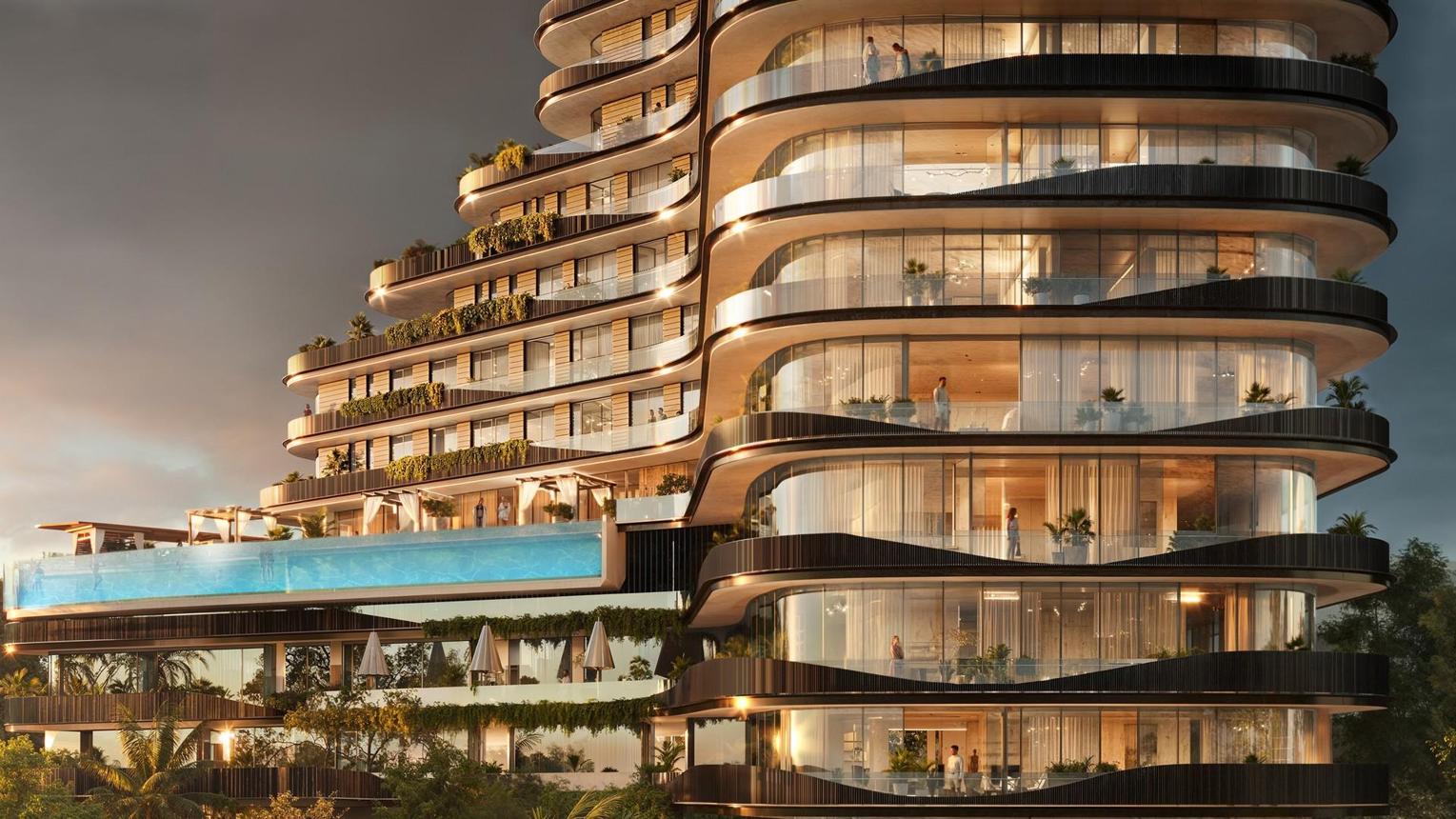
“Property companies Attacq and Tricolt Group have begun construction on Aspire Waterfall City, a R624-million luxury residential development featuring 217 apartments and penthouses in Gauteng’s Waterfall City precinct, with more than 76% of the units reportedly sold before construction began. Scheduled for completion in the second quarter of 2028, the project highlights demand for premium urban living that combines convenient access to amenities, leisure facilities and potential short-term rental opportunities.”
Waterfall City luxury development signals continued demand for premium South African property
A significant investment in luxury residential property
South Africa’s luxury residential property market continues to attract developers and investors seeking homes that offer more than conventional accommodation. In Gauteng, the latest example is Aspire Waterfall City, a R624-million residential development being delivered through a partnership between property investment company Attacq and residential developer Tricolt Group.
The developers officially broke ground on the project in October 2026, marking a significant step in the expansion of Waterfall City as a mixed-use urban destination. The development will comprise 217 luxury apartments and penthouses, with completion expected in the second quarter of 2028.
According to reporting by Engineering News, more than 76% of the residences had already been sold when construction commenced. This early sales performance provides an indication of buyer interest in the development, although the final outcome will depend on construction progress, market conditions and the delivery of the promised amenities.
The announcement is relevant to South Africa’s broader luxury property sector because it illustrates how established urban precincts are competing for buyers who value location, security, convenience and lifestyle facilities.
Why Waterfall City attracts premium property investment
Waterfall City, situated in the Midrand area between Johannesburg and Pretoria, has developed around an integrated model combining residential neighbourhoods, commercial buildings, retail destinations and leisure facilities.
This type of urban planning can appeal to professionals, business owners and investors who want convenient access to workplaces and everyday services without relying entirely on long journeys across metropolitan areas.
Aspire Waterfall City’s location within the precinct, including its direct connection to the Mall of Africa, is one of its central selling points. Residents are positioned close to shopping, restaurants and other urban amenities, while the wider development offers access to business and leisure destinations.
For luxury buyers, convenience has become an important part of the residential proposition. A premium apartment is not judged solely by its internal finishes, views or architectural appearance. Buyers may also consider commuting time, access to restaurants, the availability of recreational activities and the quality of the surrounding environment.
Waterfall City’s mixed-use character seeks to bring these elements together within one precinct.
Nevertheless, location alone does not guarantee investment performance. Buyers still need to evaluate the purchase price, ongoing ownership expenses, future competing developments and the long-term attractiveness of the area.
Strong advance sales provide an important market signal
The reported advance sales of more than three-quarters of the development’s 217 units suggest that a substantial proportion of buyers committed to the project before construction began.
Pre-sales are important for residential developers because they provide an indication of demand before a project is completed. They can also help demonstrate the commercial viability of a development and provide greater visibility into its potential sales revenue.
However, advance sales should not be confused with guaranteed profitability. The reported percentage represents units sold, rather than confirmed information about the project’s eventual profit, rental yields or capital appreciation.
For prospective buyers, the sales performance nevertheless offers a useful starting point when evaluating the development’s market positioning.
Repeat purchasers were also identified as a notable feature of the buyer base. Returning customers may already be familiar with the precinct and its existing residential offerings, potentially making them more comfortable with another investment in the same location.
Even so, prospective purchasers should conduct independent due diligence instead of relying exclusively on sales momentum. They should examine the purchase agreement, completion schedule, developer track record, ownership costs and arrangements for managing the property after occupation.
Apartments and penthouses target different luxury buyers
Aspire Waterfall City is designed around a collection of 217 apartments and penthouses, giving the development a premium residential focus within a larger urban precinct.
Apartments in integrated developments can appeal to buyers who prefer a lock-up-and-go lifestyle. This arrangement may suit professionals who travel frequently, people seeking a second residence and households that value proximity to work and leisure activities.
Penthouses, meanwhile, can attract buyers seeking a more exclusive residential experience. Depending on their final specifications, such properties may offer additional space, elevated views, private outdoor areas or distinctive layouts.
The precise appeal of individual units will depend on their design, orientation, floor area, finishes and price.
Luxury residential developments increasingly compete through a combination of architecture, shared facilities and location. However, premium branding does not automatically translate into better investment returns. A purchaser must still assess whether the property offers value relative to comparable homes in Waterfall City and other established residential precincts.
Lifestyle facilities strengthen the residential offering
The development is expected to include a restaurant, a swimming pool with a bar, fire pits and bomas. These facilities are intended to provide residents with opportunities to relax and socialise without leaving the property.
Such amenities can contribute to the appeal of luxury apartments, particularly among buyers who prioritise convenience and shared lifestyle experiences.
A swimming pool and entertainment areas may be attractive to residents who enjoy hosting visitors or spending leisure time close to home. Restaurants and communal facilities can also support the experience of living in a mixed-use precinct.
However, shared amenities require maintenance and management. Their long-term value depends on the quality of the managing body, the standard of service and the financial resources available to maintain the development.
Prospective buyers should therefore examine the applicable levies, maintenance provisions, security arrangements and rules governing access to common facilities.
The distinction between advertised lifestyle benefits and their actual day-to-day delivery is important when purchasing property at the premium end of the market.
Short-term rentals introduce an investment dimension
Another feature highlighted by the developers is the availability of short-term letting through approved operators. This arrangement may appeal to purchasers who want to use an apartment as an investment property rather than occupy it permanently.
Waterfall City’s business environment and access to retail facilities could help attract visitors seeking temporary accommodation. Potential customers might include business travellers, people attending events or individuals requiring accommodation near workplaces and commercial destinations.
Nevertheless, demand for short-term accommodation varies according to season, competition, business travel and broader economic conditions.
An investor should not assume that an apartment will remain occupied throughout the year or that advertised rental income will translate directly into profit.
A realistic investment assessment should account for management fees, cleaning, furnishing, utilities, insurance, levies, repairs, municipal charges and periods without paying guests.
Buyers should also verify the development’s current letting rules, the operator’s contractual terms and any restrictions imposed by the relevant owners’ association or management structure.
Short-term letting can provide flexibility, but it introduces operating responsibilities that do not necessarily arise in the same way with a conventional long-term lease.
Construction and delivery remain key considerations
With construction expected to take approximately 22 months and completion targeted for the second quarter of 2028, purchasers face a period during which the development must progress from its initial construction phase to a finished residential property.
Off-plan purchases can allow buyers to secure a residence before completion, but they also require careful consideration of delivery risk.
Construction costs, contractor performance, regulatory approvals and broader economic conditions can influence project schedules. Buyers should understand the remedies available if delivery is delayed and ensure that their agreements clearly establish the developer’s obligations.
They should also review the specifications that define the promised property, including finishes, fixtures, shared amenities and any conditions relating to occupation.
Independent legal and financial advice can help purchasers understand their commitments before entering into a transaction.
For investors using financing, interest-rate changes and the timing of bond registration may also influence the affordability of an off-plan purchase.
The anticipated completion date should therefore be treated as a development target rather than an unconditional guarantee.
Implications for South Africa’s luxury property market
Aspire Waterfall City arrives at a time when South Africa’s premium residential market is attracting attention despite broader affordability pressures.
Absa’s Homeowners Sentiment Index, published on 25 August 2026, reported that properties valued above R4.5-million represented 5.2% of residential transactions in the second quarter of 2026, compared with 4% a year earlier. The bank also reported that luxury properties accounted for 9.9% of transactions in the Western Cape during the quarter. These figures illustrate activity in the upper end of the market, although they do not establish demand specifically for Waterfall City.
Developments with strong transport connections, accessible services and well-maintained communal spaces may be better positioned to attract buyers than properties that rely primarily on prestige branding.
At the same time, developers must balance premium features with realistic pricing and sustainable operating costs. Buyers increasingly need to distinguish between genuine long-term value and amenities that increase the purchase price without necessarily improving resale prospects.
For Waterfall City, the commercial question will be whether the precinct can continue to attract residents and businesses while maintaining the quality of its infrastructure and public spaces.
What the project means for prospective buyers
Aspire Waterfall City presents a premium residential proposition built around connectivity, shared amenities and a location within an established mixed-use precinct.
For owner-occupiers, its appeal may lie in the convenience of apartment living, proximity to shopping and access to leisure facilities. For investors, the possibility of short-term letting introduces another route to generating rental income, subject to demand, operating costs and the applicable letting arrangements.
Neither proposition eliminates the need for careful financial planning.
Before buying, prospective purchasers should compare similar properties, request complete cost schedules, investigate the developer’s delivery record and obtain professional advice on the sale agreement. Investors should prepare conservative rental projections rather than relying on best-case occupancy assumptions.
It is equally important to consider the resale market. A property may be attractive when newly launched but face greater competition when additional developments enter the area.
Conclusion
The commencement of construction at Aspire Waterfall City represents a notable addition to Gauteng’s luxury residential pipeline. Its R624-million development value, 217 apartments and penthouses, reported advance sales and integrated lifestyle offering position it as an important project to watch through its anticipated 2028 completion.
The development also illustrates the continuing appeal of residential precincts that combine housing with retail, business and leisure amenities.
Ultimately, its long-term success will depend on more than launch-period sales. Construction quality, timely delivery, effective management, ongoing costs and sustained demand will determine whether the project delivers lasting value for residents and investors.
For South Africa’s luxury real estate sector, Aspire Waterfall City provides a useful example of how developers are seeking to meet demand for convenient, amenity-rich urban living while competing in a market where buyers must carefully weigh lifestyle benefits against financial risk.



