




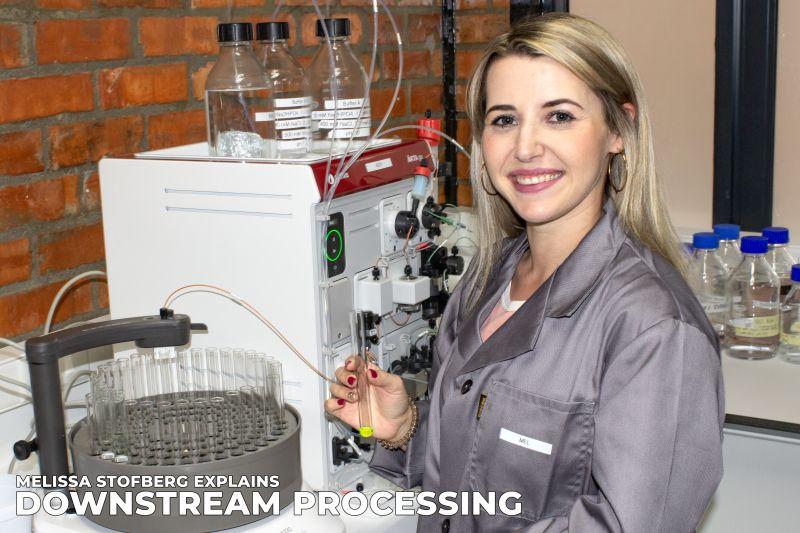
“South African biotechnology company Immobazyme is expanding its commercial production capabilities for recombinant proteins, targeting industrial, cosmetic, food and pharmaceutical applications while helping address Africa’s dependence on imported biotechnology ingredients. Its development of manufacturing infrastructure, international product distribution and regulatory compliance capabilities illustrates how local biotechnology businesses can move scientific innovation towards commercial production and broader economic impact.”
South African Biotechnology Company Immobazyme Expands Local Protein Manufacturing Ambitions
Introduction
South Africa’s biotechnology industry is gaining momentum as locally developed scientific innovations increasingly move towards commercial manufacturing and international markets. A recent development highlighted by the Centre for Epidemic Response and Innovation (CERI) at Stellenbosch University demonstrates how biotechnology entrepreneurs are addressing the challenges of translating laboratory research into commercially viable products.
The featured company, Immobazyme, is building capabilities in recombinant protein production and bioprocess development, with applications spanning industrial manufacturing, cosmetics, food and pharmaceuticals. Its experience highlights the opportunities available to South African biotechnology businesses while illustrating the financial, technical and regulatory challenges associated with establishing competitive manufacturing operations.
The company’s journey was discussed during an African STARS seminar hosted by CERI on 29 October 2026. The seminar, reported on 4 November, examined the practical lessons involved in developing biotechnology products for commercial markets.
Immobazyme’s Biotechnology Development Journey
Founded in 2019 by Dominic Nicholas, Nick Enslin and Ethan Hunter, Immobazyme emerged from a scientific entrepreneurship initiative associated with Stellenbosch University. The company has developed technologies involving recombinant proteins, enzymes and other biological products designed to support industrial and commercial applications.
Its development reflects an important transition within biotechnology: moving beyond scientific discovery towards manufacturing processes capable of producing consistent, commercially useful materials.
Recombinant proteins are produced using genetic engineering techniques that introduce instructions for manufacturing particular proteins into biological production systems. Depending on the application, these systems can include bacteria, yeast or mammalian cells.
The resulting proteins may serve as ingredients in medicines, research materials, food production processes, cosmetic formulations and industrial applications.
However, producing a protein successfully in a laboratory does not automatically mean it can be manufactured economically at commercial volumes. Companies must establish suitable production conditions, develop reliable purification processes, demonstrate consistent quality and satisfy relevant regulatory requirements.
Immobazyme’s development illustrates how South African biotechnology businesses are confronting these challenges while seeking opportunities beyond domestic markets.
Reducing Dependence on Imported Biotechnology Ingredients
One of the central themes highlighted by CERI is Africa’s dependence on imported enzymes and recombinant proteins.
These biological ingredients are essential to numerous industries, including pharmaceutical development, food processing, industrial manufacturing and scientific research.
Dependence on imported materials can expose businesses to international supply disruptions, currency fluctuations, transportation costs and extended procurement periods.
Developing local manufacturing capacity could therefore provide important economic and strategic benefits.
South African biotechnology companies capable of producing internationally competitive biological ingredients could potentially improve supply reliability, strengthen domestic industrial capabilities and create opportunities for exports.
Local production may also help researchers and manufacturers access specialised materials without depending exclusively on overseas suppliers.
Nevertheless, import substitution requires more than simply establishing manufacturing equipment. Local producers must achieve suitable quality standards, competitive pricing, dependable delivery schedules and sufficient production volumes to satisfy customers.
The commercial success of biotechnology manufacturing consequently depends on integrating scientific expertise with business development, engineering and regulatory compliance.
Recombinant Proteins and Industrial Applications
Immobazyme’s biotechnology platform focuses on developing biological products that can be used across different industries.
Recombinant proteins are particularly important because they can be engineered and produced for specific functions.
In pharmaceutical research, proteins may serve as therapeutic ingredients, diagnostic components or materials used during drug development.
In food manufacturing, enzymes can support processing operations, improve production efficiency or facilitate the development of specialised products.
Cosmetic manufacturers increasingly investigate peptides, proteins and other biological ingredients for applications involving skin and hair formulations.
Industrial biotechnology can also use enzymes to improve manufacturing processes, reduce reliance on certain chemical treatments and support the development of more sustainable production methods.
These applications demonstrate the broad commercial potential of biotechnology.
However, each market has different requirements. Pharmaceutical applications generally involve demanding quality, safety and regulatory expectations, while food and cosmetic products must comply with relevant product-specific standards.
Companies must therefore understand their intended customers and regulatory obligations before investing heavily in manufacturing infrastructure.
Commercialisation Requires More Than Scientific Innovation
A significant lesson from Immobazyme’s experience concerns the importance of commercialisation planning.
Biotechnology entrepreneurs frequently begin with a promising scientific discovery or technical capability. Yet turning that discovery into a successful business requires identifying customers, understanding purchasing decisions and establishing a realistic route to market.
The company’s founders initially attempted to conserve financial resources by undertaking much of the work themselves.
Their experience subsequently highlighted the importance of employing experienced professionals and providing teams with the resources required to succeed.
This lesson is particularly relevant to biotechnology because manufacturing processes involve specialised knowledge across microbiology, engineering, analytical testing, quality management and regulatory affairs.
A technically impressive product may struggle commercially if customers cannot obtain the necessary documentation, certification or evidence of manufacturing consistency.
Consequently, successful biotechnology companies must consider commercial requirements throughout product development rather than waiting until manufacturing is complete.
Regulatory Compliance and Quality Assurance
Regulatory compliance represents another important consideration for biotechnology manufacturers.
Products intended for food, pharmaceutical or cosmetic applications may face different requirements depending on their composition, intended use and jurisdiction.
Food manufacturers, for example, must address food safety requirements and applicable certification obligations.
Pharmaceutical biotechnology products generally require more extensive controls involving manufacturing quality, analytical testing, product characterisation and regulatory authorisation.
These requirements influence manufacturing design, documentation systems and investment decisions.
Understanding regulatory expectations early can reduce the likelihood of costly changes during commercialisation.
For South African biotechnology businesses pursuing international markets, compliance with relevant international standards can also strengthen customer confidence and facilitate commercial partnerships.
Immobazyme’s experience demonstrates why regulatory planning should be integrated into business development and product development activities from the beginning.
Manufacturing Infrastructure and Investment
The development of suitable manufacturing infrastructure remains one of biotechnology’s most significant challenges.
Commercial production may require specialised laboratories, cleanrooms, fermentation equipment, purification systems, analytical instruments and trained personnel.
These facilities can involve substantial capital expenditure, particularly for businesses attempting to establish their own manufacturing operations during their earliest development stages.
Immobazyme has been developing a manufacturing facility measuring approximately 1,800 square metres to support its expansion.
Such infrastructure could provide additional opportunities for research, product development and production activities.
However, the commercial value of manufacturing infrastructure depends on effective utilisation, appropriate investment planning and sustained customer demand.
Companies must balance the benefits of owning production capabilities against the costs of maintaining equipment, employing specialists and meeting quality requirements.
Access to shared infrastructure can therefore provide an important alternative for emerging biotechnology businesses.
Stellenbosch University’s Contribution to Biotechnology Entrepreneurship
The company’s origins also demonstrate the relationship between academic research and commercial innovation.
Universities contribute scientific knowledge, specialised training, laboratory infrastructure and research networks that can support biotechnology entrepreneurship.
The transition from academic research to commercial manufacturing, however, requires additional capabilities.
Entrepreneurs must establish intellectual property arrangements, develop business models, secure financing and identify customers willing to purchase their products.
Collaboration between universities, research institutions, investors and industry can help bridge this gap.
The African STARS seminar hosted by CERI provides an example of how scientific and entrepreneurial communities can share experiences and practical lessons.
Such exchanges may help emerging founders understand the challenges involved in developing biotechnology businesses and avoid mistakes encountered by earlier entrepreneurs.
Opportunities for South Africa’s Biotechnology Industry
South Africa has an opportunity to strengthen its biotechnology industry by developing manufacturing capabilities that support domestic and international markets.
Potential growth areas include recombinant proteins, industrial enzymes, agricultural biotechnology, pharmaceutical ingredients, food biotechnology and specialised research materials.
The development of local suppliers could also support industries that currently depend heavily on imported biological products.
Nevertheless, sustained growth requires investment in scientific training, infrastructure, financing, regulatory capabilities and market development.
Biotechnology businesses must also demonstrate that their products deliver measurable value to customers.
Competitive pricing, reliable quality and consistent supply will remain important factors determining whether local manufacturers can compete internationally.
International Markets and Commercial Expansion
Immobazyme’s reported international distribution activities indicate that South African biotechnology companies can pursue customers beyond their domestic markets.
Export opportunities may provide access to larger customer bases and support the development of manufacturing operations capable of achieving economies of scale.
However, international expansion requires companies to understand market-specific regulations, customer requirements and distribution arrangements.
Businesses must also manage intellectual property protection, technical documentation and commercial relationships carefully.
The ability to establish dependable international partnerships could help South African biotechnology companies strengthen their competitive position.
Conclusion
Immobazyme’s biotechnology journey illustrates the opportunities and challenges involved in building commercial biological manufacturing capabilities in South Africa.
The company’s development of recombinant proteins and other biotechnology products demonstrates how scientific expertise can contribute to industrial innovation, commercial entrepreneurship and international market participation.
Its experience also highlights the importance of manufacturing infrastructure, regulatory compliance, professional expertise and customer-focused product development.
The biotechnology sector’s long-term success will depend on whether promising scientific discoveries can consistently be transformed into reliable, affordable and commercially competitive products.
South Africa’s emerging biotechnology manufacturers therefore represent an important component of the country’s broader innovation and industrial development ambitions.
As companies strengthen production capabilities and establish commercial partnerships, locally developed biotechnology may increasingly contribute to economic diversification, scientific advancement and improved access to specialised biological ingredients.
The latest CERI coverage provides a timely opportunity to examine these developments and the practical lessons they offer entrepreneurs seeking to commercialise biotechnology across Africa.



