




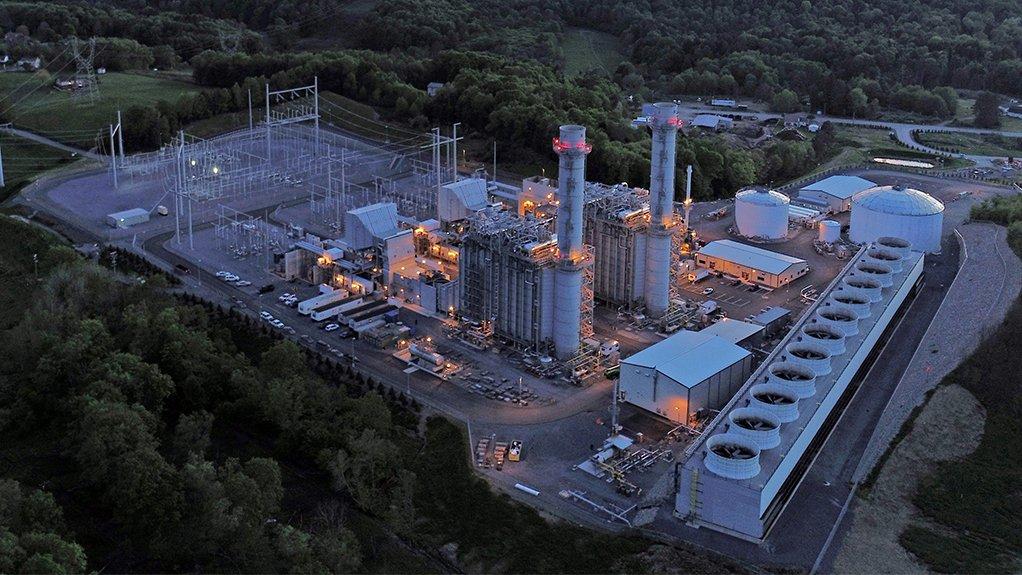
“South Africa’s first gas-to-power procurement round has failed to appoint a preferred bidder after all four participating companies failed to provide sufficient assurances about gas supplies. Electricity and Energy Minister Kgosientsho Ramokgopa says the government remains committed to developing gas-fired electricity generation, but the setback raises questions about fuel infrastructure, procurement planning and the country’s long-term energy security.”
South Africa’s efforts to diversify its electricity generation mix have encountered another significant challenge after the country’s first dedicated gas-to-power procurement round ended without selecting a single preferred bidder. The development has raised fresh concerns about the government’s ability to secure reliable natural gas supplies, attract private investment and establish the infrastructure needed to support future electricity generation.
The Department of Electricity and Energy confirmed that all four companies participating in the first bidding window of the Gas Independent Power Producer Procurement Programme (GASIPPPP) failed to meet the mandatory requirements relating to gas supply assurances. Consequently, the government awarded no generation capacity under the programme, despite receiving proposals representing a combined 2,830 megawatts (MW).
The procurement initiative had targeted 2,000MW of new gas-fired electricity generation capacity. Its unsuccessful conclusion represents an important setback for South Africa’s energy diversification strategy, particularly as the country seeks to reduce its historical dependence on coal while developing a more flexible and reliable electricity system.
The announcement was made by Electricity and Energy Minister Dr Kgosientsho Ramokgopa on 28 October 2026 and was highlighted again in Engineering News’ energy coverage on 4 November.
Four bidders fail to meet mandatory requirements
The first bidding window was established to encourage independent power producers to develop gas-fired electricity generation projects that could contribute to the country’s long-term electricity requirements.
Following consultations with potential investors and industry stakeholders, the Department of Electricity and Energy issued a revised request for proposals on 20 October 2025.
The department subsequently received four proposals on 29 May 2026, collectively offering 2,830MW of potential electricity generation capacity.
Although the combined proposed capacity exceeded the government’s 2,000MW procurement target, the submissions did not satisfy the mandatory functional criteria.
The central problem was the inability of the bidders to demonstrate sufficient guarantees of natural gas supply. The procurement requirements demanded credible assurances that the proposed power stations would have access to the fuel necessary for reliable long-term operations.
Without those guarantees, the government could not appoint preferred bidders.
The four unsuccessful projects were Khanyazwe Flexpower, Pictor GTP Consortium, Kelvin Redevelopment and Komatipoort Power. Their proposed generation capacities were approximately 440MW, 990MW, 600MW and 800MW respectively.
The outcome illustrates an important distinction in energy procurement: attracting investment proposals does not automatically mean that projects are technically, financially and commercially ready for implementation.
South Africa’s natural gas supply problem
One of the biggest challenges facing South Africa’s gas-to-power ambitions is the country’s dependence on imported natural gas.
South Africa has potential domestic natural gas resources. However, the country currently imports most of its natural gas requirements from Mozambique and does not have an operational liquefied natural gas (LNG) import terminal.
This creates uncertainty for electricity developers seeking to establish large power stations that require dependable fuel supplies throughout their operating lives.
The situation is particularly concerning because existing gas supplies from Mozambique are expected to decline, placing additional pressure on industrial consumers and future electricity generation projects.
The Pande and Temane gasfields in Mozambique have historically played an important role in supplying South African industrial customers. Their declining production creates an urgent requirement for alternative supply arrangements.
South Africa therefore needs to develop a coordinated strategy that addresses gas imports, domestic exploration, storage, transportation and long-term supply contracts.
Without such arrangements, investors may remain reluctant to commit billions of rand to gas-fired power stations whose fuel requirements cannot be guaranteed.
Industrial businesses face growing uncertainty
The consequences of the unsuccessful procurement extend beyond electricity generation.
Natural gas is an important industrial input for several sectors, including manufacturing, chemicals, processing and other energy-intensive activities.
Businesses that depend on gas require stable and predictable supplies to maintain production schedules, manage operating costs and fulfil customer contracts.
The anticipated decline in Mozambique’s gas production therefore presents a wider economic challenge.
The Industrial Gas Users Association of Southern Africa has expressed concern about the country’s ability to secure alternative supplies before existing arrangements become increasingly constrained.
Business Day reported that approximately 75,000 direct jobs and R700-billion in annual economic activity could be exposed to the wider gas supply challenge.
These figures underline why gas infrastructure planning should not be considered exclusively an electricity-sector responsibility. It also affects industrial competitiveness, employment, investment and the country’s broader economic development.
Government maintains its commitment to gas-fired electricity
Despite the unsuccessful procurement process, the government has indicated that it will not abandon its gas-to-power ambitions.
Minister Ramokgopa has emphasised that the first bidding window has provided important lessons about the practical requirements for establishing a viable gas-fired electricity generation programme.
The government intends to examine the relationship between procurement requirements, fuel availability, infrastructure development, project affordability, environmental obligations and commercial arrangements.
This approach recognises that a successful gas-to-power programme requires more than identifying companies interested in building power stations.
Developers must have access to dependable fuel supplies, appropriate transportation infrastructure, financing arrangements and regulatory certainty.
The department has also indicated that further engagement with industry participants will help inform the future direction of the programme.
A possible subsequent procurement process, referred to as Bid Window 1.5, is being considered. However, the government has not established a confirmed launch date. Any new procurement exercise will require the appropriate statutory, governance and procurement approvals.
The department indicated that further information would be communicated before the end of 2026.
Why gas matters to South Africa’s electricity system
Natural gas is considered an important potential component of South Africa’s future electricity mix because gas-fired power stations can provide dispatchable generation.
Unlike solar and wind facilities, whose output depends on weather conditions and the availability of natural resources, gas-fired plants can generally increase or reduce electricity production according to system requirements, provided that fuel is available.
This flexibility could help balance electricity supply when renewable generation falls.
For example, solar power production decreases during the evening, while electricity consumption can remain high. Wind generation can also fluctuate depending on weather conditions.
Gas-fired generation could complement renewable energy by supplying additional electricity when these sources are unavailable or insufficient.
This does not mean that gas should replace renewable energy. Instead, the government’s wider challenge is to develop an electricity system that combines different technologies to improve reliability, affordability and environmental performance.
Nevertheless, gas-fired electricity only offers these benefits if fuel supplies are secure and operating costs remain competitive.
LNG infrastructure becomes increasingly important
South Africa’s lack of an operational LNG import terminal is a significant obstacle to developing a larger gas market.
Liquefied natural gas can be transported internationally by specialised vessels and converted back into gaseous form at receiving terminals.
Such infrastructure could allow South Africa to diversify its supply sources rather than relying predominantly on pipeline imports from Mozambique.
However, LNG infrastructure requires substantial capital investment, long-term commercial agreements, appropriate port facilities and connections to consumers.
Potential projects must also address the costs of importing, transporting and distributing gas.
Government and private-sector participants will therefore need to consider whether proposed infrastructure can serve multiple customers, including power stations and industrial facilities.
Developing shared infrastructure could improve commercial viability by spreading costs across several users.
Nevertheless, decisions must carefully assess future gas demand, international prices, exchange-rate exposure and the possibility that renewable energy and battery storage could reduce demand for gas-fired electricity.
Renewable energy and battery storage remain important alternatives
South Africa’s energy strategy is developing beyond traditional coal-fired generation.
Solar and wind projects have attracted private investment, while battery energy storage is becoming increasingly important for managing fluctuations in renewable electricity production.
In October 2026, the government announced plans involving 4,600MW of battery storage and 5,000MW of additional gas-to-power generation capacity.
These proposed investments demonstrate that policymakers are considering several technologies to improve electricity system flexibility.
Battery storage can absorb surplus electricity when generation exceeds immediate demand and release stored electricity when required.
Gas-fired generation offers a different form of flexibility because it can provide electricity through fuel-powered generation rather than relying on previously stored electricity.
The two technologies could therefore serve complementary roles.
However, both require careful financial planning, appropriate infrastructure and transparent procurement arrangements.
The failure of the first gas procurement round strengthens the case for evaluating alternative solutions while continuing to address the country’s long-term fuel supply requirements.
Investors need greater certainty
The unsuccessful tender also raises questions about investor confidence in South Africa’s energy procurement environment.
Independent power producers typically commit substantial financial and technical resources before constructing generation facilities.
Investors need confidence that the regulatory environment, infrastructure arrangements and commercial agreements will support projects throughout their operating lives.
The gas supply requirement was therefore a critical part of the original procurement process.
However, the failure of all four proposals indicates that the government’s procurement timetable and the development of supporting fuel infrastructure were not sufficiently aligned.
Future procurement rounds will need stronger coordination between electricity planners, gas suppliers, infrastructure developers, regulators, financiers and industrial customers.
A clearer allocation of risks could also improve the attractiveness of future projects.
For example, government and industry participants could explore more coordinated approaches to gas procurement, infrastructure investment and long-term fuel agreements.
Such arrangements would need to protect electricity consumers from excessive costs while providing investors with sufficient commercial certainty.
Environmental and affordability considerations
Although natural gas produces fewer carbon dioxide emissions at the point of combustion than coal when generating comparable amounts of electricity, it remains a fossil fuel.
Its environmental impact must therefore be considered within South Africa’s broader climate commitments.
Methane leakage across production, processing and transportation infrastructure is another important concern because methane is a powerful greenhouse gas.
Policymakers must balance the potential reliability benefits of gas-fired electricity against its financial and environmental costs.
Affordability is equally important.
If imported gas becomes expensive, electricity produced from gas could place additional pressure on consumers and businesses.
South Africa must therefore compare gas-fired generation with renewable energy, battery storage, pumped storage and other electricity system solutions before committing to major long-term investments.
Transparent economic assessments will be essential to ensure that future energy procurement decisions deliver value for money.
What happens next?
The immediate priority is to understand why the first bidding window failed and identify practical solutions before launching another procurement exercise.
Government has indicated that structured engagement with market participants will inform the next stage of the programme.
The development of LNG import infrastructure, alternative gas supply arrangements and improved commercial coordination will be particularly important.
The proposed Bid Window 1.5 could provide another opportunity for developers to participate, but its eventual success will depend on whether the underlying fuel supply challenges are addressed.
South Africa must also maintain progress in renewable energy development, electricity transmission expansion and battery storage deployment.
Conclusion
South Africa’s unsuccessful first gas-to-power procurement round highlights the importance of aligning electricity generation ambitions with practical fuel supply arrangements.
Although four bidders proposed a combined 2,830MW of capacity against a 2,000MW target, none could meet the mandatory gas supply assurance requirements.
The outcome does not mean that gas-fired electricity has no future in South Africa. Rather, it demonstrates that the development of a reliable gas market requires coordinated investment in fuel supply, import infrastructure, commercial agreements and electricity generation.
For government, investors and industrial consumers, the challenge is now to turn the lessons of the first bidding round into a more practical and affordable energy strategy.
South Africa’s future electricity security will depend not only on building new power stations but also on ensuring that every technology has the infrastructure, financing and reliable resources required to operate successfully.



