




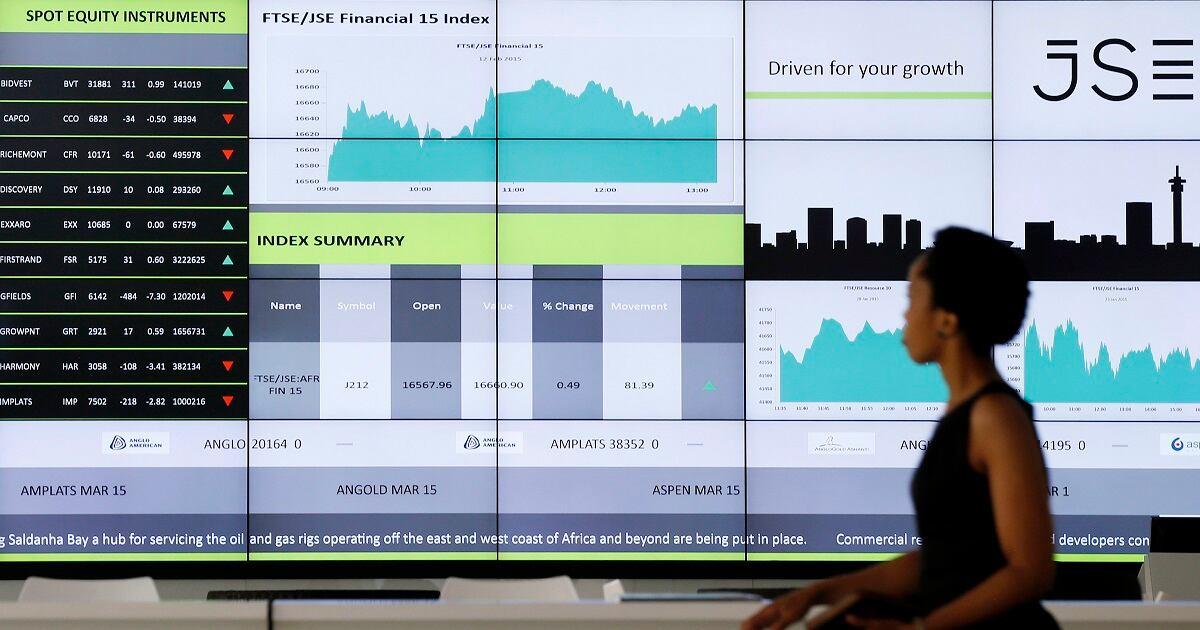
“South African financial markets are navigating municipal election uncertainty, global political developments and concerns about the country’s trade relationship with the United States, while a stronger rand and changing commodity prices influence investor sentiment. Although the Johannesburg Stock Exchange is closed for the municipal election public holiday, international markets, currencies and commodities continue trading, leaving investors focused on developments that could influence the next local trading session.”
South African Markets Face Election-Day Uncertainty as Rand Strength and Global Developments Shape Investor Sentiment
Introduction
South Africa’s financial markets are entering November under the influence of political developments, international economic uncertainty and changing investor expectations. Municipal elections taking place on Wednesday, 4 November 2026, have placed local governance and coalition stability under renewed scrutiny, while developments in the United States and changing commodity prices continue to influence the country’s currency and investment environment.
Although the Johannesburg Stock Exchange (JSE) is closed for the municipal election public holiday, international financial markets remain active. Investors are therefore monitoring currency movements, commodity prices, global political developments and economic indicators that could influence South African assets when local trading resumes.
The rand has recently traded around R16.60 to R16.65 against the United States dollar, reflecting a combination of international currency movements, commodity prices and uncertainty surrounding South Africa’s trade relationship with Washington. Meanwhile, investors are assessing whether municipal election outcomes could strengthen or weaken confidence in local economic governance.
Rand Trading Reflects International and Domestic Uncertainty
The South African rand remains one of the currencies particularly sensitive to global financial conditions. Its movements are influenced by the US dollar, international interest rates, commodity prices, emerging-market investment flows and domestic political developments.
On Tuesday, 3 November, the currency traded around R16.62 against the dollar as investors considered the consequences of the municipal elections and Washington’s decision concerning South Africa’s participation in the African Growth and Opportunity Act.
According to reporting by Reuters, investors were weighing the implications of the US trade decision alongside political developments in South Africa and the United States.
However, currency analysts have also identified supportive factors. A softer dollar, improving precious metals prices and lower oil prices can provide relief for the rand. Because South Africa imports significant quantities of petroleum products, declining oil prices can reduce pressure on the country’s import bill and inflation outlook.
The currency’s performance therefore reflects competing forces rather than one isolated political event.
Municipal Elections Put Governance Under the Spotlight
The 2026 municipal elections are attracting attention beyond political parties and voters. Investors are also watching the results for indications of future governance, municipal financial management and the stability of coalition administrations.
South Africa’s municipalities play a critical role in maintaining roads, supplying water, managing sanitation, supporting local economic development and providing essential infrastructure.
When municipal institutions struggle financially or operationally, the consequences extend beyond communities. Businesses face interruptions, households experience service delivery problems and government finances can come under additional pressure.
Investors consequently evaluate local political outcomes through their potential implications for infrastructure investment, economic activity and the country’s broader reform agenda.
Analysts have suggested that stable coalitions capable of improving municipal administration could strengthen investor confidence over time. Conversely, prolonged political disputes and weak governance could reinforce concerns about South Africa’s institutional capacity.
Nevertheless, election results alone are unlikely to determine the rand’s direction. International economic developments and financial market conditions remain powerful influences.
US Midterm Elections Add Another International Dimension
South African investors are also monitoring political developments in the United States.
The US midterm elections held on 3 November 2026 could influence expectations concerning government spending, fiscal policy, financial regulation and the country’s economic direction.
Changes in congressional control can affect the political environment surrounding economic policy. These developments may influence US Treasury yields, the dollar and global investment flows.
For emerging markets such as South Africa, movements in US interest rates are particularly important.
When American bond yields rise, international investors may find dollar-denominated assets more attractive relative to emerging-market investments. This can reduce demand for emerging-market currencies and increase borrowing costs.
When US yields decline and the dollar weakens, emerging markets can experience improved investment conditions.
The rand therefore remains exposed to developments that occur thousands of kilometres away, demonstrating the interconnected nature of contemporary financial markets.
AGOA Decision Creates Trade and Investment Concerns
Another important issue influencing South African markets is the United States’ planned suspension of South Africa from the African Growth and Opportunity Act.
The programme has historically provided qualifying African countries with preferential duty-free access to the US market.
Washington has announced plans to suspend South Africa’s benefits from 1 January 2027, raising concerns among exporters and industries that depend on preferential access.
According to Reuters reporting published on 3 November, exporters have warned that the withdrawal could increase costs, reduce competitiveness and potentially contribute to job losses in affected sectors.
Industries such as agriculture, citrus, wine and manufacturing have particular reasons to monitor the consequences.
Higher tariffs could make South African products more expensive for American buyers, forcing exporters to reconsider pricing, production strategies and destination markets.
However, the broader economic impact remains subject to assessment. Reuters has reported that most South African exports to the United States already fall outside AGOA, limiting the programme’s overall exposure.
The government has indicated that it is evaluating the consequences while pursuing opportunities to diversify export markets.
For investors, the issue represents a longer-term trade and policy risk rather than necessarily an immediate market shock.
Commodity Prices Continue Influencing the Rand
South Africa’s position as a commodity-producing economy means that international metals and energy markets remain important determinants of investor sentiment.
Gold, platinum-group metals and other mineral commodities contribute significantly to export earnings.
Higher commodity prices can improve revenue prospects for mining companies, strengthen foreign currency inflows and support economic activity.
Conversely, falling prices can reduce profitability, affect investment decisions and place pressure on mining-related employment.
Gold prices have recently experienced considerable volatility following strong movements earlier in the year.
Energy prices also remain important. South Africa’s dependence on imported petroleum products means that increases in international oil prices can raise transportation costs, production expenses and inflation.
Lower oil prices can provide relief to households and businesses while supporting the currency.
The interaction between precious metals and oil prices therefore remains a major consideration for investors evaluating South African financial assets.
Government Bonds and Investor Confidence
Government bonds provide another important indication of how investors assess South Africa’s economic outlook.
Bond yields reflect expectations about inflation, interest rates, fiscal sustainability and the compensation investors require for holding government debt.
South African government bonds can benefit when investors become more confident about economic reforms, public finances and political stability.
However, uncertainty concerning fiscal management, municipal finances and international trade can increase perceived risks.
Municipal financial difficulties are particularly relevant because municipalities depend on revenue collection to finance services and settle obligations to utilities and other creditors.
Reuters reported on 3 November that municipal debt owed to Eskom remains a significant concern, with repayment challenges complicating efforts to strengthen public finances.
Weak municipal finances can ultimately affect national government liabilities if financial assistance or guarantees become necessary.
Consequently, investors are watching whether election outcomes create conditions for stronger local administration and improved financial discipline.
JSE Trading Suspension Does Not Stop Market Developments
The JSE’s closure for the municipal election public holiday means investors cannot trade local listed shares during the holiday.
Nevertheless, international financial markets continue operating.
Currencies, international equities, commodities and selected financial instruments remain available through their respective trading platforms.
This distinction is important because global developments occurring during the local closure may influence South African market prices when trading resumes.
Investors may therefore use the holiday to evaluate company announcements, international market movements and economic developments.
The absence of local equity trading should not be interpreted as an absence of market activity.
Rather, it creates a temporary break in domestic price discovery while international financial conditions continue changing.
Investor Outlook: Fundamentals Remain More Important Than Headlines
Market analysts generally distinguish between short-term political developments and longer-term economic fundamentals.
Election results can influence investor sentiment, particularly when they produce unexpected outcomes or significant changes in political arrangements.
However, sustained improvements in market confidence normally require evidence of stronger institutions, reliable infrastructure, sound public finances and predictable economic policies.
For South Africa, these considerations include municipal revenue collection, electricity reliability, transport infrastructure, water management and the effectiveness of economic reforms.
Stable coalition governments could support improvements if political cooperation translates into stronger administration and better service delivery.
Similarly, progress in trade negotiations and export diversification could reduce concerns about dependence on particular international markets.
Investors will therefore continue evaluating whether political developments lead to practical improvements in the operating environment for businesses.
Conclusion
South African markets are navigating a complex combination of domestic political uncertainty and international economic developments on 4 November 2026.
The municipal elections have placed governance and coalition stability under scrutiny, while the rand remains influenced by global currency movements, commodity prices, international interest rates and trade-related developments.
Although the JSE is closed for the election public holiday, international markets continue trading, leaving investors attentive to developments that could influence the next local session.
The planned suspension of South Africa from AGOA represents an important trade concern, particularly for exporters and employment-intensive industries. At the same time, commodity prices, inflation expectations and government bond yields continue shaping the country’s financial outlook.
Ultimately, the market’s longer-term direction will depend less on election-day headlines alone and more on whether South Africa can strengthen municipal governance, improve infrastructure, maintain fiscal discipline and expand opportunities for economic growth.
For investors, the immediate priority remains balancing short-term uncertainty against the country’s underlying economic prospects and the evolving international environment.



