




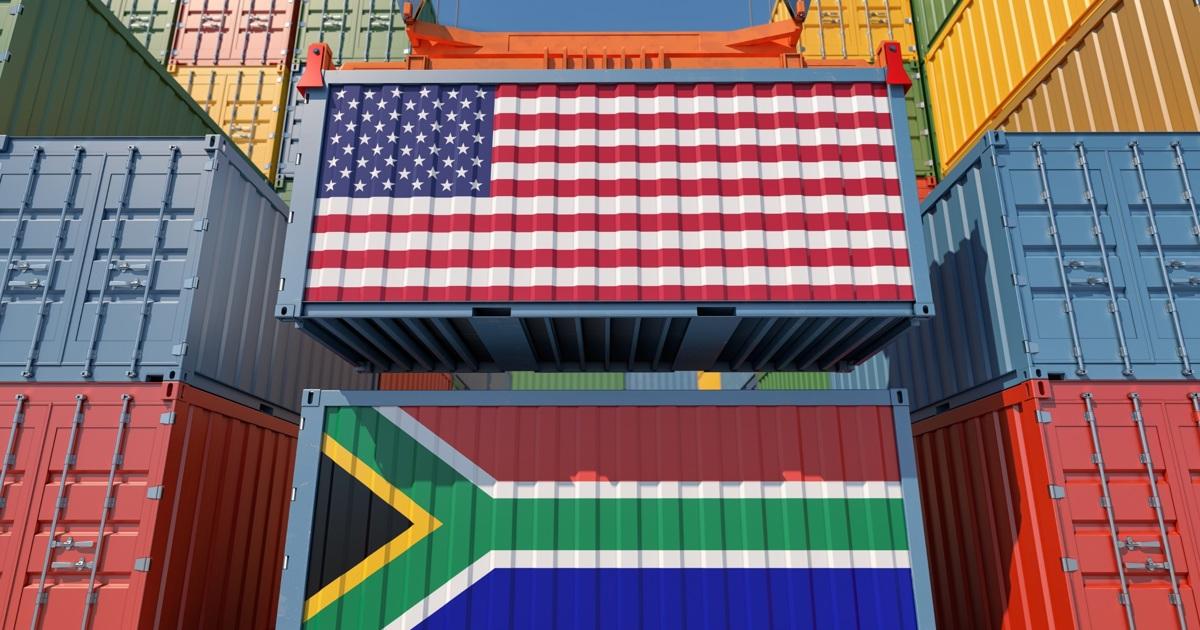
“South Africa faces renewed economic policy pressure following the United States’ decision to remove the country from the African Growth and Opportunity Act (AGOA), ending preferential duty-free access for eligible exports from 1 January 2027. The development has intensified calls for government to strengthen trade diplomacy, protect vulnerable industries, accelerate export-market diversification and develop policies that sustain employment and economic growth.”
South Africa confronts major trade policy challenge after US withdraws AGOA benefits
South Africa is confronting a significant business policy challenge following the United States government’s decision to withdraw its preferential trade benefits under the African Growth and Opportunity Act (AGOA), a development that has intensified concerns about export competitiveness, employment and the country’s economic relationship with Washington. The decision, which is scheduled to take effect on 1 January 2027, has placed renewed pressure on policymakers to strengthen trade diplomacy, protect vulnerable industries and accelerate the diversification of international markets.
The announcement represents an important development in South Africa’s economic policy environment because it affects businesses that have relied on preferential access to the American market. Although economists have cautioned against interpreting the decision as an immediate economic catastrophe, industry representatives and government officials recognise that certain export sectors could experience significant difficulties.
US trade decision introduces new uncertainty
The United States has announced that South Africa will lose its eligibility for AGOA, a programme established to promote trade between America and eligible African economies through preferential market access.
Washington has raised concerns about South Africa’s trade practices, investment barriers, governance issues and foreign policy positions. The US administration has argued that South Africa does not satisfy the eligibility requirements necessary to continue benefiting from the initiative.
The South African government has acknowledged the decision while maintaining that negotiations and diplomatic engagement remain important avenues for addressing outstanding trade concerns.
Trade, Industry and Competition Minister Parks Tau has emphasised that the withdrawal does not define the entire relationship between the two countries. According to the government’s position, both countries continue to have substantial economic interests in maintaining constructive cooperation.
The government has also indicated that it will continue pursuing a balanced partnership that supports investment, trade and economic development while protecting South Africa’s constitutional responsibilities and national interests.
Economic implications extend beyond tariff changes
AGOA has provided preferential access to the US market for eligible African exports, making it an important instrument of trade policy and industrial development.
For South Africa, the programme has supported commercial relationships involving agricultural products, manufactured goods and other export industries. Its withdrawal could increase costs for businesses selling eligible products to American buyers.
However, the overall economic impact requires careful interpretation.
Government figures indicate that approximately 89% of South African exports to the United States in 2025 entered under ordinary World Trade Organisation most-favoured-nation arrangements. AGOA exports represented approximately 10% of the country’s exports to the US, while accounting for around 1% of South Africa’s total global exports.
The figures demonstrate that AGOA is important but does not represent the entirety of South Africa’s international trade.
The bilateral relationship remains economically substantial. Government figures put total trade between South Africa and the United States at approximately US$28.8 billion in 2025. More than 600 American companies operate in South Africa, supporting approximately 134,600 jobs.
These commercial connections indicate that the policy challenge involves more than the immediate loss of preferential tariffs. It also concerns investor confidence, business relationships, supply chains and the future direction of bilateral economic cooperation.
Agricultural exporters face difficult adjustment
Agriculture is among the sectors expected to experience pressure following the withdrawal of preferential trade benefits.
South African producers of citrus, wine and other agricultural commodities have developed export relationships with American buyers. Some businesses have invested in production systems, logistics arrangements and commercial relationships designed specifically to supply the US market.
The loss of preferential access could therefore introduce additional costs into established export operations.
For producers operating within competitive international markets, higher tariffs may affect profit margins, pricing decisions and the attractiveness of South African products to American importers.
The citrus industry illustrates the potential difficulty. Agricultural exporters frequently make production and shipping decisions months before products reach their destinations. Consequently, changes in trade conditions can create uncertainty around investment, production volumes and market planning.
Daily Investor has highlighted agriculture and the motor industry as sectors facing employment risks following the US decision. Reuters has also reported concerns among exporters about potential job losses, particularly where production is closely linked to American demand.
Automotive industry faces additional competitive pressures
South Africa’s automotive sector is another important area of concern.
The country’s vehicle manufacturing industry depends on international markets, investment partnerships and extensive supply chains. Export competitiveness is therefore essential for sustaining production volumes and supporting employment.
The loss of AGOA benefits could introduce additional costs for certain automotive exports. However, the industry has already experienced pressure from separate American tariff measures affecting vehicles and other products.
This distinction is important because the economic consequences of AGOA withdrawal cannot be assessed independently of existing trade restrictions.
Manufacturers must consider the combined effects of tariffs, logistics costs, exchange-rate movements and changing international demand when determining whether exports remain commercially viable.
South Africa’s industrial policy has traditionally sought to promote domestic manufacturing, encourage investment and strengthen export-oriented production. The latest development consequently reinforces the need for policies that improve competitiveness while reducing exposure to individual international markets.
Government and industry will need to evaluate whether existing support measures are sufficient to help manufacturers adapt to changing trade conditions.
Government emphasises diplomacy and economic diversification
The South African government has indicated that it intends to continue engaging the United States while pursuing alternative opportunities for exporters.
Minister Parks Tau has stated that government remains committed to protecting affected industries, supporting workers and promoting trade and investment.
Government also maintains that South Africa has made efforts to address American concerns through negotiations. However, it argues that additional issues raised by Washington have complicated the discussions.
The policy response is expected to involve diplomatic engagement, industry consultation and the identification of alternative markets.
South Africa’s export diversification strategy includes opportunities within the African Continental Free Trade Area, the Southern African Development Community, the European Union, the United Kingdom, India, China and other international markets.
The strategy reflects an important economic policy objective: reducing dependence on a limited number of trading partners while expanding opportunities for domestic businesses.
Diversification could help exporters manage future disruptions, but it requires investment in infrastructure, market access arrangements, logistics, product standards and commercial relationships.
Businesses also need reliable information about regulatory requirements and consumer demand in new markets.
Consequently, diversification is likely to require coordination between government agencies, exporters, industry associations and international trade partners.
Economists urge measured assessment
Economists have cautioned that South Africa should avoid overstating the economic consequences of losing AGOA benefits.
The Mail & Guardian reported on 4 November that economists believe the development does not necessarily represent an economic disaster. Some have argued that the programme’s practical benefits have been limited by other tariff measures already imposed on South African exports.
The argument is that the effect of AGOA withdrawal must be considered alongside the broader trade relationship and the existing tariff environment.
Nevertheless, the assessment does not eliminate the risks facing individual companies.
A national export statistic may conceal significant exposure among particular businesses, regions or industries. An exporter heavily dependent on American customers could experience a substantial financial impact even when the national share of AGOA exports appears relatively small.
This distinction highlights the importance of sector-specific policy responses.
Government should therefore assess the consequences for individual industries, including employment, investment commitments, export revenues and supply-chain relationships.
Such assessments could help determine which businesses require assistance with market development, trade facilitation or adjustment programmes.
Employment remains a central policy concern
The possibility of job losses has emerged as one of the most important concerns associated with the decision.
South Africa continues to face substantial unemployment challenges, making employment protection an important consideration in economic policymaking.
Business Unity South Africa has warned that the impact could involve several thousand jobs, according to Reuters reporting. The risks are particularly relevant to industries that depend on exports and have limited flexibility to redirect production.
Employment effects could occur through several channels.
First, exporters facing higher costs may reduce production if demand weakens.
Second, companies could postpone investment decisions while waiting for greater certainty about trade arrangements.
Third, businesses may reconsider expansion plans where international market access becomes less predictable.
Fourth, affected producers could reduce their demand for logistics, packaging, transport and other supporting services.
These effects demonstrate why trade policy is closely connected to industrial development and labour-market policy.
Government’s response will therefore need to balance immediate assistance to vulnerable industries with longer-term measures that improve productivity, competitiveness and employment creation.
South Africa’s broader business policy environment
The AGOA decision arrives at a time when South Africa is seeking to improve economic growth, strengthen investment and expand employment.
Government-business cooperation has become an important component of the country’s economic strategy. The Government Business Partnership for Growth and Jobs has been designed to address structural challenges, improve implementation and support investment in productive sectors.
The partnership’s objectives include improving economic performance and supporting job creation through collaboration between public institutions and private businesses.
The withdrawal of AGOA benefits reinforces the importance of these initiatives because international trade uncertainty can influence business confidence and investment decisions.
South Africa’s ability to respond effectively will depend partly on whether government can implement policies that reduce operating costs, improve infrastructure reliability and support competitive manufacturing and agricultural production.
Businesses also require predictable regulatory conditions and efficient public administration to remain competitive in international markets.
The trade policy challenge therefore extends beyond negotiations with Washington. It also highlights the importance of strengthening domestic economic institutions and improving the conditions under which businesses operate.
Critical minerals and strategic economic cooperation
South Africa continues to occupy an important position in international supply chains involving critical minerals and industrial inputs.
Government has highlighted the country’s role in supplying minerals important to American industries, as well as products and materials associated with healthcare and industrial manufacturing.
South Africa supplies 12 of the 50 minerals classified as critical by the United States, according to government figures. It also supplies approximately 70% of US isotopes used in cancer treatments.
These commercial relationships demonstrate that the two countries maintain economic connections that extend beyond AGOA.
The challenge for policymakers is to translate these relationships into sustainable trade and investment cooperation.
Strategic economic discussions could include mineral beneficiation, industrial investment, manufacturing partnerships and the development of supply chains that create greater value within South Africa.
Such cooperation could support domestic industrial development while strengthening South Africa’s position in international markets.
However, maintaining these opportunities will require effective diplomacy, regulatory clarity and a willingness by both governments to address disagreements through constructive engagement.
Policy priorities for the coming months
The AGOA withdrawal presents several immediate priorities for South African policymakers.
The first is to maintain diplomatic engagement with the United States and explore whether outstanding trade concerns can be resolved.
The second is to provide exporters with clear information about future tariff arrangements and the practical consequences of the decision.
The third is to identify industries and businesses most vulnerable to market disruption and assess appropriate adjustment support.
The fourth is to accelerate diversification into alternative export markets without abandoning commercially valuable American relationships.
The fifth is to improve domestic competitiveness through infrastructure development, efficient logistics, reliable energy supply and regulatory improvements.
The sixth is to strengthen coordination between government departments and private-sector organisations responsible for export development.
These measures could help reduce uncertainty and improve the ability of businesses to respond to changing international conditions.
Importantly, successful implementation will require measurable objectives, transparent communication and regular monitoring of economic outcomes.
Outlook: trade diplomacy and competitiveness will determine the response
South Africa’s exclusion from AGOA represents a significant business policy development, but its long-term consequences will depend on how government, businesses and trading partners respond.
The country retains a substantial economic relationship with the United States, established international commercial networks and opportunities to expand trade with other regions.
At the same time, agricultural exporters, automotive manufacturers and workers connected to affected industries face legitimate concerns about higher costs and potential employment losses.
The government’s immediate challenge is to manage the transition while protecting economic interests and maintaining constructive diplomatic engagement.
Its longer-term challenge is to build a more diversified, competitive and resilient economy capable of withstanding international trade disruptions.
The AGOA decision has consequently become more than a dispute about preferential tariffs. It is a test of South Africa’s ability to coordinate trade policy, industrial development, employment protection and international economic diplomacy.
Whether the country can turn this challenge into an opportunity for broader economic reform will depend on the effectiveness of policy implementation, the strength of its partnerships and the competitiveness of its businesses.
For South Africa, the priority is clear: protect vulnerable export industries, sustain employment, diversify markets and preserve economically beneficial international relationships while strengthening the foundations of domestic growth.



