




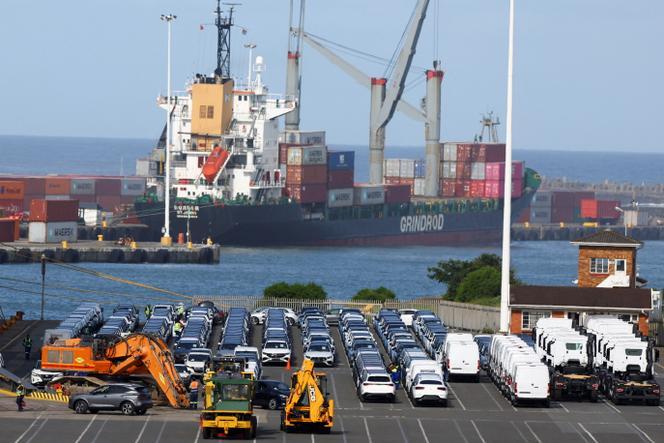
“South Africa is facing renewed pressure to protect its export industries after the United States announced plans to remove the country from the African Growth and Opportunity Act (AGOA) preferential trade programme from January 2027. Deputy Trade Minister John Steenhuisen has called for a more stable bilateral trade agreement with Washington while urging South Africa to diversify export markets, improve port efficiency and protect agricultural and automotive exporters.”
South Africa seeks new trade opportunities as US AGOA exclusion threatens exporters
South Africa is intensifying efforts to protect its export industries and expand international trade opportunities following the United States government’s decision to remove the country from the African Growth and Opportunity Act (AGOA) preferential trade programme from January 2027. The announcement has renewed concerns about agricultural exports, automotive manufacturing, employment and the future of South Africa’s commercial relationship with Washington.
Deputy Trade, Industry and Competition Minister John Steenhuisen has warned that the exclusion could have significant consequences for particular export sectors, especially agriculture and automotive manufacturing. Speaking to 702’s Clement Manyathela, Steenhuisen argued that South Africa needs a more predictable bilateral trade agreement with the United States while accelerating efforts to develop alternative international markets.
The developments place international trade at the centre of South Africa’s economic policy discussions as businesses assess how changing tariffs could affect competitiveness, export earnings and employment.
AGOA exclusion raises concerns for South African exporters
The African Growth and Opportunity Act has provided eligible African countries with preferential access to the American market for selected products. South Africa has used the programme to support exports across several industries, including agricultural products, manufactured goods and automotive components.
However, Washington has announced its intention to suspend South Africa and Rwanda from the programme from 1 January 2027. The decision creates additional uncertainty for businesses that have relied on preferential access when planning production, negotiating contracts and investing in export infrastructure.
Steenhuisen said the development was not entirely unexpected, considering the difficult diplomatic relationship between South Africa and the United States. Nevertheless, he warned that the consequences would be uneven across the economy.
Agricultural exporters, particularly citrus producers and other businesses supplying American consumers, face concerns about increased costs and reduced competitiveness. Automotive manufacturers also remain exposed to changes in American trade policy, although previous tariffs have already affected their access to the US market.
The exclusion does not amount to a complete prohibition on South African exports to the United States. Instead, products previously benefiting from AGOA preferences will generally lose those advantages and face applicable ordinary tariff arrangements.
According to government figures reported on 3 November, approximately 89% of South African exports to the United States entered under ordinary most-favoured-nation arrangements in 2025. AGOA accounted for approximately 10% of exports, representing about US$1.7 billion.
This distinction is important because the loss of preferential access affects specific products and businesses rather than automatically eliminating the broader commercial relationship.
Agricultural exporters face competitive pressure
Agriculture is among the industries most concerned about the changing trade environment.
South Africa exports citrus, grapes, wine, stone fruit and other agricultural products to international markets, including the United States. These exports support growers, agricultural workers, packhouses, transport companies and businesses involved in shipping and distribution.
Some producers have invested substantially in production systems designed around American demand. Consequently, changing tariff conditions could make existing commercial arrangements less profitable.
Steenhuisen highlighted the importance of agriculture in the trade debate, noting that particular citrus-producing businesses rely heavily on access to the American market.
Agricultural exporters also face practical challenges when redirecting products to alternative destinations. Different markets may have their own sanitary requirements, consumer preferences, distribution arrangements and seasonal demand patterns.
South Africa therefore cannot assume that products previously destined for the United States can immediately be redirected elsewhere without additional costs.
The government and industry will need to identify suitable markets, strengthen export certification systems and support businesses in establishing new commercial relationships.
At the same time, South Africa’s agricultural competitiveness remains supported by its ability to supply certain products during periods when competing producers experience different seasonal conditions.
This counter-seasonal advantage could help exporters maintain international demand despite changes in American trade policy.
Automotive industry continues to monitor trade developments
The automotive sector is another important component of South Africa’s international trade strategy.
South Africa has developed manufacturing capacity that connects domestic factories with international automotive supply chains. Vehicle production supports component manufacturers, logistics providers, engineering businesses and thousands of workers.
American trade policy has already affected this sector through tariffs introduced in 2025. Industry representatives have previously reported substantial declines in vehicle exports to the United States following those measures.
The withdrawal of AGOA preferences adds another layer of uncertainty, although the automotive sector’s exposure must be assessed alongside tariffs already affecting vehicles and components.
Steenhuisen’s comments underline the importance of protecting manufacturing competitiveness while exploring opportunities in other markets.
A stable trade environment is particularly important for manufacturers because automotive investment decisions often involve long production cycles, substantial capital expenditure and extensive supplier networks.
Companies need reliable information about tariffs, market access and regulations before committing resources to production expansion or export programmes.
The government will therefore need to engage manufacturers directly and identify measures that can help preserve investment and employment.
South Africa calls for a more predictable US trade agreement
Steenhuisen has argued that South Africa should pursue a bilateral trade agreement with the United States to reduce uncertainty and establish a more stable framework for commercial relations.
The deputy minister indicated that exporters should not have to repeatedly question whether preferential market access will continue from one year to the next.
A bilateral agreement could potentially provide greater clarity regarding tariffs, trade conditions, market access and investment cooperation.
However, negotiations would require engagement on issues affecting both countries, including economic policy, trade regulations and broader diplomatic relations.
South Africa has maintained that it remains committed to constructive engagement with Washington while protecting its constitutional responsibilities and national interests.
Trade Minister Parks Tau has similarly emphasised that South Africa intends to continue discussions with American authorities despite the AGOA decision.
The government has also indicated that it is working with affected companies to assess the implications of the withdrawal and determine appropriate support measures.
The challenge will be to maintain productive diplomatic engagement while ensuring that domestic businesses receive practical assistance.
Diversification becomes increasingly important
South Africa’s response to changing American trade conditions includes expanding its export markets.
Steenhuisen identified opportunities in China, Thailand, the Philippines, Japan and the Middle East, while also pointing to potential growth across Africa, Europe and the Association of Southeast Asian Nations.
Market diversification is particularly important because excessive dependence on a limited number of destinations exposes exporters to economic shocks, political disagreements and sudden regulatory changes.
South Africa’s geographical position and industrial capabilities provide opportunities to strengthen trade across several regions.
The African Continental Free Trade Area offers an important framework for expanding intra-African commerce. Improved regional trade could create opportunities for agricultural producers, manufacturers, service providers and logistics businesses.
South African companies may also benefit from stronger commercial relationships with India, the European Union, the United Kingdom and other Asian economies.
Nevertheless, diversification requires investment in market intelligence, transport infrastructure, product standards and commercial partnerships.
Businesses must understand the requirements of prospective customers before committing production capacity or expanding distribution networks.
Government agencies, trade associations and export promotion institutions will therefore play an important role in helping companies identify opportunities and navigate regulations.
Port inefficiencies threaten export competitiveness
Steenhuisen also highlighted infrastructure and logistics challenges as areas where South Africa can improve its trade performance.
He cited Cape Town port inefficiencies and their consequences for agricultural exporters, particularly stone fruit businesses.
Port performance is central to international trade because delays can affect delivery schedules, product quality and shipping costs.
Agricultural exporters face especially demanding logistics requirements because fresh produce must reach international customers within particular timeframes.
Delays can reduce product quality, increase storage costs and undermine relationships with buyers.
Improving port efficiency would therefore help South African businesses compete more effectively, regardless of whether they receive preferential tariff treatment in foreign markets.
Investment in infrastructure, improved operational management and stronger coordination between logistics providers could help reduce bottlenecks.
The competitiveness of South African exports depends not only on tariffs but also on the cost and reliability of transporting products from factories and farms to international customers.
Employment concerns remain central
The trade debate has also renewed attention to employment.
Agricultural and manufacturing industries support jobs in production, processing, packaging, transportation and export services.
The loss of preferential market access could place pressure on some companies if American buyers reduce purchases or negotiate lower prices.
Business and labour organisations have warned that vulnerable communities could face employment consequences if export-oriented businesses experience prolonged difficulties.
However, analysts have cautioned against treating the AGOA exclusion as equivalent to a complete shutdown of trade with the United States.
South African products can continue entering the American market under applicable tariff arrangements, although some may become more expensive or less competitive.
The actual employment impact will depend on individual industries, business decisions, alternative market opportunities and the evolution of bilateral negotiations.
Protecting workers will require coordinated efforts between government, employers and labour representatives.
Broader economic relationship remains significant
Despite the AGOA decision, South Africa and the United States maintain substantial economic connections.
Government figures indicate that bilateral trade reached approximately US$28.8 billion in 2025.
More than 600 American companies operate in South Africa, supporting approximately 134,600 jobs.
South Africa also supplies important minerals and other products to the American economy while importing inputs used in domestic manufacturing and export production.
These connections demonstrate that the relationship extends beyond preferential tariff arrangements.
The two countries continue to have commercial interests in investment, industrial development, critical minerals, energy and technological cooperation.
Consequently, maintaining constructive economic engagement remains important for both sides.
Outlook for South African trade
South Africa’s immediate trade priorities include protecting affected exporters, negotiating with the United States, improving logistics infrastructure and accelerating market diversification.
The government will also need to monitor changes in export demand and identify industries requiring targeted assistance.
For businesses, the changing environment highlights the importance of reviewing international market exposure, developing alternative customer relationships and improving operational efficiency.
Although the AGOA exclusion presents challenges, it also reinforces the need for a more diversified and resilient export economy.
South Africa’s long-term trade performance will depend on its ability to combine diplomatic engagement with practical economic reforms.
Improved ports, competitive production costs, reliable infrastructure and stronger regional trade relationships could help exporters navigate a more uncertain international environment.
The country’s agricultural and manufacturing industries remain important sources of employment, investment and foreign exchange.
Protecting their competitiveness will therefore remain central to economic policy.
Ultimately, South Africa’s response to the AGOA decision will test its capacity to adapt to changing global trade conditions while maintaining productive international partnerships.
A combination of market diversification, infrastructure improvements, business support and sustained diplomatic engagement could help the country preserve export opportunities and strengthen its position in global commerce.
The immediate challenge is to ensure that changing international trade arrangements do not unnecessarily undermine productive industries, investment or employment.
The longer-term opportunity is to build a more resilient trading economy capable of competing across multiple international markets.



