




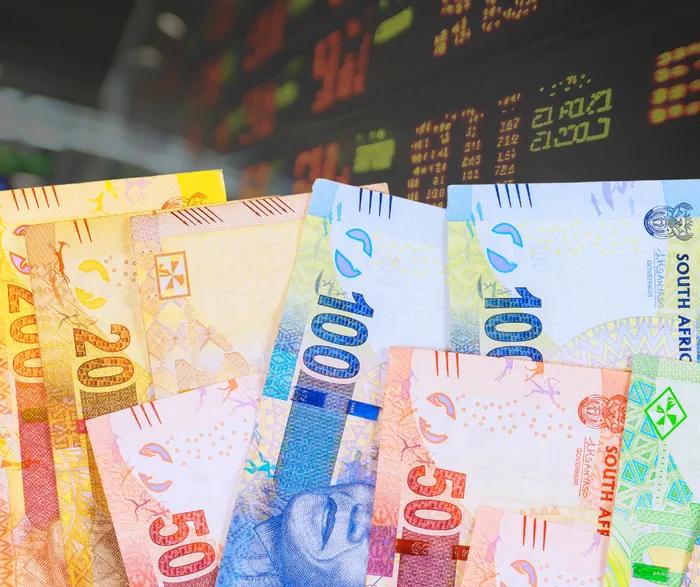
“The rand strengthened slightly in early trading as investors awaited US inflation figures for clues about the Federal Reserve’s next interest-rate decision. The outcome matters for South Africa because changes in US interest-rate expectations can influence the dollar, emerging-market investment flows and the rand’s exchange rate.”
South Africa’s financial markets began Wednesday, 14 October 2026, with renewed attention on the rand as investors awaited important inflation data from the United States. The South African currency strengthened slightly during early trading, reflecting changes in the US dollar and investor positioning ahead of a key economic announcement that could influence global monetary policy.
According to Reuters, the rand traded at R16.4550 against the US dollar at 06:43 GMT, approximately 0.2% stronger than its previous closing level. Meanwhile, South Africa’s benchmark government bond maturing in 2035 also strengthened, with its yield falling eight basis points to 8.68%. These movements highlighted the connection between international economic developments, currency performance and domestic financial conditions.
Although the rand’s early improvement was modest, the developments mattered because exchange-rate movements can influence import costs, inflation expectations, investment returns and the financial outlook for households and businesses.
US inflation data puts the rand in focus
The main driver of investor attention was the scheduled release of the United States Consumer Price Index (CPI) report for September. The figures were expected to provide fresh information about the direction of American inflation and help investors assess the Federal Reserve’s next monetary policy decisions.
Inflation measures the rate at which the prices of goods and services increase over time. When inflation remains elevated, central banks may maintain higher interest rates to reduce price pressures. Conversely, easing inflation can create opportunities for policymakers to consider less restrictive monetary conditions.
The Federal Reserve’s decisions matter beyond the United States because the dollar is central to international trade, investment and financial transactions. Changes in American interest rates can influence the attractiveness of dollar-denominated assets relative to investments in emerging economies such as South Africa.
Reuters reported that the dollar index, which measures the US currency against a basket of major currencies, stood at 102.1 after falling 0.35% on Tuesday. The weaker dollar provided a supportive backdrop for the rand and other currencies sensitive to international market sentiment.
However, the direction of the rand remained uncertain because investors were waiting for new evidence about American inflation rather than responding to a confirmed change in Federal Reserve policy.
Why Federal Reserve decisions matter to South Africa
The relationship between US interest rates and the rand is important for South Africa’s financial stability. International investors regularly compare the potential returns available from government bonds, equities and other assets across different countries.
When American interest rates are attractive, investors may prefer US Treasury securities because they offer dollar-denominated returns. This can reduce demand for some emerging-market assets, placing pressure on their currencies and government bond markets.
Alternatively, expectations of lower US interest rates can encourage investors to consider investments offering higher potential returns elsewhere. Such changes in capital flows can support the rand, although domestic economic conditions and global risk appetite also influence investment decisions.
Reuters reported that traders saw a 77% probability of the Federal Reserve leaving interest rates unchanged at its October 27–28 meeting. This was higher than the 51% probability recorded a month earlier. Market pricing also reflected expectations of approximately 75 basis points of tightening by late 2027.
These figures represented market expectations rather than confirmed policy decisions. Nevertheless, they demonstrated how investors were adjusting their positions as they assessed the outlook for inflation and interest rates.
For South Africa, the resulting movements could affect currency valuations, government borrowing costs and the willingness of international investors to provide capital.
The impact on South African government bonds
Government bonds were another important part of Wednesday’s financial market developments. South Africa’s benchmark 2035 government bond strengthened during early trading, with its yield declining to 8.68%.
A bond yield represents the return investors receive relative to the bond’s market price and contractual payments. Bond prices and yields generally move in opposite directions. When investors purchase existing bonds, their prices can rise and their yields can fall.
Lower government bond yields can indicate stronger demand for government debt or changing expectations about inflation, interest rates and risk. However, a single trading session does not establish a lasting trend.
Government bond performance matters because yields help shape the borrowing environment for the public sector and influence pricing across parts of the wider financial system. If investors demand higher returns to hold government debt, financing can become more expensive. Conversely, improving demand may ease some borrowing pressures.
South Africa’s bond market is also influenced by fiscal developments, government debt levels, inflation expectations and perceptions of economic growth. Consequently, international developments can support the market temporarily without eliminating domestic financial challenges.
What a stronger rand means for consumers
Exchange-rate movements can affect ordinary South Africans through the prices of imported goods and services. When the rand strengthens against the dollar, imported products priced in dollars may become less expensive in rand terms, assuming other costs and exchange rates remain unchanged.
Potentially affected items include imported machinery, electronics, industrial components and certain consumer products. Businesses that rely on imported inputs may also benefit if their foreign-currency expenses decline.
Fuel is another important consideration. International energy prices and the exchange rate can influence the domestic cost of imported petroleum products. A stronger rand can help offset some increases in international oil prices, although the final effect depends on several factors, including global prices, taxes, levies and distribution costs.
However, a small improvement in the rand does not automatically translate into immediate price reductions. Companies may have existing contracts, inventory purchased at earlier exchange rates or other operating expenses that influence their pricing decisions.
The opposite is also true. If the rand weakens substantially, import costs may rise and contribute to inflationary pressure. Businesses could pass some of those costs to consumers, reducing household purchasing power.
Therefore, Wednesday’s currency movement was encouraging for importers, but its practical benefits would depend on whether the improvement continued and how other costs developed.
Implications for the South African Reserve Bank
The exchange rate also matters for monetary policy in South Africa. The South African Reserve Bank uses interest-rate policy to pursue its inflation objective, while considering the broader economic outlook.
The Reserve Bank’s monetary policy framework was revised in 2025 to adopt a 3% inflation target with a tolerance band of one percentage point on either side. The bank explains that monetary policy works with a delay, meaning decisions today influence economic conditions and inflation over time.
A weaker rand can increase the domestic cost of imported goods, fuel and production inputs. If those increases become widespread, they may complicate efforts to bring inflation towards the target.
On the other hand, a stronger currency can help contain imported inflation. However, policymakers cannot rely on the exchange rate alone when deciding whether to change interest rates.
Domestic demand, wage growth, food prices, energy costs, inflation expectations and economic activity also influence monetary policy decisions. The Reserve Bank must evaluate these factors together rather than react mechanically to daily currency movements.
The rand’s early improvement therefore did not establish that South African interest rates would fall. Any future policy decision would depend on the available economic evidence and the central bank’s assessment of inflation risks.
Risks facing investors and businesses
Despite the currency’s early gains, several risks remained relevant to South Africa’s financial outlook.
First, the US inflation report could alter expectations about the Federal Reserve. If inflation proved more persistent than investors anticipated, markets might expect tighter monetary policy for longer, potentially supporting the dollar and placing pressure on emerging-market currencies.
Alternatively, softer inflation could encourage expectations of less restrictive policy. Such a development might support the rand, although investors would still assess the broader international economic environment.
Second, geopolitical developments can influence commodity prices, international trade and financial-market confidence. Changes in energy prices are particularly important for South Africa because the country imports petroleum products.
Third, domestic economic conditions remain significant. Fiscal pressures, economic growth, employment, infrastructure performance and investor confidence can all influence the attractiveness of South African assets.
Businesses involved in importing, exporting or borrowing internationally should therefore avoid making financial decisions based solely on one day’s exchange-rate movement. Currency hedging, careful cash-flow planning and regular review of foreign-currency obligations can help businesses manage exposure.
Individual investors should similarly distinguish between short-term market fluctuations and longer-term investment objectives.
Outlook for South Africa’s financial markets
The immediate outlook depended on how investors interpreted the US inflation figures and whether those results changed expectations for Federal Reserve policy.
The rand’s early advance and the improvement in government bonds showed that international market conditions were supporting South African assets at the start of trading. Nevertheless, these developments were preliminary and did not guarantee continued gains.
Investors would also need to consider the relationship between global interest rates, commodity prices, domestic inflation and South Africa’s fiscal position. Currency markets can respond quickly when new information differs from expectations, making short-term movements difficult to predict.
For businesses, the key priority is to understand how exchange rates affect costs, revenue and financing. Importers may benefit from a stronger rand, while exporters receiving foreign-currency income may experience different effects when converting revenue into rand.
For households, currency movements are most relevant when they influence fuel costs, imported products, inflation and borrowing conditions. However, changes in these areas generally depend on more than exchange rates alone.
Conclusion
South Africa’s rand edged higher on 14 October 2026 as investors awaited US inflation data that could influence the Federal Reserve’s monetary policy outlook. The currency traded at R16.4550 against the dollar in early trading, while the yield on the benchmark 2035 government bond declined to 8.68%.
The developments illustrated the close relationship between international financial markets and South Africa’s domestic economy. Changes in US interest-rate expectations can influence investment flows, currency values, bond prices and inflation risks.
Although the rand’s improvement offered some encouragement, uncertainty remained. The longer-term direction of the currency would depend on international economic developments, domestic fundamentals and investor confidence.
For South African consumers, businesses and investors, the central lesson is that daily currency movements should be assessed within the wider economic picture. Understanding the interaction between inflation, interest rates, exchange rates and government borrowing remains essential for making informed financial decisions.



