




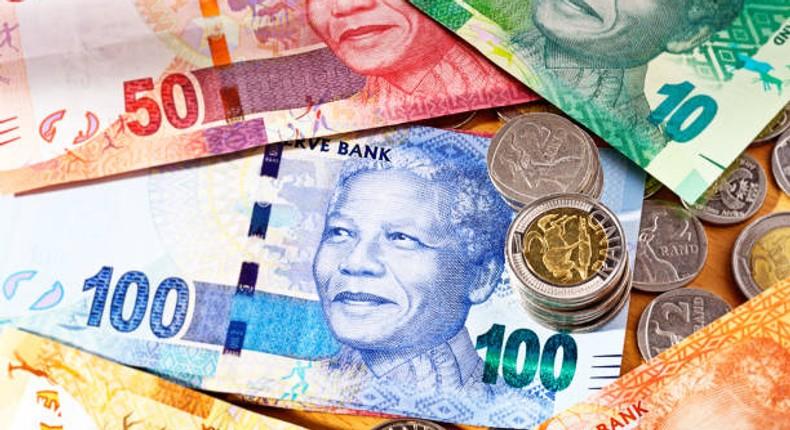
“The South African rand has weakened by approximately 5% against the US dollar during November 2026, putting it on course for its worst November performance since 2001. The currency has faced pressure from international interest-rate expectations, declining precious-metal prices, changing investor sentiment and uncertainty surrounding South Africa’s post-election political environment.”
South African Rand Faces Its Worst November in 25 Years as Global Financial Pressures and Political Uncertainty Challenge Investor Confidence
South Africa’s financial markets are facing renewed pressure as the rand heads towards its worst November performance against the United States dollar in approximately 25 years. The currency’s decline has highlighted the country’s exposure to international financial developments, commodity-market movements, changing investor expectations and domestic political uncertainty. Although the rand recovered some ground during Friday morning’s trading session, the broader monthly performance remains concerning for investors, businesses, consumers and policymakers.
According to a Bloomberg report published by Daily Investor on 27 November, the rand has lost approximately 5% against the dollar during November. This represents its largest November decline since 2001, when the currency fell by approximately 8%. The latest developments have placed South Africa’s currency under considerable scrutiny because exchange-rate movements influence the country’s inflation outlook, international trade, investment environment and overall economic stability.
The currency’s performance is particularly important because South Africa relies on international markets for several essential goods, including petroleum products, machinery, industrial equipment and technological components. Consequently, a prolonged period of rand weakness could increase the cost of imported products and place additional financial pressure on households and businesses.
Global financial conditions increase pressure on the rand
One of the major factors influencing the rand’s performance is the changing outlook for United States monetary policy. International investors closely monitor decisions and expectations surrounding interest rates because these influence the attractiveness of different currencies and investment destinations.
When investors expect United States interest rates to increase, dollar-denominated investments can become more attractive. Higher expected returns on American financial assets may encourage international investors to move money away from emerging markets and towards the United States.
This development can create additional pressure on currencies such as the South African rand.
South Africa competes internationally for investment capital. Its financial markets offer opportunities in government bonds, listed companies, banking, mining and other industries. However, international investors constantly compare the returns available in South Africa with opportunities in other markets.
When the expected return from holding dollars becomes more attractive, investors may reduce their exposure to emerging-market currencies.
This process can contribute to currency depreciation, particularly when other international developments are also creating uncertainty.
The latest November movement therefore reflects more than domestic economic conditions. It demonstrates how decisions and expectations in major international financial markets can influence South Africa’s financial environment.
Precious-metal prices add to currency weakness
Another important contributor to the rand’s November performance has been the decline in precious-metal prices.
Gold and platinum are particularly important to South Africa because the mining industry contributes to export earnings, employment, investment and government revenue.
According to the Bloomberg report published by Daily Investor, gold declined by approximately 11% during November, while platinum fell by approximately 15%. These movements placed additional pressure on the rand because precious metals represent important sources of foreign-exchange earnings for South Africa.
When international gold and platinum prices decline, mining companies may receive less revenue from their exports, depending on production volumes, exchange rates and contractual arrangements.
Lower export receipts can affect the supply of foreign currency entering the domestic economy.
Furthermore, weaker commodity prices may influence international perceptions of South Africa’s economic prospects. Investors who associate the country with mining and natural resources may become more cautious when commodity-market conditions deteriorate.
However, the relationship between commodity prices and the rand is not automatic. Production levels, global demand, operating costs, mining investment and other exchange-rate influences also matter.
The situation illustrates the importance of economic diversification. South Africa needs a broad export base that includes manufacturing, agriculture, financial services, technology and other industries to reduce its vulnerability to fluctuations in a relatively small group of commodities.
Political uncertainty influences investor confidence
Domestic political developments are also contributing to concerns about the currency’s outlook.
South Africa’s municipal elections have created a new political environment in which coalition negotiations are expected to influence local government arrangements.
The November report highlights the ANC’s weaker electoral performance and the political negotiations required to establish municipal administrations.
Investors are interested in these developments because political stability and policy consistency influence the attractiveness of long-term investments.
Businesses making decisions about factories, infrastructure, mining operations, technology facilities and financial services generally require confidence that regulations and government policies will remain reasonably predictable.
Uncertainty surrounding coalition arrangements can create questions about future policy direction, public spending priorities and the implementation of economic reforms.
However, political competition and coalition government do not automatically produce negative economic outcomes.
Successful coalitions can improve accountability, strengthen public administration and encourage cooperation between political parties.
The important consideration for financial markets is whether political negotiations produce stable administrations capable of delivering reliable services and maintaining consistent economic policies.
South Africa’s ability to demonstrate institutional stability will therefore remain important to investor confidence.
The rand’s volatility raises concerns for financial markets
The November currency movement has also been accompanied by increased expectations of exchange-rate volatility.
Daily Investor’s report indicates that a one-week measure of expected movements in the dollar-rand exchange rate reached its highest level in seven months.
This suggests that currency traders are preparing for potentially larger price movements in the short term.
Currency volatility creates challenges for companies conducting international business.
Importers may find it difficult to determine the future cost of purchasing goods from overseas suppliers. Exporters, meanwhile, must consider how exchange-rate changes affect their revenue and international competitiveness.
Companies can use financial instruments such as forward exchange contracts to manage certain currency risks. Nevertheless, these arrangements can involve costs and require careful financial planning.
For smaller businesses, managing currency exposure can be particularly difficult because they may have limited access to sophisticated financial services.
The banking sector also monitors exchange-rate developments because currency movements can influence customer demand, international transactions and the broader financial environment.
Investors in South African shares and bonds must similarly consider the effect of currency volatility on expected returns.
A weaker rand can sometimes support companies earning revenue in foreign currencies because their overseas earnings may translate into more rand. However, companies dependent on imported inputs can experience higher operating expenses.
Consequently, the overall effect varies between industries and individual businesses.
Reserve Bank faces a difficult monetary policy balancing act
The South African Reserve Bank remains central to managing inflation and maintaining financial stability.
Its monetary policy decisions influence borrowing costs, consumer spending, business investment and financial-market expectations.
At its November 2026 monetary policy meeting, the Reserve Bank maintained the policy interest rate at 7.25%.
However, the decision was closely divided, with four members supporting an unchanged rate and three preferring an increase of 25 basis points.
The narrow vote demonstrates the difficult balance policymakers face when assessing inflation risks and economic conditions.
A weaker currency can increase imported inflation by making internationally purchased products more expensive in rand terms.
Fuel, machinery, electronics, industrial materials and other imported goods may become more costly when the currency depreciates.
If these increases spread throughout the economy, businesses may pass higher expenses to consumers.
The Reserve Bank must therefore consider whether currency depreciation could create persistent inflationary pressure.
Nevertheless, increasing interest rates also has consequences.
Higher borrowing costs can place pressure on households with mortgages, vehicle finance and personal loans. Businesses may delay expansion plans because financing becomes more expensive.
The challenge is to maintain price stability without unnecessarily weakening economic activity.
The possibility of additional monetary policy adjustments will therefore remain important to financial-market expectations.
Friday’s recovery offers temporary relief
Despite the negative monthly performance, the rand experienced some recovery during Friday morning trading.
Reuters reported that the currency traded at approximately R17.3701 against the US dollar at 07:26 GMT on 27 November, representing an improvement of approximately 1% from its previous close.
The recovery was supported by stronger precious-metal prices. Gold rebounded after reaching a more than one-year low, while platinum gained nearly 5%.
South African equities also experienced a stronger opening, with the JSE Top 40 index rising approximately 2.2% in early trading.
The benchmark 2035 government bond yield declined by three basis points to 8.67%.
However, Reuters also reported that investor sentiment remained fragile because the US dollar was near a 22-month high and markets were anticipating a possible December Federal Reserve rate increase.
These developments illustrate why daily currency movements should not be confused with longer-term performance.
A currency can strengthen during an individual trading session while remaining significantly weaker over a monthly period.
The Friday recovery therefore provides some relief but does not establish that the rand’s underlying challenges have disappeared.
Market participants will continue monitoring commodity prices, international interest-rate expectations and domestic political developments.
Implications for South African consumers
Currency depreciation has consequences that extend beyond investment portfolios and financial institutions.
Ordinary households may experience its effects through the prices of imported consumer products and services.
South Africa imports a range of products used in everyday life, including electronic equipment, machinery, vehicle components, pharmaceuticals and certain food products.
When the rand weakens, businesses purchasing these products internationally may face higher costs.
Some companies may absorb the increases to protect market share. Others may pass the additional costs to customers.
This can reduce household purchasing power, particularly when incomes do not increase at the same pace as living expenses.
Fuel prices are another important consideration.
International oil prices, exchange rates and domestic fuel-price calculations all influence the cost of petroleum products.
A weaker rand can increase the local-currency cost of imported petroleum, although lower international oil prices can partly or completely offset that pressure.
Consumers should therefore consider both international commodity prices and exchange-rate movements when assessing future fuel costs.
The impact on household finances can also extend to savings and investments.
People holding foreign-currency assets may experience changes in the rand value of those investments, while investors concentrated in local assets remain exposed to domestic financial-market conditions.
Consequences for businesses and international trade
South African companies operating in international markets must carefully evaluate the implications of currency weakness.
Exporters may benefit when overseas earnings are converted into a weaker domestic currency. However, this advantage depends on the proportion of imported inputs, financing costs and the competitiveness of their products.
Mining companies, agricultural exporters and manufacturers may experience different outcomes depending on their international sales and operating structures.
Import-dependent businesses face a different challenge.
Companies purchasing equipment, technology, chemicals and raw materials from international suppliers may experience increased expenses.
This can affect profitability, investment decisions and pricing strategies.
Businesses may respond by negotiating longer-term supply agreements, diversifying suppliers, improving financial planning and using appropriate currency-risk management instruments.
Small and medium-sized enterprises are particularly vulnerable because they may have limited financial resources to absorb sudden increases in operating costs.
Improving access to affordable financial advice and risk-management services could help these businesses manage international market uncertainty.
South Africa needs stronger economic resilience
The rand’s November performance highlights the importance of building a more resilient economy.
South Africa has several advantages, including established financial institutions, developed capital markets, natural resources, a sophisticated banking industry and access to international trade networks.
However, these advantages must be supported by consistent economic policies and improvements in the country’s productive capacity.
Reliable electricity, efficient ports, functioning rail infrastructure, stable municipal services and predictable regulations can help improve business confidence.
Greater investment in manufacturing and export diversification could also reduce the economy’s dependence on commodity-price movements.
Furthermore, maintaining responsible public finances is important because investors evaluate the government’s ability to manage debt and meet its financial obligations.
The South African Reserve Bank’s November financial stability assessment has also emphasised that stronger fiscal and external positions provide protection against international financial risks.
This demonstrates that currency stability cannot be achieved through monetary policy alone. It requires coordinated progress across government, financial institutions, businesses and the broader economy.
Outlook for the rand and South African financial markets
The immediate outlook remains uncertain.
International interest-rate expectations, precious-metal prices, the strength of the US dollar and domestic political developments will continue influencing the rand.
A sustained recovery in gold and platinum could support export earnings and improve sentiment towards South African assets.
Similarly, greater certainty surrounding political arrangements and economic policy could help strengthen investor confidence.
However, renewed pressure on commodity prices or stronger demand for US-dollar assets could create further challenges.
Investors will also monitor upcoming Reserve Bank communications and inflation data for indications of the direction of monetary policy.
South Africa’s ability to maintain a credible inflation-targeting framework while supporting sustainable economic growth will remain important.
For businesses and households, prudent financial planning will be essential while uncertainty persists.
Companies should monitor their exposure to foreign currencies, review import costs and assess whether their pricing strategies remain sustainable.
Consumers should consider their budgets carefully, particularly where borrowing costs and imported goods represent significant household expenses.
Ultimately, the rand’s November performance is an important warning about the influence of global financial conditions on emerging-market economies.
Although the currency’s Friday recovery provides encouragement, a lasting improvement will depend on stronger economic fundamentals, credible institutions, stable policies and favourable international conditions.
South Africa’s challenge is not simply to reverse one month’s currency losses. It is to build an economy capable of attracting long-term investment, supporting productive businesses and protecting household purchasing power even when international financial markets become turbulent.
The coming weeks will therefore be important for determining whether the rand’s recent weakness represents a temporary market correction or the beginning of a more prolonged period of currency pressure.
For policymakers, businesses and investors, the priority will be to distinguish short-term market movements from the structural economic changes needed to strengthen South Africa’s financial future.



