




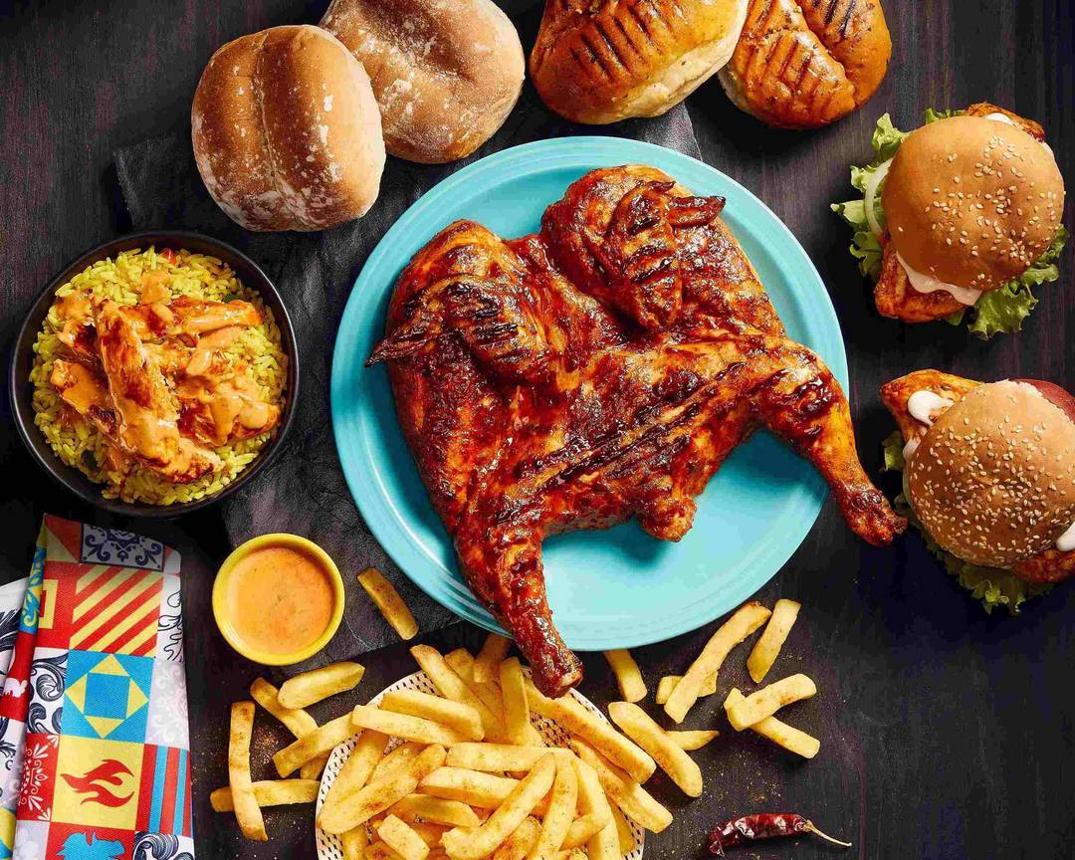
“South African fast-food businesses are increasingly competing to attract price-sensitive consumers by offering family meals below R200 as household budgets remain under pressure from fuel expenses and the rising cost of living. The R200 price threshold is becoming an important competitive benchmark, with businesses seeking to balance affordability, food quality, portion sizes and customer loyalty ahead of the festive season.”
South Africa’s Fast-Food Industry Turns to Under-R200 Family Meals as Consumers Become More Price-Conscious
Introduction: Affordability becomes a competitive advantage
South Africa’s fast-food industry is entering the festive season with a growing focus on affordability as households become increasingly careful about how they spend their money. With food, electricity, transport and other essential expenses competing for a larger share of household income, consumers are paying closer attention to the prices of takeaway meals. Consequently, fast-food restaurants are placing greater emphasis on affordable family packages, promotional offers and smaller individual meals to attract customers.
A significant development in this changing market is the emergence of R200 as an important price threshold for family takeaway meals. According to a report published by the Knysna-Plett Herald on 27 November 2026, fast-food businesses are competing to provide meals below this amount while maintaining acceptable food quality, portion sizes and customer satisfaction. The trend demonstrates how changing household purchasing power is influencing business decisions in South Africa’s competitive food-service industry.
The development is particularly important from a microeconomic perspective because it illustrates the relationship between consumer demand, prices, household budgets, competition and business profitability.
Household budgets are changing consumer behaviour
Household purchasing decisions are influenced by disposable income, the prices of goods and services, and the availability of substitutes. When essential expenses increase, consumers frequently reconsider discretionary purchases, including restaurant meals and takeaway food.
South African consumers are experiencing these pressures as inflation and higher living costs affect their purchasing power. Statistics South Africa reported that annual consumer inflation increased to 5.2% in October 2026, compared with 4.5% in September. This was the highest annual inflation rate in almost two-and-a-half years.
Although inflation affects different households differently, its impact on purchasing decisions can be substantial. Consumers who previously purchased takeaway meals without extensive price comparisons may now examine promotional offers, compare restaurant menus and choose less expensive alternatives.
For families, the difference between spending R150 and R200 on a meal can be significant, particularly when takeaway purchases are made repeatedly throughout the month. Therefore, affordable meal packages are becoming an important way for restaurants to respond to changing demand.
This behaviour demonstrates the microeconomic concept of budget constraints. Households have limited financial resources and must allocate their income between competing needs. When the cost of essential goods rises, less money remains available for non-essential consumption.
The R200 price threshold and competition between restaurants
The R200 threshold is emerging as an important reference point for businesses attempting to attract families and groups of customers.
According to the Knysna-Plett Herald report, Tasty Gallos has introduced family meals priced below R200. One example is its Gallo Family 4 meal, which includes half a chicken, two chicken burgers and chips for R185 when purchased in-store.
Divided between four people, the meal costs approximately R46.25 per person. The business also offers a Clever Choice meal for R95, consisting of a chicken burger, quarter chicken and chips.
These packages illustrate price differentiation and product bundling. Instead of selling every item separately, restaurants combine products into packages designed to offer consumers a perceived saving.
Bundling can benefit both customers and businesses. Consumers receive several food items at a single advertised price, while restaurants can increase the number of products sold in one transaction.
However, the effectiveness of this strategy depends on whether customers believe that the package offers genuine value. If portions are too small or quality is inconsistent, customers may decide that the advertised saving is not worthwhile.
Consumer preferences extend beyond price
Although affordability is important, price is not the only factor influencing restaurant selection.
The Market Research Foundation’s October 2026 MAPS findings, cited in the original report, indicate that food quality accounted for 20% of reported reasons for choosing a fast-food outlet. Portion sizes accounted for 19%, convenient location for 17%, and value for money for 16%. Fast service and a consistent meal experience each accounted for 12%.
These findings demonstrate that consumers evaluate several characteristics when choosing where to purchase food.
From a microeconomic perspective, customers seek to maximise utility, meaning the satisfaction they receive from spending their available income. A cheaper meal does not necessarily provide greater utility if it has poor quality, insufficient portions or an unsatisfactory service experience.
Restaurants must therefore identify the combination of price, quality, convenience and portion size that best satisfies their target customers.
Businesses that focus exclusively on reducing prices could struggle to maintain customer loyalty if their products fail to meet expectations.
The pressure of inflation on food purchases
Food affordability remains an important concern for South African households.
The Pietermaritzburg Economic Justice and Dignity organisation’s November 2026 Household Affordability Index placed the average cost of its Household Food Basket at R5,530.83. This represented an increase of R18.30 compared with October and R117.30 compared with November 2025.
The index monitors 44 basic food products across supermarkets and butcheries in several South African cities.
These figures help explain why consumers are becoming more selective about spending money on restaurant meals.
When grocery expenses increase, households may prefer preparing food at home rather than purchasing takeaway meals. However, restaurants can still attract customers by offering affordable packages that provide convenience and competitive value.
This creates an important relationship between the market for takeaway food and the market for groceries. These products are not perfect substitutes because takeaway meals provide convenience and save preparation time. Nevertheless, households can switch between them depending on prices, income and personal preferences.
Restaurants must therefore consider the alternatives available to consumers when designing their menus and promotional offers.
Salary pressures and declining purchasing power
Income is another major determinant of consumer demand.
A report published by The National on 25 November 2026 indicated that the PayInc Net Salary Index remained unchanged at R21,680 in October. The index’s real net salary measure declined by 2.9% year on year, indicating that purchasing power had weakened after accounting for inflation. The index tracks approximately 2.1 million South African salary earners.
When salaries do not increase sufficiently to compensate for higher prices, households have less capacity to purchase discretionary goods and services.
This can affect fast-food businesses through smaller orders, fewer restaurant visits and increased demand for discounted products.
Lower-income consumers may be particularly sensitive to price increases because a larger proportion of their income is allocated to essential expenses.
Consequently, restaurants that offer meals at different price points may be better positioned to serve consumers with different financial circumstances.
Festive-season opportunities for fast-food businesses
The festive season presents an important commercial opportunity for South African restaurants.
Families travel, attend gatherings and spend more time together. These activities can increase demand for convenient food options, particularly family-sized takeaway packages.
The original report notes that takeaway and fast-food outlets generated nearly R4.75 billion in December 2025, representing a 15.5% increase compared with November.
Family meals can increase average transaction values because customers purchase several items together rather than buying individual meals separately. Restaurants may also benefit from improved production efficiency when preparing popular bundled products.
However, higher sales do not automatically guarantee higher profits. Businesses must carefully manage ingredient costs, labour expenses, packaging, electricity, delivery arrangements and promotional discounts.
If the cost of producing a family package exceeds the revenue generated, increasing sales could create financial difficulties rather than improve profitability.
Restaurants must therefore balance competitive pricing with sustainable operating margins.
Price competition and business profitability
The growing emphasis on affordable meals highlights the importance of price competition in microeconomics.
When several businesses compete for the same customers, each restaurant must consider the prices and products offered by its competitors.
If one restaurant introduces a family meal below R200, competing outlets may respond by adjusting their own menus, introducing discounts or offering additional products at similar prices.
This creates pressure to improve operational efficiency.
Businesses may negotiate better purchasing agreements with suppliers, reduce food waste, improve inventory management and streamline preparation processes.
However, excessive price competition can become harmful if restaurants repeatedly reduce prices without reducing costs.
A sustainable pricing strategy should consider customer willingness to pay, production costs, competitor prices and the expected demand for different menu items.
Restaurants that develop strong customer relationships and maintain consistent quality may also compete successfully without being the cheapest option in the market.
January could test customer loyalty
Although December offers opportunities for increased restaurant sales, January may present a different commercial environment.
Households often face additional financial responsibilities after the festive season, including school expenses, transport costs, outstanding bills and other essential purchases.
The original report highlights this challenge, noting that fast-food businesses will need to retain customers after festive promotional campaigns end.
This means restaurants cannot depend entirely on temporary discounts to maintain demand.
Customer loyalty is influenced by the overall experience, including food quality, service, convenience, affordability and consistency.
Businesses that provide reliable value may encourage repeat purchases even when consumers become more cautious about discretionary spending.
Restaurants should also monitor customer preferences and adjust their products according to changing demand rather than assuming that one promotional strategy will remain effective throughout the year.
Conclusion: Value will shape the future of fast food
South Africa’s growing competition around family meals below R200 reflects a wider shift in consumer behaviour as households respond to inflation, income pressures and changing spending priorities.
The development demonstrates several important microeconomic principles, including price sensitivity, consumer utility, budget constraints, product bundling, competition and demand substitution.
For consumers, affordable family packages provide opportunities to purchase convenient meals while managing household budgets. For restaurants, these products create opportunities to attract customers, increase transaction values and strengthen their position in a competitive market.
Nevertheless, the long-term success of affordable meal strategies will depend on maintaining quality, controlling operating costs and building customer loyalty.
As the festive season progresses, the ability to offer competitive prices without sacrificing customer satisfaction could become one of the most important advantages in South Africa’s fast-food industry.
The R200 threshold is therefore more than a promotional figure. It illustrates how businesses respond to consumers’ changing financial circumstances and how purchasing power influences decisions throughout the economy.



