




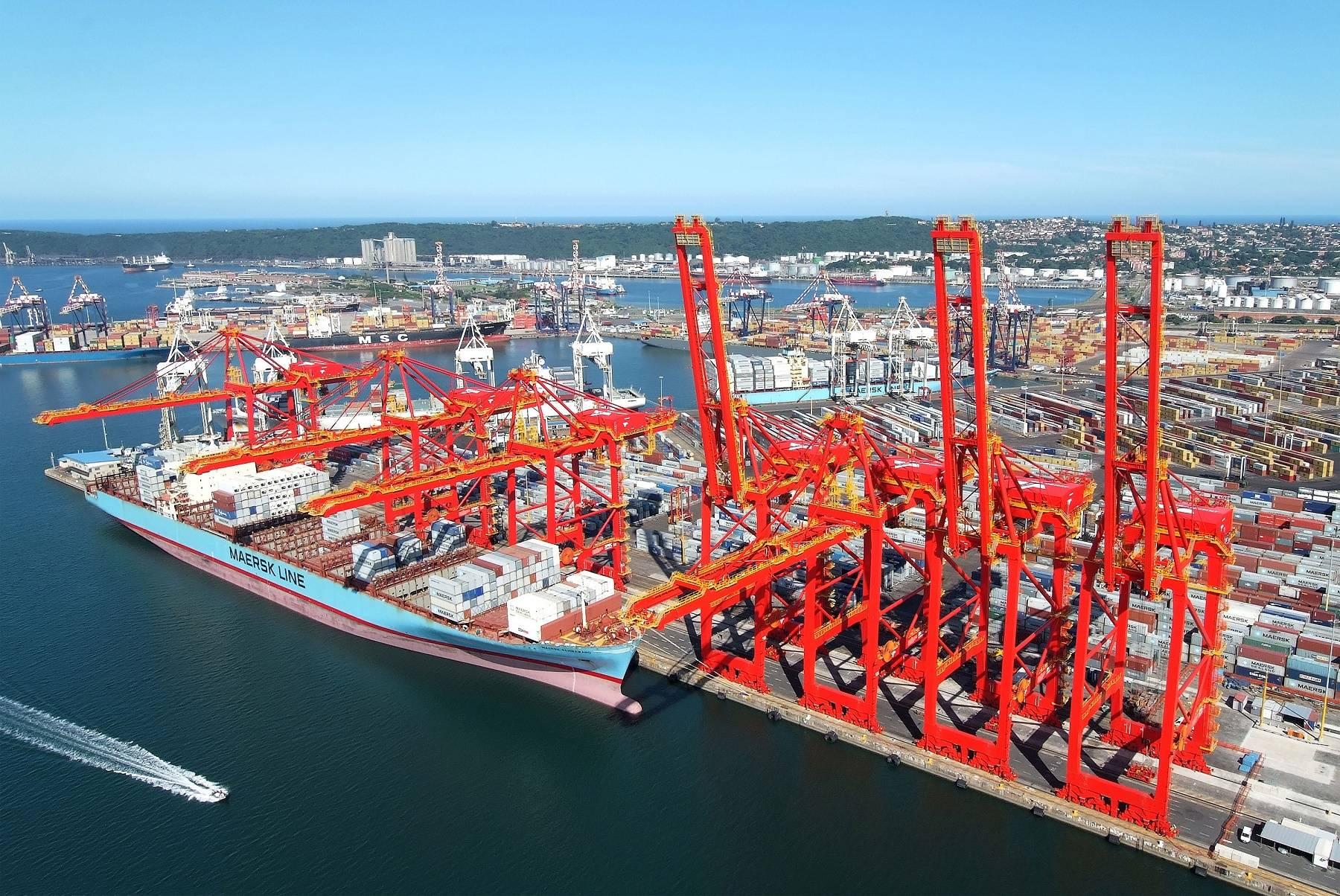
“South Africa’s anticipated removal from the African Growth and Opportunity Act (AGOA) from January 2027 could affect not only domestic exporters but also neighbouring African economies that depend on South African industrial supply chains to access the American market. Government officials are consequently advocating export-market diversification, stronger regional industrialisation and expanded trade partnerships to protect employment, improve competitiveness and reduce reliance on preferential access to a single international market.”
South Africa’s AGOA Exit Threatens Regional Export Chains as Government Accelerates Trade Diversification
South Africa’s anticipated exclusion from the African Growth and Opportunity Act (AGOA) is emerging as a significant challenge for the country’s international trade relationships, with government officials warning that the consequences could extend beyond domestic exporters to neighbouring African economies. As Pretoria prepares for the expected withdrawal of preferential American market access from January 2027, policymakers are increasingly emphasising regional industrialisation, export diversification and stronger commercial partnerships as essential components of a sustainable trade strategy.
The latest warning was delivered by Simphiwe Hamilton, director-general of the Department of Trade, Industry and Competition, during the CEO Dialogue on Southern Africa organised by The European House – Ambrosetti. Hamilton argued that South Africa’s relationship with AGOA should not be considered exclusively a bilateral issue because several neighbouring countries rely on South African production networks to access international markets.
AGOA Withdrawal Raises Regional Trade Concerns
The African Growth and Opportunity Act has historically provided eligible sub-Saharan African countries with preferential, generally duty-free access to the United States market for thousands of products. South Africa has used the programme to support exports in sectors including agriculture, automotive manufacturing and industrial production.
However, Washington announced its intention to remove South Africa and Rwanda from AGOA effective January 1, 2027. The decision followed a review by the United States Trade Representative, which concluded that the countries did not satisfy certain programme eligibility requirements.
Although Congress extended AGOA through 2028, the extension does not automatically guarantee South Africa’s continued participation.
South African government officials have expressed concern about the implications for businesses, workers and communities connected to export-oriented industries. Nevertheless, they maintain that AGOA represents only one component of the country’s broader economic relationship with the United States.
According to the Department of Trade, Industry and Competition, bilateral trade between South Africa and the United States reached approximately $28.8 billion in 2025. More than 600 American companies operate in South Africa, supporting approximately 134,600 jobs.
Government figures also indicate that approximately 89% of South African exports to the United States entered under ordinary World Trade Organization most-favoured-nation arrangements in 2025, while around 10% entered through AGOA.
AGOA exports were valued at approximately $1.7 billion during 2025, considerably lower than the $4 billion recorded in 2024.
Consequently, although the programme remains important to particular industries, its overall contribution to South Africa’s international export earnings is comparatively limited.
Neighbouring Countries Could Face Indirect Export Challenges
Hamilton’s warning highlights a less visible dimension of the impending trade adjustment: the interconnected nature of African industrial supply chains.
South Africa serves as a major manufacturing, logistics and distribution centre for several economies within the Southern African Development Community and the broader African continent.
Regional producers frequently supply components, raw materials and intermediate products that enter South African manufacturing systems before being exported internationally.
Consequently, changes affecting South African export competitiveness can influence businesses operating across neighbouring economies.
For example, agricultural producers, manufacturers and suppliers in other African countries may depend on South African processing facilities, transportation networks, ports and commercial distribution arrangements to reach overseas customers.
If preferential access to the American market becomes more expensive or complicated, exporters may reconsider sourcing arrangements, production locations and investment decisions.
This could create uncertainty for regional suppliers that have invested in existing commercial relationships.
Hamilton argued that overlooking these connections would produce an incomplete understanding of the potential consequences of South Africa’s AGOA exclusion.
The challenge therefore extends beyond Pretoria’s diplomatic relationship with Washington. It also concerns the resilience of regional production systems and the ability of African economies to participate collectively in international trade.
The issue has renewed attention on the importance of regional economic integration, particularly efforts to increase trade between African countries rather than relying predominantly on international markets.
Export Diversification Becomes a Strategic Priority
South African officials are increasingly presenting export diversification as a central response to changing international trade conditions.
Hamilton stressed that diversification is necessary across markets, products and industries.
The Department of Trade, Industry and Competition has begun exploring additional opportunities in the Association of Southeast Asian Nations, commonly known as ASEAN, while continuing to strengthen commercial relationships across Africa, Europe and Asia.
The government’s broader market diversification strategy includes the African Continental Free Trade Area, India, China, the European Union, the United Kingdom, ASEAN, MERCOSUR and the Southern African Development Community.
These markets offer different opportunities for South African producers.
African markets remain particularly important for manufactured products, machinery, industrial equipment, processed goods and other value-added exports.
Asian markets offer potential opportunities in agricultural commodities, minerals, manufactured products and industrial partnerships.
European markets continue to provide opportunities for agricultural exports, advanced manufacturing and products linked to sustainability and technological innovation.
However, diversification requires more than identifying potential customers.
Exporters must establish commercial relationships, understand market regulations, meet product standards, secure transportation arrangements and develop reliable distribution networks.
Government agencies and trade promotion organisations therefore have an important role in supporting companies as they enter new markets.
The challenge is especially significant for small and medium-sized enterprises that may lack the resources needed to undertake international market development independently.
Regional Industrialisation Could Strengthen African Trade
South Africa’s government is also placing renewed emphasis on industrialisation across the African continent.
Hamilton described the Southern African Development Community, the Southern African Customs Union and wider African markets as important foundations for South Africa’s value-added exports.
This reflects the structure of South African trade, in which manufactured goods frequently find customers within neighbouring economies.
Strengthening regional industrial capacity could allow African countries to develop complementary production systems, reduce dependence on imported finished products and increase the value generated within the continent.
Instead of exporting raw materials and importing finished goods, regional economies could progressively develop processing facilities, manufacturing industries and integrated supply chains.
Such an approach could improve employment opportunities, encourage technology transfer and support the development of domestic industrial capabilities.
South Africa possesses established industrial infrastructure, manufacturing expertise and financial institutions that could support these developments.
Meanwhile, neighbouring countries offer opportunities in agriculture, minerals, energy, manufacturing inputs and emerging industrial sectors.
Combining these capabilities could strengthen regional competitiveness.
Hamilton also referenced a R5 billion industrialisation fund approved during a recent SADC Heads of State summit. The initiative is expected to become operational over a period of approximately two to three years.
The fund could support industrial development and regional value-chain initiatives, although its ultimate effectiveness will depend on implementation, financing arrangements and the projects selected.
The government has also highlighted opportunities to advance automotive value chains with Botswana and expand battery production capacity in Namibia.
These developments illustrate how regional cooperation could become an important component of South Africa’s trade strategy.
Agriculture and Manufacturing Face Adjustment Pressures
South African exporters in agriculture and manufacturing remain among the sectors most concerned about changes to preferential American market access.
Citrus producers have warned that the loss of AGOA could weaken their competitiveness in the United States, particularly because agricultural production requires substantial investment and long-term planning.
Some orchards have been established specifically to supply American customers, creating difficulties when producers attempt to redirect shipments to alternative destinations.
Different countries impose distinct sanitary, phytosanitary and market requirements, meaning that products prepared for one destination may not automatically qualify for another.
South African wine exporters have similarly expressed concerns about losing preferential access relative to competing producers in countries such as Chile and Argentina.
Manufacturing industries also face uncertainty, particularly where export production is integrated into international supply chains.
The automotive sector illustrates these complexities.
South Africa exports vehicles and automotive components to numerous international markets, with the United States representing an important destination for selected products.
However, automotive exports to the American market have already faced separate tariff pressures, reducing the practical benefits associated with AGOA in certain categories.
Reuters reported earlier this month that exporters could experience reduced margins and employment pressures following the withdrawal of preferential access. Business Unity South Africa estimated potential employment losses in the range of several thousand jobs, although the eventual impact remains uncertain.
Trade Policy Must Protect Employment and Competitiveness
The anticipated AGOA adjustment has renewed attention on the relationship between international trade policy and employment.
Export-oriented industries support employment across agricultural production, manufacturing, packaging, transportation, warehousing and logistics.
Changes affecting export demand can therefore influence businesses and workers beyond the companies directly involved in international sales.
South Africa already faces significant unemployment challenges, making the protection of productive employment a major economic priority.
Government has indicated that it is working with affected industries to assess the implications of the AGOA decision and determine appropriate support measures.
The Department of Trade, Industry and Competition has also committed to engaging social partners to strengthen productive sectors, improve resilience and protect employment.
Nevertheless, support measures must be carefully designed to avoid simply preserving uncompetitive production systems.
Businesses require assistance that improves productivity, encourages innovation and strengthens access to alternative markets.
This may involve export financing, market intelligence, infrastructure improvements, technical assistance and support for compliance with international standards.
Ultimately, the objective should be to help companies remain commercially sustainable rather than dependent indefinitely on preferential trade arrangements.
African Continental Free Trade Area Offers Additional Opportunities
The African Continental Free Trade Area represents another important opportunity for South Africa’s export diversification strategy.
The agreement seeks to establish a more integrated continental market by reducing trade barriers, improving cooperation and facilitating the movement of goods and services between participating countries.
For South African manufacturers, the initiative could expand access to customers across Africa.
However, the success of continental integration depends on addressing practical obstacles that continue to increase the cost of cross-border trade.
These include inconsistent customs procedures, infrastructure limitations, administrative delays, transport costs and non-tariff barriers.
Improving border efficiency and harmonising trade procedures would make regional commerce more attractive.
South Africa could benefit by strengthening logistics connections with neighbouring countries, improving port efficiency and supporting regional transport infrastructure.
At the same time, African governments need to encourage investment in production capacity and industrial development.
Greater regional trade should ideally involve the exchange of processed and manufactured goods rather than simply the movement of raw commodities.
This would help expand the economic benefits generated by trade across the continent.
International Partnerships Remain Important
Although South Africa is seeking greater diversification, government officials continue to regard the United States as an important economic partner.
South Africa supplies critical minerals to American industries and maintains commercial relationships across several sectors.
Government figures indicate that South Africa supplies 12 of the 50 minerals considered critical by the United States.
The country also supplies approximately 70% of certain isotopes used in American cancer-treatment applications.
These relationships demonstrate that trade between the two countries extends beyond AGOA.
South African companies also maintain investments in the United States, while American businesses have substantial operations in South Africa.
Consequently, both economies have commercial interests in maintaining constructive relations.
The South African government has indicated that negotiations and diplomatic engagement remain important avenues for addressing trade concerns.
At the same time, Pretoria maintains that its constitutional responsibilities, domestic policy priorities and international obligations must be respected.
The government has therefore adopted a strategy combining diplomatic engagement with market diversification and domestic industrial development.
Outlook: Diversification and Industrialisation Will Shape Trade Strategy
South Africa’s anticipated AGOA exclusion represents a significant adjustment in its international trade environment, particularly for industries that have benefited from preferential access to American customers.
Nevertheless, the broader consequences will depend on how businesses, policymakers and regional partners respond.
The government’s emphasis on diversification reflects recognition that sustainable export growth requires access to multiple markets and a competitive domestic production base.
Regional industrialisation could help strengthen South Africa’s position while creating opportunities for neighbouring economies.
However, these ambitions require substantial coordination between governments, businesses, investors and trade institutions.
Investment in infrastructure, skills development, technology, logistics and manufacturing capacity will be essential.
Likewise, exporters must identify emerging markets, improve product competitiveness and establish reliable commercial partnerships.
The African Continental Free Trade Area and SADC industrialisation initiatives could provide important foundations for these developments.
Meanwhile, continued engagement with the United States remains relevant to preserving investment relationships and exploring alternative commercial arrangements.
The immediate challenge is to manage the transition without unnecessarily damaging employment, productive capacity or regional economic integration.
The longer-term opportunity is to establish a more diversified and resilient trade system in which South Africa and its African partners generate greater value from their production capabilities.
For Pretoria, the central message emerging from the latest trade discussions is clear: international competitiveness cannot depend on a single preferential arrangement.
Instead, sustained economic development will require stronger regional markets, diversified export destinations and deeper industrial capabilities.
South Africa’s response to the AGOA decision could therefore become an important test of its ability to transform trade uncertainty into an opportunity for broader African economic integration.



