




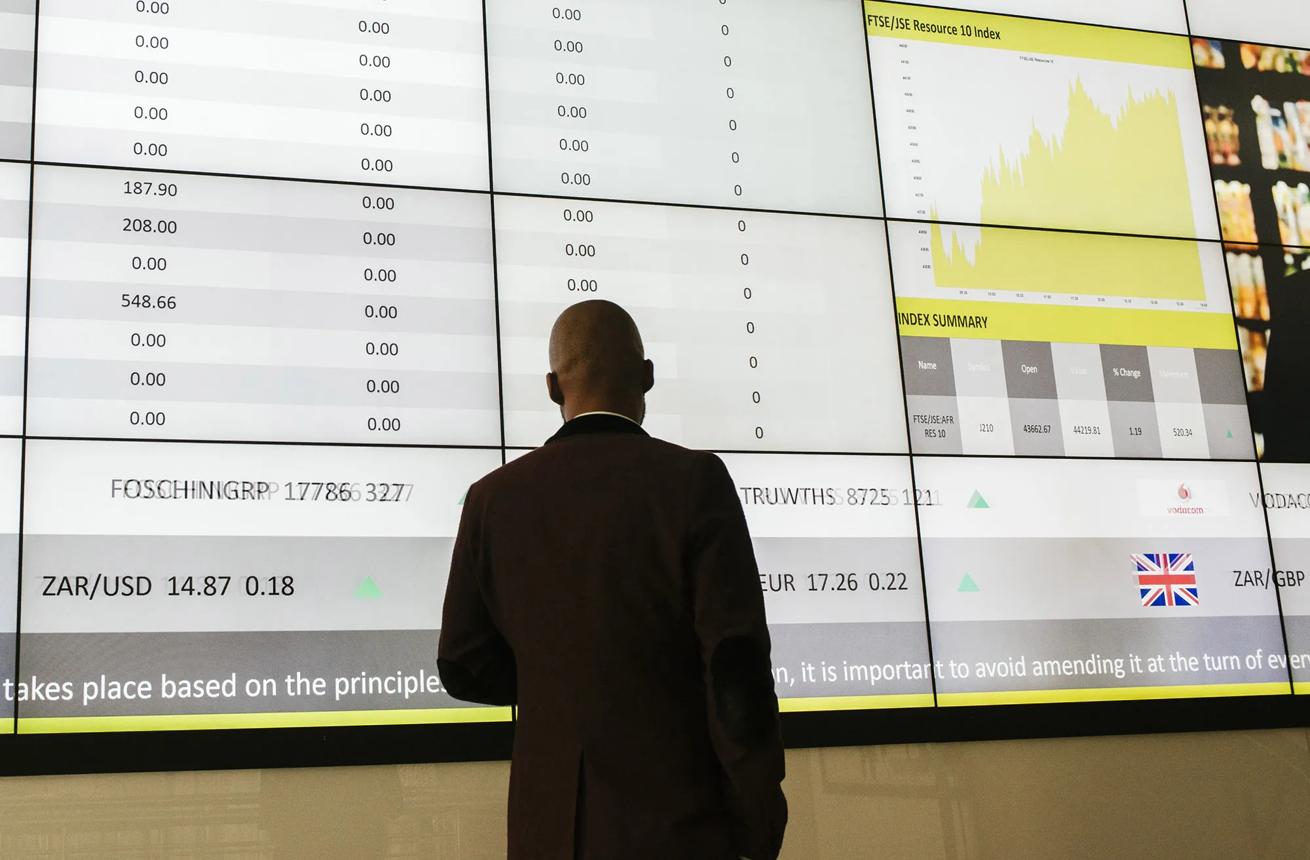
“The South African rand remained relatively stable on Friday after falling sharply in the previous trading session, with investors reluctant to make major currency bets ahead of important month-end economic data. The currency’s near-term direction will depend on incoming economic indicators, global market conditions, fuel-price pressures and expectations for South Africa’s interest-rate and fiscal policies.”
South African Rand Holds Steady as Investors Await Economic Data Amid Inflation and Fuel-Price Uncertainty
Currency stability puts South Africa’s economic outlook in focus
South Africa’s currency market entered Friday, 23 October 2026, in a cautious mood as the rand stabilised following a sharp decline during the previous trading session. Investors were assessing the effects of elevated international oil prices, recent inflation figures and the government’s latest budget measures while preparing for a new series of economic releases expected next week. The developments highlight the close relationship between currency movements, domestic inflation, government finances and the broader performance of Africa’s largest economy.
According to Reuters, the rand traded at approximately R16.5050 against the United States dollar at 06:36 GMT on Friday, broadly unchanged from Thursday’s closing level. The currency had come under pressure during the preceding session as higher oil prices weighed on South Africa, a country that imports much of its fuel. The relative stability represented a pause in the market’s recent movements rather than definitive evidence that the currency’s underlying challenges had disappeared.
For investors, businesses and policymakers, the immediate question is whether forthcoming economic indicators will reinforce confidence in South Africa’s economy or reveal additional pressure on growth, public finances and prices. Currency markets respond not only to published economic statistics but also to expectations about what those statistics mean for future interest rates, capital flows and economic policy.
Global oil prices remain an important source of pressure
One of the most significant influences on the rand is the international oil market. South Africa’s reliance on imported fuel means that rising global oil prices can increase the cost of energy and transport throughout the domestic economy. When international oil prices rise, importers generally require more rand to purchase the same quantity of foreign-currency-priced fuel if exchange rates and other costs remain unchanged.
This relationship can create a difficult economic chain reaction. Higher fuel costs increase transport expenses for freight operators, public transport providers, agricultural producers and retailers. Businesses may respond by raising prices, reducing profit margins or delaying investment. Households, meanwhile, can face higher commuting costs and more expensive goods, leaving less disposable income for other purchases.
The consequences extend beyond individual consumers. If imported fuel becomes substantially more expensive, the country’s import bill can rise, placing additional pressure on foreign-exchange demand. Although movements in the exchange rate also depend on exports, investment flows and global investor sentiment, rising energy costs can make the rand more vulnerable during periods of international uncertainty.
Recent developments have illustrated these risks. Reuters reported on Thursday that the rand weakened as oil prices increased amid concerns about further disruption to supplies from the Middle East. The government has responded to the fuel-price burden through temporary fuel-levy relief announced in its medium-term budget statement.
Nevertheless, a reduction in fuel levies cannot eliminate the effects of an international oil-price shock. It can ease some of the tax burden on fuel, but underlying import costs, exchange-rate changes and other expenses continue to influence the final prices paid by consumers and businesses.
Inflation remains central to the monetary-policy outlook
Inflation is another major consideration for currency traders. Statistics South Africa reported that annual consumer inflation increased to 4.5% in September from 4.4% in August. Although the increase was modest, transport costs remained a concern as fuel prices rose. Reuters reported that economists were watching the possibility of further inflationary pressure following the substantial increase in fuel prices during October.
For households, inflation determines how much everyday goods and services cost relative to their incomes. When prices increase faster than wages, purchasing power declines. Lower purchasing power can weaken consumer demand, particularly in an economy where many households have limited room to absorb additional expenses.
For businesses, inflation complicates decisions about production costs, wages, inventory and pricing. Companies may struggle to determine whether to absorb higher costs or pass them on to customers. If consumers cannot afford higher prices, businesses can experience slower sales even when their operating expenses are increasing.
The South African Reserve Bank must also consider whether rising prices are temporary or likely to persist. A short-lived increase caused by an external fuel shock may eventually reverse. However, if businesses and workers begin to expect consistently higher inflation, price adjustments and wage negotiations can prolong the pressure.
The Reserve Bank’s October 2026 Monetary Policy Review described the effects of global energy disruption and highlighted the risk that fuel, administered-price and food shocks could become embedded in inflation expectations. It also projected that inflation would remain elevated before gradually returning towards the target later in the forecast period.
This creates a delicate balancing act. Raising interest rates may help contain inflation expectations and support confidence in monetary policy, but higher borrowing costs can also discourage household spending, business expansion and investment. Keeping rates unchanged can support demand, yet prolonged inflationary pressure may eventually require a more restrictive response.
Consequently, investors are likely to examine new inflation-related data alongside evidence of economic activity before making firm assumptions about the Reserve Bank’s next decision.
Interest rates influence investment and the rand
Interest-rate expectations play an important role in determining currency-market behaviour. Investors compare expected returns across countries, taking into account interest rates, inflation, financial risks and the likelihood of exchange-rate gains or losses.
When investors believe South African interest rates will remain relatively high, local financial assets may offer attractive yields. However, higher yields do not automatically guarantee stronger demand for the rand. Investors must also consider the risk of currency depreciation, the country’s growth prospects and developments in international markets.
Higher interest rates also have domestic costs. Households with variable-rate loans may face more expensive repayments, leaving less money available for food, transport and other spending. Companies that rely on borrowing can experience higher financing costs, making it more difficult to expand operations, purchase equipment or employ additional workers.
For a country seeking faster economic growth, these trade-offs matter. Monetary policy must protect price stability while avoiding unnecessary damage to already modest economic activity.
The Reserve Bank’s October review placed South Africa’s projected economic growth for 2026 at 1.2%, reflecting a weaker outlook than previously anticipated. This forecast underlines the challenge of controlling inflation in an environment where growth remains limited.
The rand’s performance over the coming days will therefore depend partly on whether economic releases suggest inflation risks are intensifying or that price pressures can ease without additional monetary tightening.
Government’s medium-term budget provides important context
Fiscal policy is another factor shaping investor confidence. On 21 October, Finance Minister Enoch Godongwana presented the 2026 Medium-Term Budget Policy Statement, outlining the government’s assessment of economic growth, revenue, expenditure and debt.
The Treasury lowered its real economic growth forecast for 2026 to 1.2%, compared with the 1.6% projected in February. It expects growth to improve to 1.6% in 2027 and reach 2% by 2029. The revised outlook reflects domestic constraints and a more difficult international environment, including risks associated with the Middle East conflict and energy prices.
The statement also reported that government debt had stabilised at 78.4% of gross domestic product in the 2025/26 financial year. The budget deficit was projected at 3.9% of GDP for 2026/27, while the government outlined plans to strengthen the primary surplus and reduce borrowing pressures over time.
These fiscal indicators matter because government borrowing influences the availability and cost of finance across the economy. When investors believe that public debt is manageable and budget commitments are credible, concerns about future financing pressures may diminish. Improved confidence can support government bonds and potentially strengthen demand for domestic financial assets.
Conversely, persistent weak growth, higher debt-service costs or uncertainty about government revenue can undermine confidence. Slow economic expansion also makes it more difficult to increase tax revenue sustainably without placing additional pressure on households and businesses.
South Africa’s challenge is to improve fiscal sustainability while maintaining essential public services and investing in infrastructure that can increase the economy’s productive capacity.
Temporary fuel relief offers assistance but creates trade-offs
The government’s fuel-levy intervention is one of the immediate measures intended to limit the economic effects of higher international energy prices.
According to the medium-term budget statement, the government plans temporary reductions in fuel levies, including an initial reduction of R1.50 per litre for petrol and R3 per litre for diesel from 4 November to 1 December 2026. Lower reductions are scheduled to continue until 5 January 2027. The intervention is designed to provide approximately R10 billion in relief, with a corresponding fiscal cost in foregone revenue.
For households, the measure may reduce some of the immediate pressure on transport budgets. For businesses, particularly those dependent on road freight and deliveries, lower levies could help contain operating costs.
However, the extent of the benefit depends on developments in international oil prices, the rand and other components of fuel pricing. If imported fuel becomes more expensive, a levy reduction may offset only part of the increase.
The fiscal trade-off is equally important. Revenue forgone through fuel relief cannot simultaneously be used for other priorities unless the government identifies alternative funding or adjusts spending. Policymakers must therefore balance short-term cost-of-living assistance against longer-term requirements for infrastructure, health, education and debt management.
The intervention may help soften the immediate shock, but durable improvements in household purchasing power will also depend on stronger employment, rising incomes, more efficient transport and sustainable economic growth.
Economic data expected next week could shape market sentiment
The next phase of market activity will be influenced by a series of economic releases scheduled for the coming week. Reuters identified South Africa’s leading business cycle indicator, money supply, private-sector credit, producer inflation, the budget balance and trade balance among the figures investors would be watching.
The leading business cycle indicator can help investors assess the direction of economic activity. Money supply and private-sector credit provide information about financial conditions, lending and demand. Producer inflation offers insight into price pressures faced by businesses before those pressures potentially reach consumers.
The budget balance provides an update on government revenue and expenditure, while the trade balance helps show how exports and imports are performing. Stronger exports can support foreign-exchange earnings, whereas a rising import bill may increase demand for foreign currency.
Taken together, these figures can help investors determine whether South Africa’s economy is gaining momentum or facing further headwinds. However, a single data release rarely determines the rand’s direction. Markets will also consider international oil prices, global interest rates and geopolitical developments.
Implications for households, businesses and policymakers
The rand’s stability is relevant well beyond financial markets. A more stable currency can make import costs easier for businesses to plan around, although stability alone does not guarantee lower prices. A weaker currency can increase the cost of imported machinery, fuel and certain food inputs, potentially affecting investment and household budgets.
Exporters may benefit when foreign earnings translate into more rand, although their results also depend on production costs, international demand and commodity prices. Companies that rely heavily on imported inputs can face the opposite effect.
For policymakers, the immediate priority is to manage external shocks without undermining longer-term economic stability. That requires coordinated attention to inflation, credible public finances, infrastructure delivery and measures that improve productivity.
The Treasury has identified structural reforms and growth-enhancing infrastructure as important elements of its economic strategy. Their effectiveness will depend on implementation, including whether electricity, water, transport and municipal services become more reliable for businesses and communities.
Outlook: cautious trading as investors await clearer signals
The rand’s relative stability on 23 October provides a pause after recent volatility, but the outlook remains uncertain. International oil prices, inflation expectations, monetary-policy decisions and the government’s fiscal position will continue to influence market sentiment.
Next week’s economic releases should provide additional evidence about the condition of South Africa’s economy. Stronger-than-expected indicators could support confidence, while disappointing results could reinforce concerns about weak growth and financial pressures.
Ultimately, sustainable currency stability will require more than favourable daily trading conditions. It will depend on stronger economic growth, effective public investment, manageable inflation and credible fiscal management.
For now, investors appear to be waiting for better information before making major moves. The forthcoming data will help clarify whether South Africa can navigate current external pressures while building a firmer foundation for investment, employment and long-term prosperity.



