




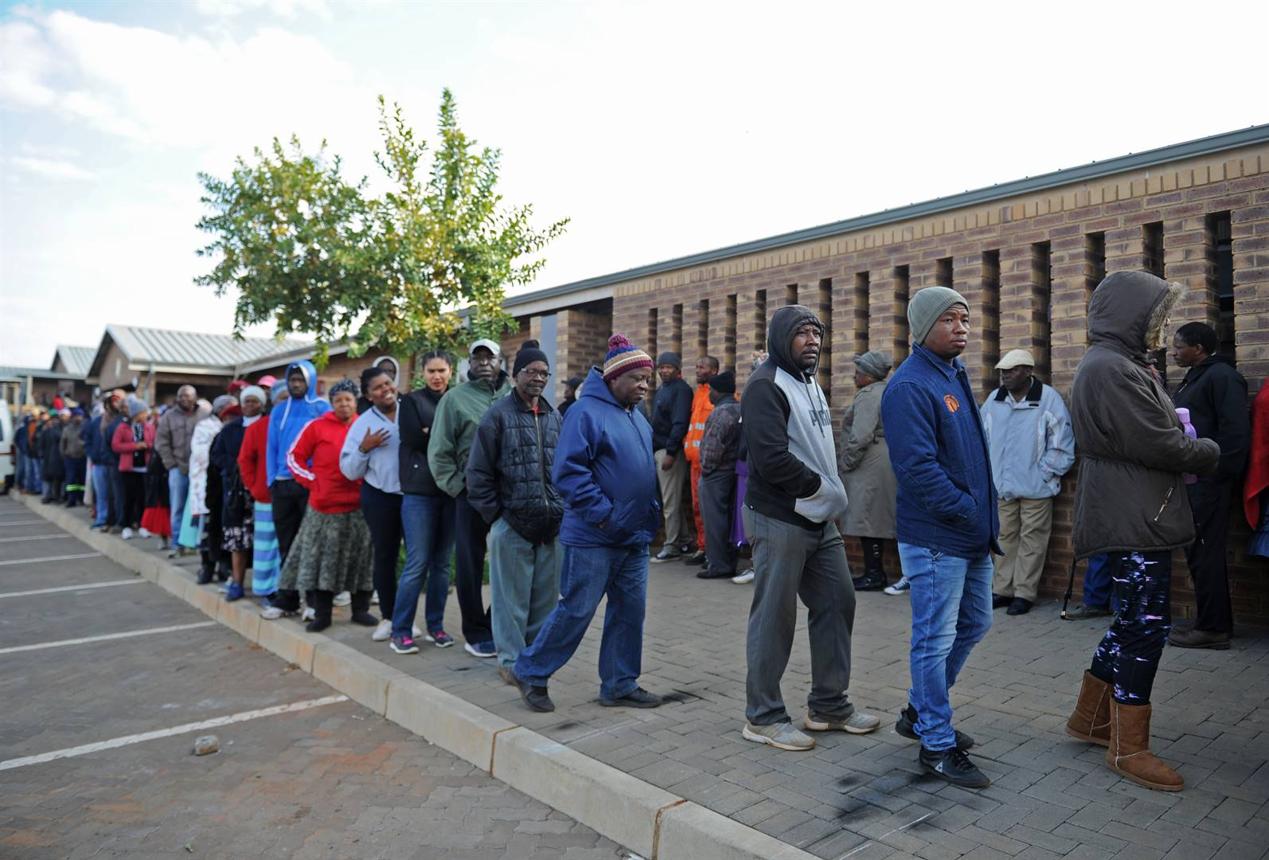
“Recent polling and reporting suggest that dissatisfaction with water supply, electricity, roads, sanitation and municipal leadership is becoming a major factor shaping voter sentiment ahead of South Africa’s 4 November 2026 local government elections. At the same time, fragmented party support and public willingness to consider coalition governments mean that the election outcome may depend as much on cooperation between political parties as on which party receives the most votes.”
Public dissatisfaction puts South Africa’s municipal leadership under pressure ahead of crucial elections
South Africa is approaching a decisive moment in local government politics as public opinion, dissatisfaction with municipal services and changing party loyalties shape the debate ahead of the local government elections scheduled for 4 November 2026. Recent opinion polls suggest that voters are increasingly prepared to reconsider traditional political loyalties, while several major metropolitan municipalities face intense competition between established parties and newer political movements. The developments could influence not only which parties win the most votes, but also how municipalities are governed after the election.
At the centre of this political shift is the relationship between citizens and the local authorities responsible for delivering essential services. Water shortages, electricity disruptions, deteriorating roads, sewage problems and concerns about municipal administration have become important issues in public discussions. For many residents, these everyday experiences provide a more immediate measure of government performance than national political speeches or campaign promises.
The latest polling coverage indicates that the ANC is facing substantial challenges in several urban areas, while the Democratic Alliance (DA), uMkhonto weSizwe Party (MKP), Economic Freedom Fighters (EFF) and smaller parties compete for voters who may be dissatisfied with existing leadership. However, polling figures are snapshots of public opinion rather than guaranteed election outcomes, and differences between surveys mean that individual results must be interpreted cautiously.
Municipal service delivery emerges as a major election issue
Municipal service delivery is one of the clearest themes emerging from recent public-opinion reporting. Residents depend on local government for functioning infrastructure, reliable water supplies, sanitation, electricity distribution and the maintenance of public spaces. When these responsibilities are not fulfilled consistently, frustration can translate into demands for new leadership.
Johannesburg illustrates this challenge. A MarkData survey reported by Business Day on 18 October found that the DA was polling at 35%, compared with 21.8% for the ANC. The same survey recorded considerable dissatisfaction with municipal performance: 40.7% of Johannesburg respondents said the municipality had been extremely badly run over the previous five years, while another 28% said it had not been well run.
These findings indicate that municipal performance is an important part of the political conversation. They do not, however, establish that every dissatisfied resident will vote for the opposition. Voters may consider a range of factors, including party identification, leadership credibility, policy proposals and confidence in the alternatives available.
The situation in Tshwane reinforces the importance of service delivery in shaping public attitudes. A report published on 25 October described an eNCA MarkData poll in which 67.2% of respondents said the mayor and municipality had performed poorly enough to warrant a new mayor and governing majority. In the same report, 62.6% expressed dissatisfaction with the handling of water-supply challenges.
These results place municipal accountability at the heart of the election debate. Political parties seeking to gain support must demonstrate how their policies would improve infrastructure management, financial accountability and the reliability of essential services.
The ANC faces pressure as voter loyalties shift
The ANC’s declining support in recent polling is another important development in South African public opinion. The Common Sense reported on 19 October that a Social Research Foundation survey placed the party at 32% nationally, its joint lowest level in that polling series. The DA recorded 26%, the MKP 12% and the EFF 8%. The survey covered 3,100 respondents between 18 September and 12 October 2026.
The figures suggest that the ANC is facing a more competitive political environment than the one in which it traditionally dominated national and municipal politics. Nevertheless, the results should not be interpreted as proof that the party has permanently lost its support base. Political attitudes can change during campaigns, and local election outcomes depend on regional conditions, turnout and the performance of individual candidates.
The ANC’s challenges are particularly significant in large urban centres, where voters encounter municipal service failures directly. When residents associate persistent infrastructure problems with governing parties, dissatisfaction can become a reason to support competing organisations.
At the same time, opposition parties must persuade voters that they can govern effectively. Criticism of an incumbent administration may attract attention, but it does not automatically demonstrate that an alternative government will deliver better results.
The DA gains ground but faces coalition challenges
The DA’s recent polling performance suggests that it is well positioned to compete strongly in several metropolitan areas. An eNCA report published on 25 October placed the party at 28.4% nationally, compared with 29.6% for the ANC. The narrow difference highlights how competitive the national party contest has become in that particular survey.
However, the DA’s potential gains also reveal a challenge facing South African politics: becoming the largest party in a municipality does not necessarily mean securing an outright majority.
Johannesburg demonstrates this distinction. Even if the DA finishes ahead of its rivals, a fragmented council could require it to negotiate with other parties to establish an administration. Those negotiations could influence the selection of a mayor, the composition of the municipal executive and the adoption of budgets.
Consequently, voters’ opinions about coalition arrangements have become increasingly relevant. A party’s election campaign may promise change, but its ability to implement that programme could depend on agreements with political organisations whose priorities differ from its own.
The election therefore presents two related questions: which party can attract the greatest public support, and which combination of parties can form a stable administration capable of delivering services?
Public attitudes towards coalitions are changing
Recent polling suggests that coalition government has become an increasingly accepted possibility among South African voters. An Inside Politics report published on 20 October described a Social Research Foundation survey finding that 68% of respondents supported ANC–DA cooperation in municipalities where neither party secured an outright majority. Thirty per cent opposed the proposed arrangement.
This finding is significant because cooperation between the ANC and DA has often been politically contentious. Support for such an arrangement suggests that some voters may prioritise administrative stability over strict party competition when no single organisation can govern independently.
Nevertheless, support for one possible coalition does not mean that all voters agree on the appropriate governing arrangement. Another News24/SABI poll, discussed in an Inside Politics report on 5 October, found that 61% of registered voters would be happy with a coalition governing their municipality, but only 20% selected an ANC–DA coalition as their preferred arrangement.
The difference between these findings illustrates the importance of survey wording and methodology. Voters may accept coalition government in principle while disagreeing about which parties should cooperate.
Political negotiations after the election will therefore need to reconcile electoral results, party policies and public expectations. Coalitions that fail to establish clear priorities or maintain working relationships could struggle to pass budgets and implement infrastructure programmes.
eThekwini illustrates the changing political landscape
The political situation in eThekwini provides another indication of how regional public opinion could reshape municipal leadership. Business Day reported on 25 October that an eNCA MarkData poll placed the MKP at 48%, ahead of the DA at 25.2% and the ANC at 14.5%. The report also questioned whether the survey could reliably predict the final outcome, given the size and complexity of the metropolitan electorate.
The figures point to a potentially significant challenge for the ANC in a metropolitan area where the MKP has attracted substantial support. However, the reported percentages should be understood as survey estimates rather than confirmed election results.
The broader significance is that South African politics increasingly varies across regions. National polling averages cannot fully explain local political behaviour, because voters in different municipalities face different service-delivery problems, party structures and leadership choices.
This regional variation makes it difficult for political organisations to rely on a single national message. Campaigns must demonstrate an understanding of local conditions and provide practical solutions relevant to the communities they seek to represent.
Polling credibility and public trust
As election day approaches, opinion polls will continue to influence political debate. Yet their value depends on transparent methodology, representative samples, appropriate weighting and honest explanations of uncertainty.
The recent reporting demonstrates why comparisons require care. Surveys can differ in their fieldwork dates, sample sizes, interviewing methods and geographic coverage. Consequently, two polls conducted at different times may produce different estimates without either necessarily providing a complete picture of public opinion.
For voters, the most useful approach is to examine the questions asked, the number and type of people surveyed, and the limitations acknowledged by the researchers. Polling can help identify political trends, but it cannot replace the official election count.
Responsible reporting is equally important. A party’s interpretation of a favourable survey should be distinguished from the poll’s actual findings, while claims about voter dissatisfaction should be supported by clearly identified evidence.
What the election means for accountability
The central question emerging from recent public-opinion research is whether political competition will produce more accountable municipal government.
Voters have an opportunity to assess incumbents against their record on service delivery, financial management and responsiveness to residents. Opposition parties, in turn, must explain how their proposed policies would improve municipal performance and how they would finance and implement those commitments.
After the election, public scrutiny should extend beyond which party controls a council. Residents will need to assess whether elected officials publish credible plans, maintain infrastructure, manage municipal finances responsibly and respond to complaints.
Coalition governments will face an additional test: demonstrating that political differences do not prevent them from fulfilling basic responsibilities. Clear agreements, transparent decision-making and measurable performance targets could help improve accountability.
Ultimately, the most important outcome for residents will not simply be a change in political leadership. It will be whether the election produces administrations that deliver more reliable services and respond more effectively to community needs.
Conclusion
South Africa’s approaching local government elections are unfolding amid public dissatisfaction, competitive party politics and growing attention to coalition arrangements. Recent surveys suggest that the ANC faces pressure in several areas, the DA is competing strongly, and the MKP could influence outcomes in important metropolitan regions. At the same time, differing polling results underline the need for caution when interpreting estimates of voter sentiment.
For South African voters, the decisive issue is whether political parties can turn campaign promises into effective local government. The eventual measure of success will be the ability of elected administrations to address residents’ everyday concerns and restore confidence in the institutions responsible for delivering essential services.



