




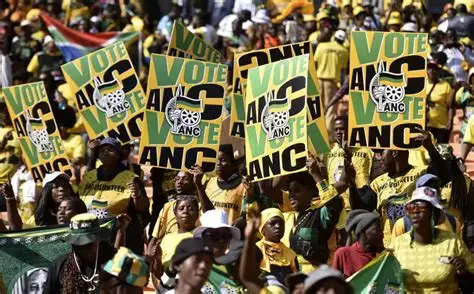
“The ANC has emerged as the largest party in South Africa’s 2026 local elections, securing just over 40% of the vote but falling short of a majority. With the DA and M.K. gaining significant ground, coalition talks are expected to shape governance in key metros and municipalities.”
South Africa’s 2026 local government elections have concluded with results that underscore both continuity and change in the country’s political landscape. The African National Congress (ANC), long the dominant force in South African politics, secured 40.18% of the vote, maintaining its position as the largest party but failing to achieve an outright majority. The Democratic Alliance (DA) followed with 21.81%, while former President Jacob Zuma’s M.K. party surprised many by capturing 14.58%.
Voter Turnout and Registration
The elections saw a voters’ roll exceeding 29 million, boosted by a youth-led registration drive. The Independent Electoral Commission (IEC) reported 16.29 million votes cast, with 16.07 million valid ballots. This turnout reflects both heightened political engagement and the growing influence of younger voters, who have become increasingly vocal about issues such as unemployment, corruption, and service delivery.
Party Performance
- ANC (40.18%): Despite retaining its lead, the ANC’s support has declined compared to previous elections, raising questions about its ability to govern without coalition partners.
- DA (21.81%): The DA consolidated its base in urban centers, particularly Cape Town and parts of Gauteng, positioning itself as a credible alternative to the ANC.
- M.K. (14.58%): Zuma’s party emerged as a major disruptor, drawing significant support in KwaZulu-Natal and parts of Mpumalanga, reshaping the political map.
- EFF (9.52%): The Economic Freedom Fighters maintained a presence but failed to expand significantly, suggesting limits to their appeal beyond radical youth movements.
Coalition Dynamics
With no party securing a majority, coalition negotiations are inevitable. Key metros such as Johannesburg, Tshwane, and Durban are expected to become battlegrounds for coalition talks. The ANC may seek alliances with smaller parties like the IFP or PA, while the DA could explore partnerships with ActionSA and other opposition groups. The M.K.’s role will be pivotal, as its strong regional performance gives it leverage in negotiations.
Youth Influence
The surge in youth registrations—291,000 new voters added—has reshaped the electoral landscape. Young voters have shown a preference for parties promising radical change, including M.K. and the EFF, signaling a generational shift in South African politics.
Challenges Ahead
The fragmented outcome poses challenges for governance. Coalition governments often struggle with instability, policy disagreements, and short-lived alliances. Service delivery, corruption, and economic inequality remain pressing issues, and voters will expect swift action from whichever coalitions emerge.
International and Domestic Reactions
Observers from civil society groups, including Defend Our Democracy, have emphasized the importance of transparency and accountability in the coalition-building process. International partners are watching closely, as South Africa’s political stability has implications for regional trade and investment.
Conclusion
The 2026 local elections mark a turning point in South African politics. While the ANC remains the largest party, its reduced dominance highlights the electorate’s demand for accountability and effective governance. The rise of M.K. and the resilience of the DA suggest that coalition politics will define the next phase of South Africa’s democracy. Whether these coalitions can deliver on promises of service delivery and economic reform will determine the country’s political trajectory in the years ahead.



