




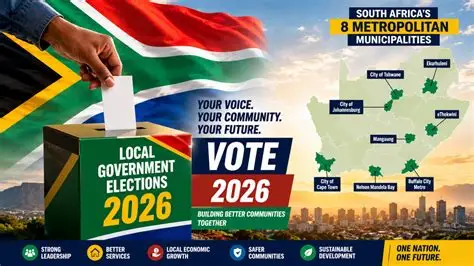
“The Independent Electoral Commission (IEC) has proclaimed 4 November 2026 as the official election date, launching the final 90‑day campaign period. Early results show the ANC leading with 40.18%, but strong performances by the DA (21.81%) and MK (14.58%) signal a fragmented political landscape with coalition possibilities.”
South Africa’s 2026 Local Government Elections have entered a historic phase with the IEC’s proclamation of 4 November as election day. This announcement sets the stage for a fiercely contested campaign where the ANC, DA, MK, and EFF are vying for dominance in municipalities across the country. With the voters’ roll surpassing 29 million registered citizens, largely due to youth mobilization, the elections promise to reshape the political map.
Current Results Snapshot
- ANC: 40.18% (6,459,284 votes)
- DA: 21.81% (3,506,855 votes)
- MK: 14.58% (2,344,291 votes)
- EFF: 9.52% (1,529,914 votes)
- IFP: 3.85% (618,208 votes)
These figures highlight the ANC’s continued dominance but also underscore the rise of challengers, particularly the DA and MK, who are consolidating urban and provincial support bases.
Youth Mobilization
The IEC has emphasized youth participation, with Deputy Chief Electoral Officer Dr. Victor Shale noting that young voters are critical to sustaining democracy. Campaigns have targeted barriers to youth engagement, including accessibility of registration and awareness drives. The surge of 291,000 new voters in the final registration weekend demonstrates the effectiveness of these outreach efforts.
Party Strategies
- ANC: Focused on stability, service delivery, and leveraging its liberation legacy.
- DA: Positioning itself as the party of governance efficiency, urging citizens to “get towns and cities working.”
- MK: Capitalizing on Jacob Zuma’s populist appeal, particularly in KwaZulu‑Natal.
- EFF: Campaigning on radical economic transformation, land reform, and youth empowerment.
Coalition Scenarios
With no party likely to secure outright majorities in key metros such as Johannesburg, Tshwane, and Cape Town, coalition negotiations are expected to dominate post‑election politics. Analysts predict complex alliances involving smaller parties like ActionSA, IFP, and VF Plus, which could become kingmakers.
Challenges Ahead
- Disinformation: IEC has warned against fake news campaigns.
- Audit Failures: Auditor‑General flagged governance weaknesses in metros.
- Service Delivery Protests: Rising discontent may influence voter turnout.
Voter Registration Success
The IEC confirmed that the voters’ roll now exceeds 29 million, a record in South Africa’s democratic history. Online registration portals and local IEC offices remained open until midnight on proclamation day, ensuring maximum participation.
Conclusion
The 2026 Local Government Elections represent a turning point in South Africa’s democracy. With the ANC facing its toughest challenge yet, the DA and MK gaining ground, and youth voters reshaping the electorate, the November polls will determine not only municipal governance but also the trajectory of national politics.



