




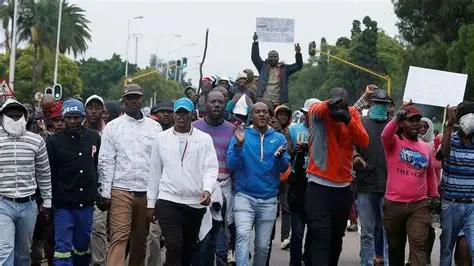
“Anti-immigration protests in South Africa have intensified, with violent clashes injuring several people and fueling xenophobic tensions nationwide. The activism, spearheaded by groups like Operation Dudula, has triggered diplomatic protests from neighboring African nations and forced the government to balance enforcement with constitutional protections.”
South Africa is experiencing one of its most sustained waves of political activism in recent years, as anti-immigration protests dominate the national agenda. What began as sporadic demonstrations has evolved into weekly nationwide marches, reshaping discourse around migration, governance, and social cohesion. The protests have not only mobilized thousands across all nine provinces but also provoked diplomatic tensions with countries whose nationals have been targeted.
Background of the Movement
The protests gained momentum in late June 2026, when anti-migrant groups issued a “national shutdown” ultimatum demanding undocumented migrants leave South Africa. Civic organizations such as Operation Dudula and March and March have spearheaded the movement, framing it as a grassroots campaign against unemployment, crime, and strained public services. Their rhetoric resonates with communities facing economic hardship, but critics argue it scapegoats migrants for systemic governance failures.
Escalation into Violence
On September 8, 2026, violence erupted during a protest in Johannesburg, leaving several people injured. Police clashed with demonstrators after attempts to disperse crowds turned chaotic. Protesters accused authorities of protecting undocumented migrants, while officials condemned the violence as undermining democratic activism. This escalation highlights the fragile line between peaceful protest and mob action, raising concerns about the sustainability of civic activism in South Africa.
Diplomatic Fallout
The protests have triggered diplomatic protests from African nations whose citizens have been targeted. Zimbabwe, Mozambique, and Malawi have lodged formal complaints, warning that xenophobic activism threatens regional stability. The African Union has urged South Africa to uphold constitutional protections and avoid policies that could inflame continental divisions. This diplomatic fallout underscores how domestic activism can reverberate across borders, complicating foreign relations.
Government Response
President Cyril Ramaphosa’s administration faces mounting pressure to balance enforcement with constitutional rights. While acknowledging public frustration over unemployment and crime, the government insists that migrants cannot be blamed for structural economic challenges. The Electoral Commission of South Africa (IEC) has also been drawn into controversy, as activists accuse political parties of failing to represent grassroots concerns. Ramaphosa has warned against vigilantism, emphasizing that migration policy must be addressed through legal frameworks rather than street activism.
Activism and Social Cohesion
The protests highlight the dual nature of activism in South Africa: a powerful tool for civic engagement, but also a potential catalyst for division. Activists argue they are reclaiming communities from neglect, while critics warn that xenophobic rhetoric undermines the country’s constitutional commitment to equality. The challenge lies in channeling activism into constructive dialogue rather than destructive confrontation.
Economic Dimensions
South Africa’s unemployment rate remains stubbornly high, with youth unemployment exceeding 50%. Activists claim migrants undercut wages and strain public services, but economists argue that structural issues—such as corruption, poor infrastructure, and inadequate education—are the real culprits. The protests thus reflect deeper frustrations with governance, using migration as a symbolic battleground.
Future of Civic Activism
The trajectory of these protests will shape the future of civic activism in South Africa. If violence continues, public sympathy may wane, and authorities could impose stricter controls. Conversely, if activists pivot toward constructive engagement, they could influence migration policy and broader governance reforms. The outcome will depend on whether activism remains rooted in democratic principles or succumbs to populist xenophobia.
Conclusion
South Africa’s anti-immigration protests represent a pivotal moment in the nation’s political activism. They expose deep frustrations with governance, economic inequality, and social cohesion, while also testing the resilience of constitutional protections. As violence escalates and diplomatic tensions mount, the government faces a critical choice: suppress activism or harness it to address systemic challenges. The stakes are high, not only for South Africa but for the broader African continent.



