




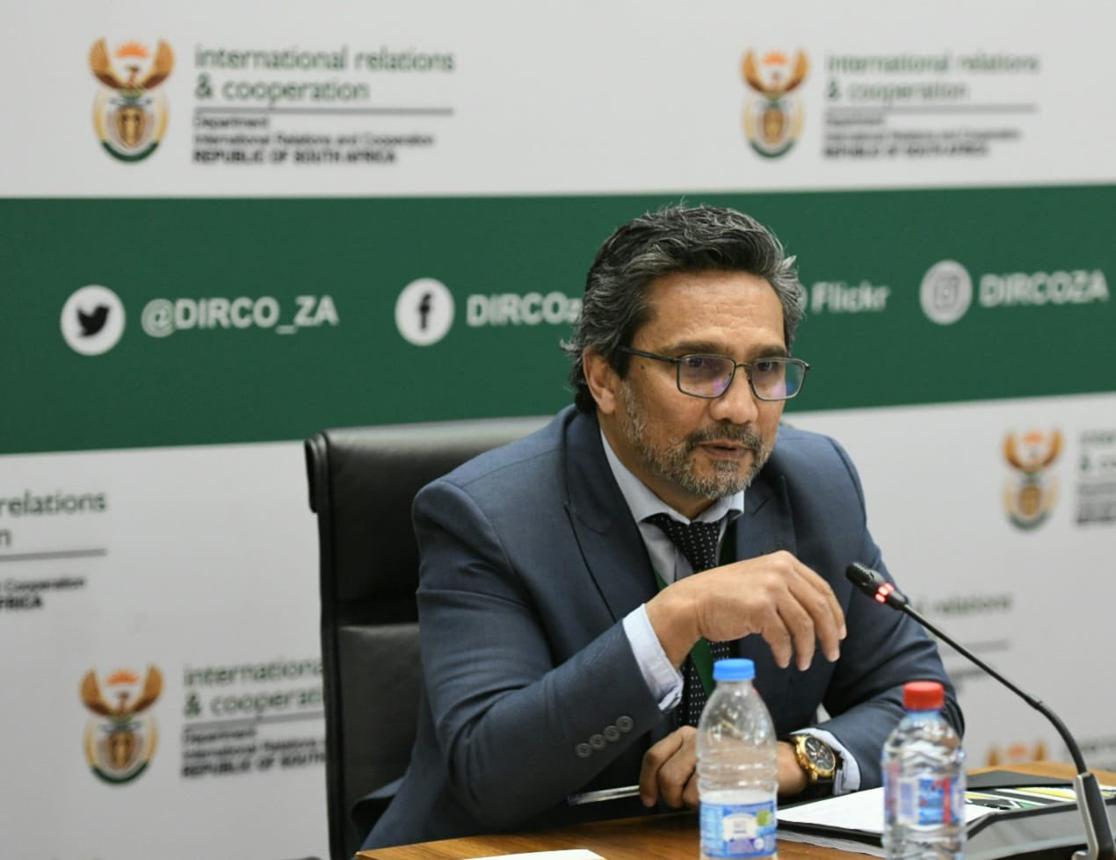
“South Africa’s international-relations strategy is facing a practical test as the Department of International Relations and Cooperation (DIRCO) warns that closing diplomatic missions to reduce costs could weaken the country’s political influence, trade relationships and ability to engage foreign governments. The warning came as Parliament scrutinized the cost of maintaining South Africa’s overseas properties, with DIRCO saying maintenance requirements exceed R300 million a year and that a substantial part of its foreign property portfolio is in poor condition.”
The issue is significant because South Africa is trying to maintain an active role in African, Global South and multilateral diplomacy while also managing pressure on public finances. Director-General Zane Dangor told Parliament that reducing the diplomatic footprint may create savings, but could also carry strategic costs that are difficult to measure in a conventional budget. EWN reported on 7 October that Dangor specifically cited the political and economic risks of closing missions in countries where South Africa needs a continuing presence.
The Financial Challenge
DIRCO’s overseas property portfolio is extensive. According to EWN, the department is responsible for 174 state-owned properties and 666 rented buildings used by foreign missions. The government property portfolio abroad is estimated at R5 billion, while DIRCO says it does not have sufficient funding or technical capacity to maintain the entire estate properly.
The department has therefore been selling under-utilised properties. EWN reported that at least 18 properties have received approval for sale, while further disposals require National Treasury approval. DIRCO has also been trying to rationalise its missions and make greater use of officials from other government departments serving as attachés.
The condition of the properties adds another layer to the problem. EWN reported that only 28% of the properties were regarded as being in good condition, while at least 30% were described as being in poor condition. The department told Parliament that it needs more than R300 million annually for maintenance.
The challenge is not simply about buildings. Diplomatic missions provide the infrastructure through which a country conducts diplomacy, supports citizens abroad, promotes trade and investment, and maintains political relationships. DIRCO’s strategic framework identifies bilateral and multilateral engagement, protection of South African interests, consular services and the promotion of foreign-policy objectives as central responsibilities.
Why Mission Closures Matter
Dangor’s warning was that closing missions can reduce South Africa’s ability to influence events and maintain relationships in strategically important countries. He cited Finland and Oman as examples where the government reconsidered earlier decisions to close missions because officials later identified political and economic risks.
That argument reflects a broader feature of diplomacy: a mission can have value even when its immediate financial return is difficult to calculate. A diplomatic post can provide access to ministries, businesses, regional organisations, investors and civil-society networks. It can also help South Africa respond quickly when political or economic conditions change.
Parliament’s Concerns
The parliamentary scrutiny also reflects a demand for measurable results from foreign-policy spending. Members have questioned how much value South Africa receives from its network of missions and whether scarce public resources are being allocated efficiently.
This concern comes alongside another issue raised in Parliament this week: money owed to South Africa by foreign governments and entities. The Standing Committee on Appropriations said on 7 October that DIRCO lacks sufficient capability to recover funds owed to South Africa. Parliament said DIRCO supports a network of missions across 103 countries and receives about R7.2 billion in public funds.
The committee specifically highlighted money owed to South African Airways by Zimbabwe, estimated at around R1 billion in ticket-sales revenue. It argued that diplomatic relationships should not prevent South Africa from pursuing money legally owed to its institutions.
Together, these debates show the two sides of the international-relations challenge. South Africa needs diplomatic capacity to advance national interests, but that capacity must also demonstrate financial discipline and tangible results.
A Wider Diplomatic Test
The discussion comes at an important time for South African foreign policy. Pretoria has sought to maintain an active role in multilateral organisations, African institutions and Global South cooperation. DIRCO’s strategic priorities include protecting sovereignty, advancing national interests, promoting multilateralism and contributing to a rules-based international system.
At the same time, South Africa is managing difficult bilateral relationships, including an increasingly strained relationship with the United States. Recent reporting has documented repeated diplomatic disagreements between Pretoria and Washington, including the summoning of US Ambassador Leo Brent Bozell III for a third formal diplomatic protest.
That wider environment makes the question of diplomatic presence more complicated. When relations with major powers become difficult, and when competition for investment and political partnerships intensifies, maintaining experienced diplomatic networks can become more important. However, financial constraints mean that South Africa cannot necessarily sustain every existing property or mission at its current cost.
Modernising the Diplomatic Footprint
The department’s property strategy is therefore likely to remain central. Selling buildings that are genuinely under-utilised could release resources, but decisions need to consider long-term strategic value as well as short-term financial savings. A property in a country that becomes economically or politically important could acquire greater value over time.
Accountability and Effectiveness
The parliamentary debate also highlights the importance of accountability. DIRCO’s international role gives it responsibilities that are sometimes difficult to measure using ordinary departmental performance indicators. Nevertheless, Parliament and the public need information showing how diplomatic spending contributes to national priorities.
This could include clearer reporting on trade and investment facilitated by missions, consular assistance delivered to South Africans, political engagements, support for African peace and security initiatives, and progress in recovering funds owed to South African entities.
South Africa’s foreign-policy ambitions require a functioning diplomatic service. DIRCO’s annual reporting has described overseas missions as strategic assets that support political engagement, trade and investment promotion, tourism and international cooperation. At the same time, the department must deal with ageing infrastructure, staffing gaps and limited resources.
The immediate parliamentary debate therefore goes beyond the cost of maintaining embassies. It is about how South Africa wants to position itself internationally and what resources it is prepared to devote to that objective.
For DIRCO, the task is to demonstrate that diplomatic presence translates into national value while addressing concerns about costs, property management and accountability. For Parliament, the challenge is to scrutinise spending without weakening the country’s ability to pursue its interests abroad.
The debate is likely to continue as South Africa weighs fiscal pressure against its ambitions to remain an influential African and Global South actor. The central question is not simply how many missions the country can afford, but which diplomatic capabilities are strategically necessary and how efficiently they can be delivered.
As Dangor’s warning indicates, closing a mission can produce an immediate saving while creating longer-term political or economic costs. The policy challenge for South Africa is therefore to make those trade-offs transparently, using evidence about national interests, regional priorities, commercial opportunities and the needs of South African citizens abroad. The outcome will also affect South Africa’s ability to respond to crises, assist citizens overseas and sustain relationships that support investment, security cooperation and regional diplomacy. These functions become especially important during periods of international uncertainty.



