




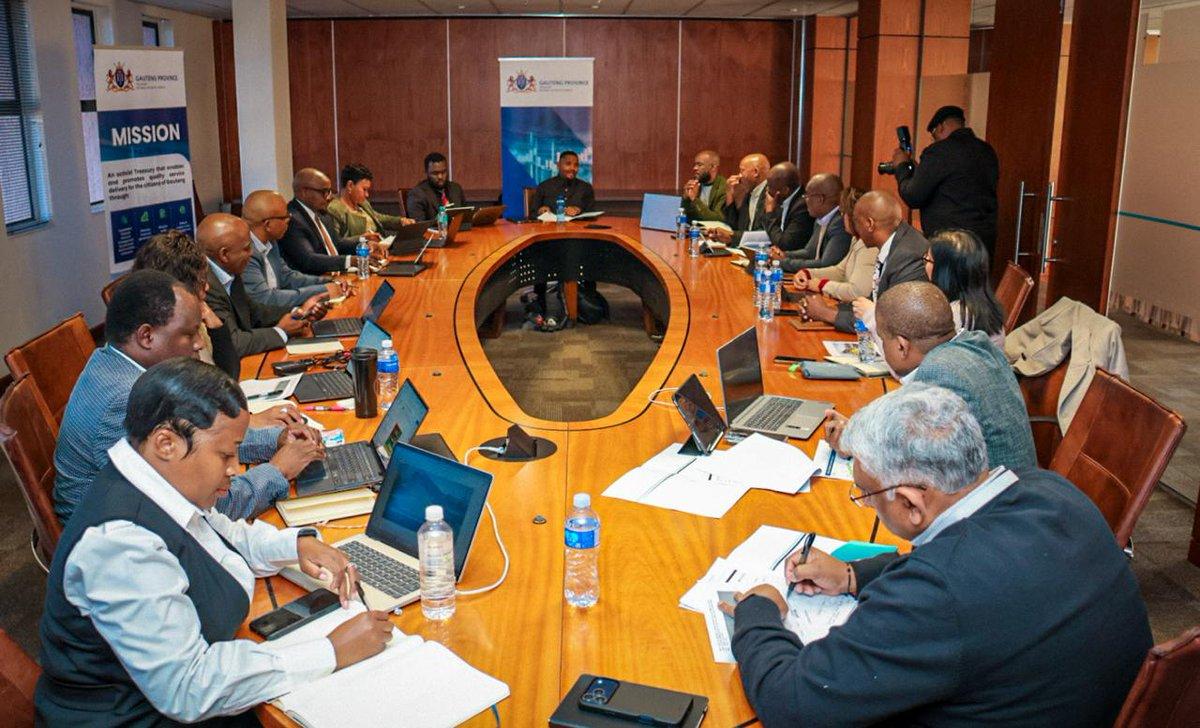
“The Auditor-General of South Africa has warned Gauteng municipalities that the upcoming local government elections must not interrupt financial accountability, audit action plans, financial recovery programmes or consequence management. The warning comes as Gauteng municipalities introduce a new interim financial reporting protocol intended to identify financial problems earlier, strengthen internal controls and ensure that improvements in municipal governance continue after new councils take office.”
South Africa’s municipal governance system has entered a critical period as the country prepares for the 2026 local government elections, with the Auditor-General of South Africa (AGSA) warning Gauteng municipalities against allowing political changes to interrupt financial accountability and administrative reforms. The warning, delivered this week, highlights one of the country’s most persistent governance challenges: ensuring that improvements achieved by one municipal administration are not lost when new political leadership takes office.
The warning is particularly significant because South Africa’s local government elections are scheduled for 4 November 2026. With municipalities preparing for political transitions, the Auditor-General has stressed that audit action plans, financial recovery plans and consequence management must continue regardless of changes to municipal councils and political leadership.
AGSA Gauteng business unit leader Fhumulani Rabonda said municipalities could not afford to restart governance processes every time a new administration came into power. The central message is that municipal governance should be continuous rather than tied to electoral cycles. Communities, businesses and residents depend on municipalities every day for water, electricity, roads, waste management, sanitation and other essential services.
The warning comes as Gauteng Co-operative Governance and Traditional Affairs, the provincial Treasury, municipalities and AGSA introduce a Provincial Interim Financial Statement Protocol. The initiative is designed to move municipalities away from a system in which financial problems are often identified only during annual audits. Instead, municipalities will be expected to monitor their financial position throughout the year and address weaknesses before they become major audit findings.
Under the new approach, municipalities will prepare interim financial statements and supporting records at designated points during the financial year. These records can then be reviewed, allowing financial officials, provincial authorities and auditors to identify errors, control weaknesses and emerging risks earlier.
This represents an important shift in the philosophy of municipal financial management. Rather than treating the annual audit as the main moment of accountability, the protocol seeks to establish continuous audit readiness. Regular reconciliations, quality reviews, monitoring and corrective action are expected to become part of routine municipal management.
The initiative is being introduced against a difficult national governance background. AGSA’s 2024/25 local government audit outcomes found that only 39 of South Africa’s 257 municipalities, or 15%, achieved clean audits. The Auditor-General also reported that 99 municipalities received modified audit opinions and that financial reporting remained compromised in many municipalities.
These figures help explain why financial accountability has become an important political and governance issue ahead of the local government elections. A municipality’s audit outcome is not simply an accounting matter. Poor financial management can affect the municipality’s ability to maintain infrastructure, pay service providers, implement projects and deliver services effectively.
Gauteng’s situation is especially important because the province contains several of South Africa’s largest municipalities and metropolitan governments. According to reporting on the new protocol, only two of Gauteng’s 11 municipalities — Midvaal and West Rand District — achieved clean audits in 2024/25. Johannesburg and Ekurhuleni were among municipalities receiving qualified audit opinions.
The financial governance problems are not limited to audit classifications. Separate reporting this week highlighted serious concerns at Ekurhuleni, where information-technology control failures and cyber breaches were linked to an estimated R2.5 billion loss. Mangaung was also reported to have accumulated R8.9 billion in unauthorised expenditure, illustrating the scale of financial and governance pressures confronting municipalities.
Against this backdrop, the Auditor-General’s warning about the election transition carries broader significance. Political change can bring new councillors, mayors, committee structures and priorities. However, the administrative systems responsible for financial reporting and service delivery must continue operating.
The challenge is therefore to ensure that incoming councils inherit functioning institutions rather than having to rebuild systems that should already exist. Audit action plans and financial recovery plans should remain active, while outstanding irregularities and instances of possible misconduct should continue to be investigated.
This principle is also reflected in preparations being made nationally for the post-election period. Parliament’s Portfolio Committee on Cooperative Governance and Traditional Affairs was briefed this week on plans to support newly elected councillors. The South African Local Government Association said it is preparing a phased development programme that will include initial induction for incoming councillors in January 2027, followed by portfolio-specific training and opportunities for accredited learning.
The objective is to professionalise municipal political leadership and strengthen councillors’ understanding of their responsibilities. However, Parliament also questioned whether training and support are producing visible improvements in municipal performance. Members raised concerns about corruption, senior appointments, long-term commitments by outgoing councils and the continuing gap between institutional support and actual service delivery.
That concern is important because governance requires more than formal procedures. A municipality may have policies, committees and audit recommendations, but accountability becomes meaningful only when officials and political leaders act on identified problems.
The transition to new councils therefore presents both a risk and an opportunity. The risk is that political uncertainty could delay decisions, weaken oversight or create opportunities for outgoing administrations to make questionable long-term commitments. The opportunity is for newly elected councils to introduce stronger standards of transparency, financial discipline and consequence management from the beginning of their terms.
Parliament has already raised concerns about outgoing councils entering into long-term contracts and making strategic appointments shortly before elections. Transition guidance has consequently been developed to help prevent decisions that could unnecessarily constrain incoming councils, while ensuring that municipalities continue filling essential operational positions and maintaining critical services.
The governance challenge extends beyond Gauteng. The Department of Cooperative Governance and Traditional Affairs has highlighted the broader need to strengthen South Africa’s local government system, including institutional capacity, financial sustainability, accountability and service delivery. Cabinet has also approved a revised White Paper on Local Government that seeks to respond to persistent governance, institutional, financial and service-delivery problems.
The new Gauteng financial protocol should therefore be viewed as part of a wider national effort to improve municipal governance. Its success will depend on whether municipalities actually use interim financial information to make better decisions.
Early identification of problems is valuable only if officials respond to those problems. If a reconciliation reveals an unexplained discrepancy, management must investigate it. If an audit action plan identifies recurring weaknesses, responsible officials must be held accountable for correcting them. If financial recovery plans are not implemented, political and administrative leaders must explain why.
The Auditor-General’s warning ultimately points to a simple principle: elections may change political leadership, but they should not reset accountability.
For Gauteng residents, the significance of this debate is practical. Effective municipal governance determines whether public money is used responsibly and whether municipalities can provide reliable services. Residents do not experience municipal performance only when they vote. They experience it when a water supply fails, when roads deteriorate, when waste is not collected or when infrastructure projects remain unfinished.
As South Africa approaches the November elections, the test for incoming municipal leaders will therefore extend beyond winning political mandates. They will have to demonstrate that their administrations can protect public resources, strengthen financial controls, act on audit findings and improve service delivery.
For Gauteng, the immediate challenge is to ensure that the transition from one municipal political administration to another does not become a transition away from accountability. The new interim financial reporting system offers one mechanism for achieving continuity, but its effectiveness will ultimately depend on political commitment, capable administration, transparent oversight and meaningful consequence management.
The message from the Auditor-General is consequently both a warning and a challenge. Municipalities must not treat November’s elections as a starting point for governance. Instead, new councils should inherit existing accountability processes, strengthen them where necessary and ensure that residents see measurable improvements.
With the elections approaching, maintaining that continuity could become one of the most important tests of South Africa’s commitment to effective local democracy.



