




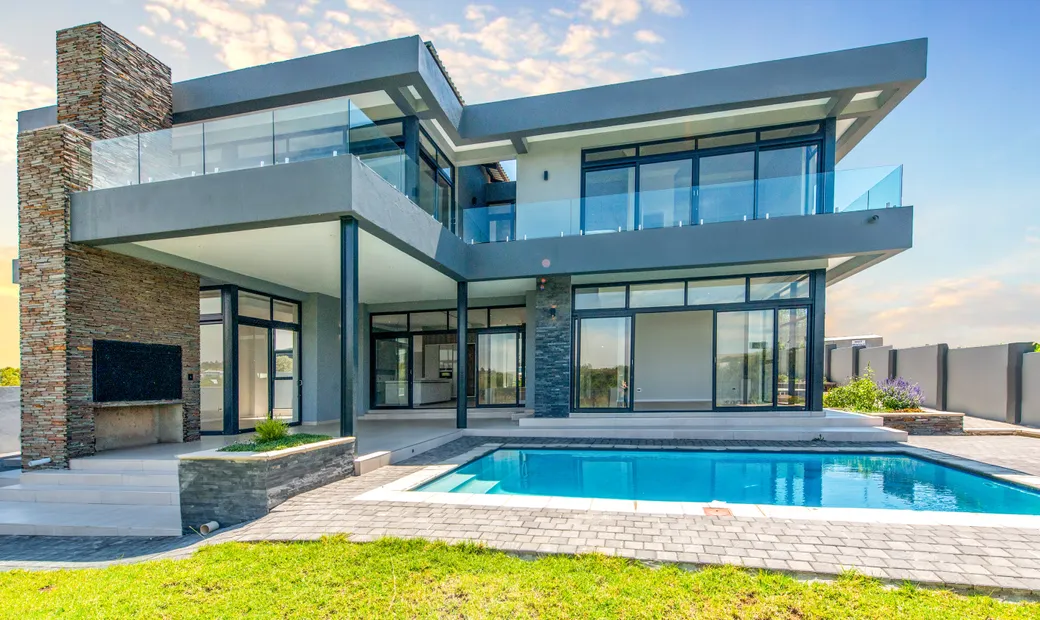
“South Africa’s luxury property sector is regaining momentum in 2026, buoyed by stable interest rates and affluent buyers returning from abroad. Key regions such as Cape Town, Johannesburg, and Durban are seeing renewed demand for premium estates, reshaping the country’s high-end property market.”
Market Resurgence
The South African luxury real estate market, after years of volatility, is entering a new phase of stability and growth. Stable lending rates maintained by the South African Reserve Bank (repo rate at 7.00%, prime lending rate at 10.50%) have created a predictable environment for buyers and sellers. This financial stability is critical for the luxury segment, where long-term planning and confidence are essential.
Reverse Emigration Trend
A unique phenomenon shaping the market is reverse emigration. Many South African expatriates are returning home, bringing capital and renewed interest in reinvesting domestically. This influx of affluent buyers is particularly visible in Cape Town’s Camps Bay, Johannesburg’s Sandton, and Durban’s Dolphin Coast, where scenic views, modern amenities, and cultural proximity make properties highly desirable.
Regional Hotspots
- Cape Town (Camps Bay, Bloubergstrand, Durbanville): Demand driven by families and investors seeking short-term rental potential.
- Garden Route (George, Knysna): Appreciating in value due to semigration trends.
- Johannesburg (Sandton, Waterfall Estate): Strong demand for lifestyle estates offering secure living and community amenities.
- Durban (Dolphin Coast): Rising interest from affluent buyers seeking coastal luxury.
Demographic Shifts
Unlike previous decades dominated by younger professionals, today’s luxury buyers are older, financially secure individuals. They prioritize lifestyle amenities, established neighborhoods, and long-term value. Banking data shows increased mortgage activity in higher price bands, underscoring confidence among this demographic.
Structural Realignment
The luxury property market is not driven by speculation but by discerning, well-capitalized buyers focused on quality and security. Global demand intersects with domestic fundamentals, creating a balanced environment. This structural realignment ensures resilience even when broader market momentum softens.
Risks and Challenges
Despite optimism, challenges remain:
- Affordability barriers exclude marginal buyers.
- Economic uncertainty could impact long-term stability.
- Infrastructure strain in high-demand regions may limit growth.
Outlook
Experts predict continued growth in the luxury segment through 2026, with reverse emigration and stable lending rates serving as the twin pillars of resilience. South Africa is positioning itself as a hub for premium real estate, attracting both domestic and global investors.



