




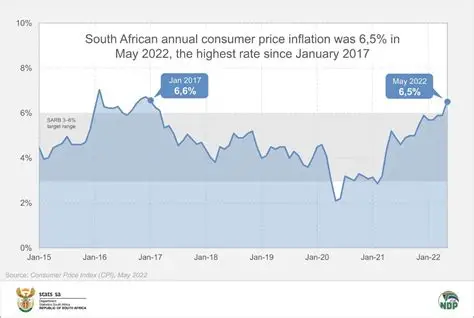
“Households in South Africa are facing mounting pressure as inflation rises to 4% in June 2026, driven by a 35% increase in petrol prices since January, while the Reserve Bank raised the prime overdraft rate to 10.5%, eroding disposable incomes. At the same time, businesses are grappling with disruptive AI adoption, which boosts efficiency but displaces jobs, widens inequality, and raises compliance costs.”
Inflation and Household Pressures
South Africa’s microeconomic environment has entered a turbulent phase. Inflation accelerated to 4% in June 2026, up from 3% earlier in the year. The sharp rise is largely attributed to instability in the Middle East, which has driven global oil prices higher. Petrol prices have surged by 35% since January, directly impacting transport and food costs. For households, this translates into reduced disposable income, particularly for those with mortgages and loans tied to the prime overdraft rate, which the Reserve Bank raised to 10.5%.
This erosion of consumer spending power is a classic microeconomic concern. Families are cutting back on non-essential purchases, dampening retail activity and slowing growth in small businesses. The ripple effect is evident across sectors: restaurants report declining foot traffic, clothing retailers face shrinking sales, and service providers struggle to maintain demand.
Employment and Wage Stagnation
Job creation remains stagnant, failing to keep pace with population growth. Youth unemployment continues to hover above 60%, reflecting structural weaknesses in labor markets. Rising living costs without wage increases exacerbate inequality, leaving many households unable to meet basic needs.
Microeconomically, this imbalance between labor supply and demand reduces productivity and weakens aggregate demand. The lack of wage growth means households cannot offset rising costs, entrenching a cycle of poverty and underemployment.
AI Disruption and Business Costs
Artificial intelligence adoption is reshaping business processes. Large firms benefit from efficiency gains, but the short-term impact is job insecurity and rising inequality. SMEs, in particular, struggle to afford AI integration, widening the gap between large corporations and smaller players.
While AI promises long-term productivity improvements, the short-term reality is stark: displaced workers, rising compliance costs, and heightened cybersecurity risks. Firms adopting AI reduce labor costs but face new expenses in data protection and regulatory compliance.
Consumer Behavior Shifts
The combined pressures of inflation, higher interest rates, and AI disruption are reshaping consumer behavior. Households are prioritizing essentials—food, transport, and housing—while cutting back on discretionary spending. This shift has profound implications for microeconomic dynamics, as demand patterns evolve and businesses must adapt.
Retailers are experimenting with smaller packaging sizes to cater to cash-strapped consumers. Service providers are offering flexible payment plans. Yet, these adjustments only partially mitigate the strain, as overall demand remains subdued.
Policy Implications
The Parliamentary Budget Office’s June 2026 Quarterly Economic Brief underscores the need for targeted interventions. Policymakers face the challenge of balancing inflation control with growth stimulation. Raising interest rates curbs inflation but erodes household spending power. Conversely, loosening monetary policy risks fueling further price increases.
Structural reforms are essential. Investments in skills development can help workers adapt to AI-driven changes. Support for SMEs can bridge the gap between large corporations and smaller players. Social safety nets must be strengthened to protect vulnerable households from the combined shocks of inflation and technological disruption.
Long-Term Outlook
South Africa’s microeconomic trajectory hinges on its ability to balance innovation with inclusivity. AI adoption is inevitable, but without policies to ensure equitable access and mitigate job losses, inequality will deepen. Inflationary pressures linked to global oil shocks highlight the vulnerability of households to external factors.
The long-term outlook is mixed. On one hand, AI-driven productivity gains could boost competitiveness. On the other, entrenched inequality and stagnant employment threaten social stability. Policymakers must navigate this delicate balance to ensure sustainable growth.



